International Journal of Coercion, Abuse, and Manipulation Volume 9 2026 92
characterized by degrading the victim’s self-esteem to
the point of humiliating her or forcing her to do things
that go against her moral values. Isolation is the third
tactic presented by Stark (2007). In this case, men will
ensure that women are alone, with no contact with
family or friends, no support, and no plans. In this way,
they reinforce their power and prevent women from
seeing any positive prospects that might encourage
them to leave the abusive relationship. Finally, coercive
control often culminates in the regulation of all aspects
of a woman’s life, controlling their access to vital needs
(food, sleep, money, sex, etc.). Ultimately, women are
deprived of autonomy, and their behavior is regulated
to conform to the traditional roles expected of women.
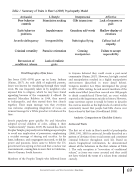
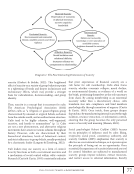
These elements help clarify how coercive control
operates in practice through a pattern of strategic,
ongoing, and personalized violence, men entrap
women in relationships of domination. This form
of control is not limited to isolated acts of abuse but
constitutes a cumulative process that progressively
erodes the victim’s autonomy, often rendering escape
nearly impossible. In its most extreme manifestations,
this dynamic can lead to total entrapment and, in some
cases, even result in the woman’s death.
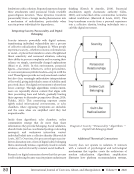
Given its relevance for understanding gendered power
dynamics in intimate contexts, how this framework
applies to other environments marked by gendered
domination, such as cultic groups, should be examined.
Several recent studies on cultic groups (Duron et al.,
2021 Hlavaty &Haselschwerdt, 2019) use the concept
of coercive control, establishing the relevance of this
theoretical framework beyond domestic violence,
particularly in understanding the experiences of
women in cultic contexts (Lamboley et al., 2022).
Moreover, Stark (2007) mentions in his book that
his theory can be adapted to cultic groups. Using the
example of Jehovah’s Witnesses, he states that women
are more likely to be repressed and that their external
relationships are strictly controlled. He also mentions
that women’s economic dependence on the group and
on men could lead to the implementation of coercive
control. Similarly, theoretical models developed for
the understanding of cultic groups highlight the same
aspects as Stark (2007) does (Hassan, 2020 Lalich,
2004 Singer, 1995).
Problem and Objectives
This research aims to find a possible answer to the
following question: How do women experience
their lives before, during, and after joining a cultic
group? Thus, the main objective is to document and
understand the experiences of women within cultic
groups in Québec. More specifically, I would like to
highlight the place and roles of women within cultic
communities understand the power and the coercion
techniques used to subject women to the authority of
the group and its leader understand how experiences
of victimization in a cultic context can affect women,
their lives, their beliefs and their process of leaving the
community and highlight the strategies used by these
women to cope with the cultic relationship and the
damage suffered, during and after their exit from the
group.
Methodology
This study adopts a qualitative research design aimed
at understanding the lived experiences of women who
were formerly involved in cultic groups. Qualitative
methodology is particularly suited for capturing
complex, subjective phenomena and for giving voice
to marginalized experiences (Paillé &Mucchielli,
2012 Polkinghorne, 2005). Through a discursive
and inductive process, this study sought to explore
how women interpret and make meaning of their
experiences before, during, and after their involvement
in such groups.
Data collection was conducted through semi-structured
interviews, a method widely used in criminology and
feminist research for exploring sensitive or understudied
topics (Frigon, 2010 Poupart &Couvrette, 2018).
Women in cultic groups may experience distinct
realities. Potter (2013) notes that all women have an
individual identity, which means that each will have a
unique experience of violence and harm. The freedom
offered to participants via semi-structured interviews
enabled them to guide the conversation, while
enabling the researcher to explore key themes such as
motivations for joining, life within the group, and the
process of exit and recovery. Interviews began with
an open-ended question: “Can you tell me about your
experiences before, during, and after your involvement
in a sectarian group?” and were followed by prompts
characterized by degrading the victim’s self-esteem to
the point of humiliating her or forcing her to do things
that go against her moral values. Isolation is the third
tactic presented by Stark (2007). In this case, men will
ensure that women are alone, with no contact with
family or friends, no support, and no plans. In this way,
they reinforce their power and prevent women from
seeing any positive prospects that might encourage
them to leave the abusive relationship. Finally, coercive
control often culminates in the regulation of all aspects
of a woman’s life, controlling their access to vital needs
(food, sleep, money, sex, etc.). Ultimately, women are
deprived of autonomy, and their behavior is regulated
to conform to the traditional roles expected of women.
These elements help clarify how coercive control
operates in practice through a pattern of strategic,
ongoing, and personalized violence, men entrap
women in relationships of domination. This form
of control is not limited to isolated acts of abuse but
constitutes a cumulative process that progressively
erodes the victim’s autonomy, often rendering escape
nearly impossible. In its most extreme manifestations,
this dynamic can lead to total entrapment and, in some
cases, even result in the woman’s death.
Given its relevance for understanding gendered power
dynamics in intimate contexts, how this framework
applies to other environments marked by gendered
domination, such as cultic groups, should be examined.
Several recent studies on cultic groups (Duron et al.,
2021 Hlavaty &Haselschwerdt, 2019) use the concept
of coercive control, establishing the relevance of this
theoretical framework beyond domestic violence,
particularly in understanding the experiences of
women in cultic contexts (Lamboley et al., 2022).
Moreover, Stark (2007) mentions in his book that
his theory can be adapted to cultic groups. Using the
example of Jehovah’s Witnesses, he states that women
are more likely to be repressed and that their external
relationships are strictly controlled. He also mentions
that women’s economic dependence on the group and
on men could lead to the implementation of coercive
control. Similarly, theoretical models developed for
the understanding of cultic groups highlight the same
aspects as Stark (2007) does (Hassan, 2020 Lalich,
2004 Singer, 1995).
Problem and Objectives
This research aims to find a possible answer to the
following question: How do women experience
their lives before, during, and after joining a cultic
group? Thus, the main objective is to document and
understand the experiences of women within cultic
groups in Québec. More specifically, I would like to
highlight the place and roles of women within cultic
communities understand the power and the coercion
techniques used to subject women to the authority of
the group and its leader understand how experiences
of victimization in a cultic context can affect women,
their lives, their beliefs and their process of leaving the
community and highlight the strategies used by these
women to cope with the cultic relationship and the
damage suffered, during and after their exit from the
group.
Methodology
This study adopts a qualitative research design aimed
at understanding the lived experiences of women who
were formerly involved in cultic groups. Qualitative
methodology is particularly suited for capturing
complex, subjective phenomena and for giving voice
to marginalized experiences (Paillé &Mucchielli,
2012 Polkinghorne, 2005). Through a discursive
and inductive process, this study sought to explore
how women interpret and make meaning of their
experiences before, during, and after their involvement
in such groups.
Data collection was conducted through semi-structured
interviews, a method widely used in criminology and
feminist research for exploring sensitive or understudied
topics (Frigon, 2010 Poupart &Couvrette, 2018).
Women in cultic groups may experience distinct
realities. Potter (2013) notes that all women have an
individual identity, which means that each will have a
unique experience of violence and harm. The freedom
offered to participants via semi-structured interviews
enabled them to guide the conversation, while
enabling the researcher to explore key themes such as
motivations for joining, life within the group, and the
process of exit and recovery. Interviews began with
an open-ended question: “Can you tell me about your
experiences before, during, and after your involvement
in a sectarian group?” and were followed by prompts