International Journal of Coercion, Abuse, and Manipulation Volume 9 2026 46
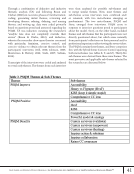
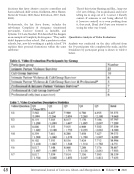
sub-theme was termed Systemic Coercive Control
(SCC) and appeared in every interview, every theme
in Story, and predominated participants’ most
passionate recommendations for change. The sub-
theme SCC includes abuser-initiated coercive violence
as well as coercive control not initiated by the coercive
controller and aligns with Katz’s (2022) and Stark’s
(2023) research findings that abusers often choose to
weaponize third parties and/or their own children as
part of their strategy to control and punish their female
partners.
SCC also relates to coercive control’s invisibility and our
system’s complicity in victim entrapment (Stark, 2007
Hill, 2020). The following quote from P2 illustrates the
SCC subtheme.
This example from P12 highlights how victims’ trauma
can be exploited to re-traumatize them, also from the
SCC subtheme, and, as Monterrosa and Hattery (2022)
suggest, hold them hostage in perpetuity.
P4, a professional, is similarly outraged, in the SCC
subtheme: “Survivors who speak...about how they were
treated (by police)...It’s maddening! It’s infuriating
to listen to. One section where the police detective is
talking it’s just so backwards.”
P12, whose ex-partner had raped and video-taped her
while unconscious, was threatened by the family court,
a common context of SCC. She stated, “It was family
court. I tried to flee. ...They told me I had two days to
come back, or they’d take my son.”
Interviewees most referenced the legal system as the
I worked there for eleven years...and had been in
an abusive relationship while in that job...then
I got a new manager who was a manipulator...
and...he convinced people that I was mentally
unstable and was projecting my trauma, due to
my past experience.
My ex and the school filed charges against
my father for harassment. That’s why I had to
drop my restraining order...So, in my trusty
paperwork...there’s like,...“You’re voluntarily
dropping this, right?” And I’m like, “Yes”
(weakly). If you read it, “Oh, she must not
have been that scared, right? She voluntarily
dropped the restraining order.”
primary context for their experiences of SCC. For
example, P3 stated, “You know that case in Connecticut
where a woman was killed in front of her children?...
She’d run away...And...told she had to come back to
attend the family court, and he killed her when she
came back.”
P3, an IPV survivor, references how coercive
controllers use DARVO in court cases, re-traumatizing
victims. The case of Depp v Heard resulted in a win
for the perpetrator, Johnny Depp, and a jury finding
of defamation against Amber Heard, despite an earlier
UK case finding of domestic violence by Depp against
Heard. Depp’s use of DARVO (deny, attack, reverse
victim and offender), combined with social-media-
fueled misogynistic backlash, proved effective for the
perpetrator, and devastating for the victim (Depp
v Heard, 2020). Had Heard’s adaptive responses to
Depp’s abuse been accurately assessed, this case may
have turned out completely differently. P3 stated, also
from the SCC subtheme: “They look at the Depp/
Heard case and they say ‘Oh, see, it’s men too’, and
you’re like, ‘Oh my God, how could you? They were
delighted, weren’t they?...That was horrifying!’”
Sub-themes within the Victim theme appeared
frequently. P7 spoke to the sub-theme Trapped, “I
don’t think I could have just gotten out of the group on
my own. It helped that she was, you know, pulling me
out (of the quicksand). But then, you know, I had to
get out of that too.” Inspired by the PSQM videos, P9
stated, illustrating the Strength subtheme: “I’m getting
better. Yes!...because it gives me a sense of like, ‘Oh,
well I could refer someone to those videos and be like,
this is why [I responded like that].’” P4, a professional,
expressed hope upon learning that a perpetrator of
coercive control had been sentenced for his crime, an
illustration of the Empowerment &Solutions Needed
subtheme: “Like, how powerful is it if we’re actually
able to take the guy away? And for an extended period
of time?”
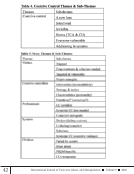
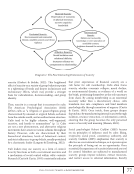
P2 discusses all four Coercive Controller sub-themes
below: Strategy &Tactics (S&T), Intervention &
Accountability (I&A), Intentional &Conscious (I&C),
and Abuser Characteristics &Personality (C&P): “It’s
understanding manipulation. The whole world needs
to know how to look for it. How to understand it so that
people, so they’re not further victimizing people by
sub-theme was termed Systemic Coercive Control
(SCC) and appeared in every interview, every theme
in Story, and predominated participants’ most
passionate recommendations for change. The sub-
theme SCC includes abuser-initiated coercive violence
as well as coercive control not initiated by the coercive
controller and aligns with Katz’s (2022) and Stark’s
(2023) research findings that abusers often choose to
weaponize third parties and/or their own children as
part of their strategy to control and punish their female
partners.
SCC also relates to coercive control’s invisibility and our
system’s complicity in victim entrapment (Stark, 2007
Hill, 2020). The following quote from P2 illustrates the
SCC subtheme.
This example from P12 highlights how victims’ trauma
can be exploited to re-traumatize them, also from the
SCC subtheme, and, as Monterrosa and Hattery (2022)
suggest, hold them hostage in perpetuity.
P4, a professional, is similarly outraged, in the SCC
subtheme: “Survivors who speak...about how they were
treated (by police)...It’s maddening! It’s infuriating
to listen to. One section where the police detective is
talking it’s just so backwards.”
P12, whose ex-partner had raped and video-taped her
while unconscious, was threatened by the family court,
a common context of SCC. She stated, “It was family
court. I tried to flee. ...They told me I had two days to
come back, or they’d take my son.”
Interviewees most referenced the legal system as the
I worked there for eleven years...and had been in
an abusive relationship while in that job...then
I got a new manager who was a manipulator...
and...he convinced people that I was mentally
unstable and was projecting my trauma, due to
my past experience.
My ex and the school filed charges against
my father for harassment. That’s why I had to
drop my restraining order...So, in my trusty
paperwork...there’s like,...“You’re voluntarily
dropping this, right?” And I’m like, “Yes”
(weakly). If you read it, “Oh, she must not
have been that scared, right? She voluntarily
dropped the restraining order.”
primary context for their experiences of SCC. For
example, P3 stated, “You know that case in Connecticut
where a woman was killed in front of her children?...
She’d run away...And...told she had to come back to
attend the family court, and he killed her when she
came back.”
P3, an IPV survivor, references how coercive
controllers use DARVO in court cases, re-traumatizing
victims. The case of Depp v Heard resulted in a win
for the perpetrator, Johnny Depp, and a jury finding
of defamation against Amber Heard, despite an earlier
UK case finding of domestic violence by Depp against
Heard. Depp’s use of DARVO (deny, attack, reverse
victim and offender), combined with social-media-
fueled misogynistic backlash, proved effective for the
perpetrator, and devastating for the victim (Depp
v Heard, 2020). Had Heard’s adaptive responses to
Depp’s abuse been accurately assessed, this case may
have turned out completely differently. P3 stated, also
from the SCC subtheme: “They look at the Depp/
Heard case and they say ‘Oh, see, it’s men too’, and
you’re like, ‘Oh my God, how could you? They were
delighted, weren’t they?...That was horrifying!’”
Sub-themes within the Victim theme appeared
frequently. P7 spoke to the sub-theme Trapped, “I
don’t think I could have just gotten out of the group on
my own. It helped that she was, you know, pulling me
out (of the quicksand). But then, you know, I had to
get out of that too.” Inspired by the PSQM videos, P9
stated, illustrating the Strength subtheme: “I’m getting
better. Yes!...because it gives me a sense of like, ‘Oh,
well I could refer someone to those videos and be like,
this is why [I responded like that].’” P4, a professional,
expressed hope upon learning that a perpetrator of
coercive control had been sentenced for his crime, an
illustration of the Empowerment &Solutions Needed
subtheme: “Like, how powerful is it if we’re actually
able to take the guy away? And for an extended period
of time?”
P2 discusses all four Coercive Controller sub-themes
below: Strategy &Tactics (S&T), Intervention &
Accountability (I&A), Intentional &Conscious (I&C),
and Abuser Characteristics &Personality (C&P): “It’s
understanding manipulation. The whole world needs
to know how to look for it. How to understand it so that
people, so they’re not further victimizing people by