105
Luigi Corvaglia |The Price of Belief
If you apply rational choice theory uncritically to
religion, it does not just describe beliefs and behaviors.
It also runs the risk of naturalizing even the most
coercive dynamics by reinterpreting dependence as
autonomy and abuse as free consent. So let us begin by
examining the scientific soundness of this seemingly
ecumenical and free-trade view.
Empirical and logical critiques of TRE
The premise underlying the Theory of Religious
Economy (TRE) is empirically weak, to say the least.
The idea of applying economic rationality outside
its natural domain has already been questioned by
Herbert Simon (1955) and Paul Diesing (1973).
Simon’s concept of “bounded rationality”—the idea
that humans settle for sub-optimal solutions due to
the computational limits of our brains—casts doubt
on the credibility of TRE. In Simon’s words, “decision
making under uncertainty rarely conforms to the ideal
of complete rationality” (Simon, 1955, p. 103).
The fact that human decisions are not rational has
even been confirmed by the Nobel Prize winner,
Daniel Kahneman. He even created a discipline
known as behavioral economics, which highlights
the economic illogicality of human decisions. Indeed,
Kahneman and Tversky (1979) showed that human
decisions are characterized by mental shortcuts and
bias rather than systematic calculation. Kahneman’s
distinction between “System 1” (quick and intuitive)
and “System 2” (slow and deliberate) also undermines
the notion that humans are capable of consistently
and comprehensively evaluating and weighing long-
term benefits of their decisions (Kahneman, 2011).
George Ainslie (2001) shows that people often make
short-sighted decisions even when they are aware
of their counterproductive nature. This is due to the
phenomenon of “hyperbolic discounting,” i.e., the
process of valuing immediate rewards over long-term
benefits.
Antonio Damasio (1994) backs up this indisputable
data by showing that emotions are not just a peripheral
lives.... Members of Heaven’s Gate allowed
themselves to be conditioned in a different
way, but that does not make them any more
or less brainwashed than everyone else.
disturbance, but a central element of thinking that is
actively involved in decision-making—a realization
that fundamentally challenges the cold and calculating
action that TRE assumes. It should not be overlooked
that religious commitment often arises not from a
comparative judgement between faiths, but from
emotional experiences, existential emergencies, or
personal crises. It should also be borne in mind that
the emotional element not only supports decisions, but
also, in some cases, can deprive them of any coherence
because, as George Loewenstein (1996) emphasizes,
visceral impulses—desire, fear, emotional urgency—
can gain the upper hand over any form of utility
calculation.
To conclude the analysis of the cognitive aspects, it
should be noted that autonomous decision-making
and manipulation are not mutually exclusive but can
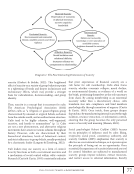
coexist. The writer proposed a model that shows that
a gradual decision to adopt a certain behavior can
lead to an outcome that the individual would have
never accepted if it had been suggested to them in
the first place. If this outcome involves exploitation
by the persuader, one can speak of a manipulative
process (Corvaglia, 2025). In this light, the rationalist
assumptions of TRE appear detached from the way
belief and belonging actually develop.
The internal logic of the model is also problematic.
At the level of comparative choice alone, it is obvious
to everyone that a belief is not a car. The latter can
change their models and vary their accessories to
better satisfy consumers, but it is unlikely that a belief
can do the same to survive in the market. The mistake
of treating beliefs as commodities robs them of their
epistemic dimension, by reducing them to superficial
consumption models, the fundamental cultural
dimension is lost, as beliefs are often formed through
intense socialization and emotional immersion
rather than free choice (Henrik Lagerlund, 2018).
Furthermore, the preferences expressed by consumers
in the religious market are inferred from behavior,
while behavior is in turn explained by preferences—a
circular argument, as Steve Bruce (1999, p. 21) noted:
If we explain the choice of a religion by the fact
that it satisfies one’s preferences, but we only
know what one’s preferences are by observing
the choice, we are not saying anything.
Luigi Corvaglia |The Price of Belief
If you apply rational choice theory uncritically to
religion, it does not just describe beliefs and behaviors.
It also runs the risk of naturalizing even the most
coercive dynamics by reinterpreting dependence as
autonomy and abuse as free consent. So let us begin by
examining the scientific soundness of this seemingly
ecumenical and free-trade view.
Empirical and logical critiques of TRE
The premise underlying the Theory of Religious
Economy (TRE) is empirically weak, to say the least.
The idea of applying economic rationality outside
its natural domain has already been questioned by
Herbert Simon (1955) and Paul Diesing (1973).
Simon’s concept of “bounded rationality”—the idea
that humans settle for sub-optimal solutions due to
the computational limits of our brains—casts doubt
on the credibility of TRE. In Simon’s words, “decision
making under uncertainty rarely conforms to the ideal
of complete rationality” (Simon, 1955, p. 103).
The fact that human decisions are not rational has
even been confirmed by the Nobel Prize winner,
Daniel Kahneman. He even created a discipline
known as behavioral economics, which highlights
the economic illogicality of human decisions. Indeed,
Kahneman and Tversky (1979) showed that human
decisions are characterized by mental shortcuts and
bias rather than systematic calculation. Kahneman’s
distinction between “System 1” (quick and intuitive)
and “System 2” (slow and deliberate) also undermines
the notion that humans are capable of consistently
and comprehensively evaluating and weighing long-
term benefits of their decisions (Kahneman, 2011).
George Ainslie (2001) shows that people often make
short-sighted decisions even when they are aware
of their counterproductive nature. This is due to the
phenomenon of “hyperbolic discounting,” i.e., the
process of valuing immediate rewards over long-term
benefits.
Antonio Damasio (1994) backs up this indisputable
data by showing that emotions are not just a peripheral
lives.... Members of Heaven’s Gate allowed
themselves to be conditioned in a different
way, but that does not make them any more
or less brainwashed than everyone else.
disturbance, but a central element of thinking that is
actively involved in decision-making—a realization
that fundamentally challenges the cold and calculating
action that TRE assumes. It should not be overlooked
that religious commitment often arises not from a
comparative judgement between faiths, but from
emotional experiences, existential emergencies, or
personal crises. It should also be borne in mind that
the emotional element not only supports decisions, but
also, in some cases, can deprive them of any coherence
because, as George Loewenstein (1996) emphasizes,
visceral impulses—desire, fear, emotional urgency—
can gain the upper hand over any form of utility
calculation.
To conclude the analysis of the cognitive aspects, it
should be noted that autonomous decision-making
and manipulation are not mutually exclusive but can
coexist. The writer proposed a model that shows that
a gradual decision to adopt a certain behavior can
lead to an outcome that the individual would have
never accepted if it had been suggested to them in
the first place. If this outcome involves exploitation
by the persuader, one can speak of a manipulative
process (Corvaglia, 2025). In this light, the rationalist
assumptions of TRE appear detached from the way
belief and belonging actually develop.
The internal logic of the model is also problematic.
At the level of comparative choice alone, it is obvious
to everyone that a belief is not a car. The latter can
change their models and vary their accessories to
better satisfy consumers, but it is unlikely that a belief
can do the same to survive in the market. The mistake
of treating beliefs as commodities robs them of their
epistemic dimension, by reducing them to superficial
consumption models, the fundamental cultural
dimension is lost, as beliefs are often formed through
intense socialization and emotional immersion
rather than free choice (Henrik Lagerlund, 2018).
Furthermore, the preferences expressed by consumers
in the religious market are inferred from behavior,
while behavior is in turn explained by preferences—a
circular argument, as Steve Bruce (1999, p. 21) noted:
If we explain the choice of a religion by the fact
that it satisfies one’s preferences, but we only
know what one’s preferences are by observing
the choice, we are not saying anything.