International Journal of Coercion, Abuse, and Manipulation Volume 9 2026 82
From Scarcity to Cultic Digital Belonging
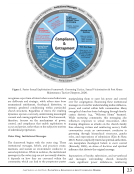
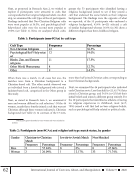
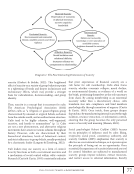
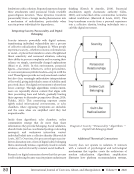
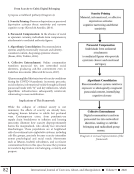
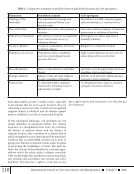
I propose a multilevel pathway (Diagram 4).
1. Scarcity Priming: Resource deprivation or perceived
deprivation activates threat sensitivity and narrows
cognitive scope (Krosch &Amodio, 2014).
2. Parasocial Compensation: In the absence of social
or epistemic certainty, individuals form compensatory
attachments to mediated authority figures.
3. Algorithmic Consolidation: Recommendation
systems amplify emotionally resonant and identity-
consistent content, deepening epistemic closure
(Beam, 2014 Tufekci, 2015).
4. Collective Entrenchment: Online communities
transform parasocial ties into networked social
identities, producing cult-like commitment even in
leaderless movements (Marwick &Lewis, 2017).
QAnon exemplified this trajectory of scarcity conditions
during the COVID-19 pandemic (economic precarity,
social isolation, informational voids) through facilitated
parasocial bonds with “Q” and key influencers, which
algorithmic infrastructures subsequently reinforced,
culminating in mass mobilization.
Implications of This Framework
While the collapse of civilized society is not
imminent, the effects of scarcity are already here,
reshaping human behavior in subtle but profound
ways. Contemporary crises, from pandemic-era
supply chain breakdowns to inflation and housing
insecurity, illustrate how scarcity disproportionately
harms the marginalized, who already face structural
disadvantages. These populations are at heightened
risk of recruitment into exploitative systems, including
cult-like groups, precisely because scarcity intensifies
unmet psychological and social needs. Movements
such as QAnon, tradwife subcultures, and eco-fascist
communities thrive in this space because they promise
to transform deprivation into belonging, certainty, and
purpose.
Diagram 4: A visual representation of the
framework
From Scarcity to Cultic Digital Belonging
I propose a multilevel pathway (Diagram 4).
1. Scarcity Priming: Resource deprivation or perceived
deprivation activates threat sensitivity and narrows
cognitive scope (Krosch &Amodio, 2014).
2. Parasocial Compensation: In the absence of social
or epistemic certainty, individuals form compensatory
attachments to mediated authority figures.
3. Algorithmic Consolidation: Recommendation
systems amplify emotionally resonant and identity-
consistent content, deepening epistemic closure
(Beam, 2014 Tufekci, 2015).
4. Collective Entrenchment: Online communities
transform parasocial ties into networked social
identities, producing cult-like commitment even in
leaderless movements (Marwick &Lewis, 2017).
QAnon exemplified this trajectory of scarcity conditions
during the COVID-19 pandemic (economic precarity,
social isolation, informational voids) through facilitated
parasocial bonds with “Q” and key influencers, which
algorithmic infrastructures subsequently reinforced,
culminating in mass mobilization.
Implications of This Framework
While the collapse of civilized society is not
imminent, the effects of scarcity are already here,
reshaping human behavior in subtle but profound
ways. Contemporary crises, from pandemic-era
supply chain breakdowns to inflation and housing
insecurity, illustrate how scarcity disproportionately
harms the marginalized, who already face structural
disadvantages. These populations are at heightened
risk of recruitment into exploitative systems, including
cult-like groups, precisely because scarcity intensifies
unmet psychological and social needs. Movements
such as QAnon, tradwife subcultures, and eco-fascist
communities thrive in this space because they promise
to transform deprivation into belonging, certainty, and
purpose.
Diagram 4: A visual representation of the
framework