43
Kate Amber and Roderick Dubrow-Marshall |An Investigation into the Efficacy of the PsychoSocial Quicksand Model™
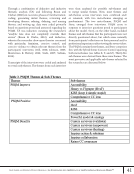
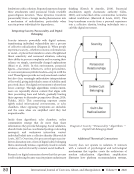
PSQM Benefits, PSQM Improve, and PSQM Positive
emerged from the meta-theme of PSQM. These themes
were named for aspects of the model participants felt
were beneficial to survivors and professionals, held
opportunities for model improvement, or deemed to
be powerful, successful, and/or effective, respectively.
PSQM themes broke down further into five sub-themes,
four of which, Keep It Simple Stupid (KISS), Honey
Vs Flypaper (HvsF), Accessibility, and Comprehensive
Coercive Control Lens, were found in all three themes,
and Powerful Model &Analogy (PM&A) appeared
only within the PSQM Positive theme.
Given that interview questions were designed to
collect participants’ responses to the model’s efficacy,
it is unsurprising that three of the five sub-themes
correspond with engagement and accessibility (HvsF,
KISS, &Accessibility). HvsF correlates with how the
PSQM was, or was expected to be, appreciated and
accepted by professionals, and was named for the
concept that honey attracts more flies than flypaper.
In other words, training that uses respectful ways
of confronting systemic failures is more likely to
be received positively than directly confrontational
methods that could potentially be perceived as attacks.
KISS corresponds with participant comments to keep
terms simple to ease a learner’s comprehension, and
Accessibility includes all other aspects of engagement
and/or accessibility coding not applicable to the other
two sub-themes.
The HvsF and KISS sub-themes emerged as especially
significant to training professionals for whom coercive
control is often “invisible in plain sight” (Fontes,
2015 Hill, 2020 Meyer, 2015 Stark, 2007). Training
professionals who hold misconceptions, biases,
and victim-blaming tendencies can be challenging.
However, implicit bias, such as the “strong female-
family stereotype,” was shown to have a “statistically
significant increase in bias awareness” for participants
following training in a recent study (Sabin et al., 2022).
These sub-themes suggest survivors and professionals
alike recommend that training be designed carefully
to prevent defensiveness and engage professionals in
ways likely to facilitate the abandonment of said biases.
Therefore, effectively addressing coercive control,
through training models like the PSQM, requires
community and professional engagement that avoids
defensiveness and fosters respect for each other and
the challenges we collectively face.
PSQM Improve and PSQM Positive both included the
sub-theme of HvsF, which interviewees suggested was
particularly relevant to training professionals. Often,
professionals believe they have sufficient knowledge of
what constitutes coercively controlling behavior, even
when they do not. Two of the most difficult training
challenges that participants revealed occur when
professionals are both unaware of their implicit bias
and ignorant of their ignorance. This phenomenon
was especially salient for the two professionals who
were not survivors, who recommended approaching
professionals with deference and respect to improve
the chances that biases and assumptions could be
overcome.
P1 is a cult professional who reflects in the two quotes
below on HvsF and how the PSQM effectively handles
this challenge.
P1 also makes suggestions to reduce professionals’
defensiveness.
P4, a professional in the domestic violence field,
mentions the importance of using case studies and
making training interactive to effectively engage law
enforcement, another example of the HvsF subtheme.
1
1 Gabby Petito was killed by her boyfriend, Brian Laundrie, in
2021 following a domestic violence incident. Law enforcement did
not arrest Laundrie as required by their policies, leading to a missed
intervention opportunity.
Things were very well done and very
appropriate. I’m thinking the professional
who’s just starting…would benefit from looking
at those videos. They’re very clear and easy to
understand, and yet you’re not talking down to
people or assuming that they’re idiots.
Information…will help you draw on things that
you already know but apply them in a way that’s
appropriate to a new set of circumstances...
Something like that...would be...nice transition
for people...who are professionals and feel like
they know everything about the topic already.
When I do training with police cadets, at the
very least...the things that work with them
are that it has to be very interactive and very
engaging, and examples. So...the Gabby Petito1
case...exploring that even more, showing actual
Kate Amber and Roderick Dubrow-Marshall |An Investigation into the Efficacy of the PsychoSocial Quicksand Model™
PSQM Benefits, PSQM Improve, and PSQM Positive
emerged from the meta-theme of PSQM. These themes
were named for aspects of the model participants felt
were beneficial to survivors and professionals, held
opportunities for model improvement, or deemed to
be powerful, successful, and/or effective, respectively.
PSQM themes broke down further into five sub-themes,
four of which, Keep It Simple Stupid (KISS), Honey
Vs Flypaper (HvsF), Accessibility, and Comprehensive
Coercive Control Lens, were found in all three themes,
and Powerful Model &Analogy (PM&A) appeared
only within the PSQM Positive theme.
Given that interview questions were designed to
collect participants’ responses to the model’s efficacy,
it is unsurprising that three of the five sub-themes
correspond with engagement and accessibility (HvsF,
KISS, &Accessibility). HvsF correlates with how the
PSQM was, or was expected to be, appreciated and
accepted by professionals, and was named for the
concept that honey attracts more flies than flypaper.
In other words, training that uses respectful ways
of confronting systemic failures is more likely to
be received positively than directly confrontational
methods that could potentially be perceived as attacks.
KISS corresponds with participant comments to keep
terms simple to ease a learner’s comprehension, and
Accessibility includes all other aspects of engagement
and/or accessibility coding not applicable to the other
two sub-themes.
The HvsF and KISS sub-themes emerged as especially
significant to training professionals for whom coercive
control is often “invisible in plain sight” (Fontes,
2015 Hill, 2020 Meyer, 2015 Stark, 2007). Training
professionals who hold misconceptions, biases,
and victim-blaming tendencies can be challenging.
However, implicit bias, such as the “strong female-
family stereotype,” was shown to have a “statistically
significant increase in bias awareness” for participants
following training in a recent study (Sabin et al., 2022).
These sub-themes suggest survivors and professionals
alike recommend that training be designed carefully
to prevent defensiveness and engage professionals in
ways likely to facilitate the abandonment of said biases.
Therefore, effectively addressing coercive control,
through training models like the PSQM, requires
community and professional engagement that avoids
defensiveness and fosters respect for each other and
the challenges we collectively face.
PSQM Improve and PSQM Positive both included the
sub-theme of HvsF, which interviewees suggested was
particularly relevant to training professionals. Often,
professionals believe they have sufficient knowledge of
what constitutes coercively controlling behavior, even
when they do not. Two of the most difficult training
challenges that participants revealed occur when
professionals are both unaware of their implicit bias
and ignorant of their ignorance. This phenomenon
was especially salient for the two professionals who
were not survivors, who recommended approaching
professionals with deference and respect to improve
the chances that biases and assumptions could be
overcome.
P1 is a cult professional who reflects in the two quotes
below on HvsF and how the PSQM effectively handles
this challenge.
P1 also makes suggestions to reduce professionals’
defensiveness.
P4, a professional in the domestic violence field,
mentions the importance of using case studies and
making training interactive to effectively engage law
enforcement, another example of the HvsF subtheme.
1
1 Gabby Petito was killed by her boyfriend, Brian Laundrie, in
2021 following a domestic violence incident. Law enforcement did
not arrest Laundrie as required by their policies, leading to a missed
intervention opportunity.
Things were very well done and very
appropriate. I’m thinking the professional
who’s just starting…would benefit from looking
at those videos. They’re very clear and easy to
understand, and yet you’re not talking down to
people or assuming that they’re idiots.
Information…will help you draw on things that
you already know but apply them in a way that’s
appropriate to a new set of circumstances...
Something like that...would be...nice transition
for people...who are professionals and feel like
they know everything about the topic already.
When I do training with police cadets, at the
very least...the things that work with them
are that it has to be very interactive and very
engaging, and examples. So...the Gabby Petito1
case...exploring that even more, showing actual