49
Kate Amber and Roderick Dubrow-Marshall |An Investigation into the Efficacy of the PsychoSocial Quicksand Model™
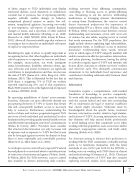
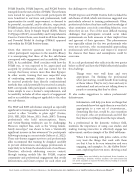
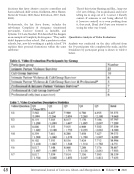
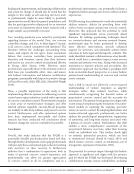
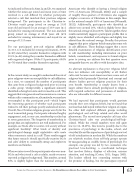
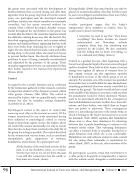
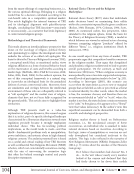
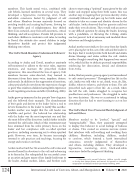
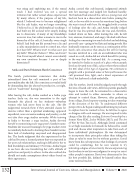
For analysis across the participant groups, the survivor
and professional groups in the above table (*)were
combined as a Survivor &Professional group (n=14) to
allow for a survivor professional sample large enough
for analysis. Overall means and standard deviations
for answers to the five video evaluation questions and
total, for each video, are shown in Table 7 above.
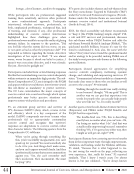
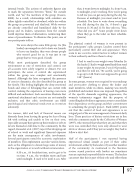
Distribution analysis revealed that data on most of the
video evaluation questions were significantly positively
skewed (Shapiro-Wilk test p.05) across the participant
groups and videos. These results indicate that the
videos, and hence the model, were being more often
positively evaluated rather than negatively evaluated
across most of the evaluation questions. Results also
indicate that the model was being viewed favorably, in
general, by most of the participants in the study.
Analysis of differences in the video evaluations across
the participant groups (using the Kruskal-Wallis non-
parametric ANOVA) showed that on almost all the
video evaluation questions, there is no significant
difference in the mean ranks across the participant
groups. Along with the generally positively skewed
data, analysis indicates that, in general, the videos
appear to have been favorably viewed across the board.
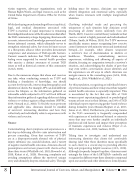
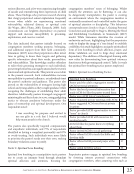
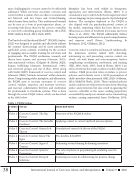
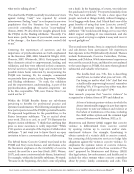
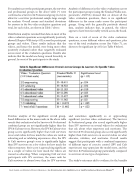
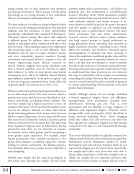
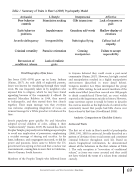
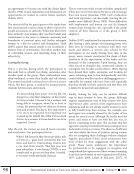
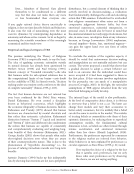
Data on a total of seven of the video evaluation
questions, across different videos and questions, plus
one of the total evaluation scores (for Video 7), are
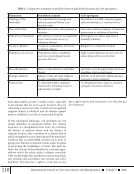
shown to be significant (p.05) (see Table 8 below).
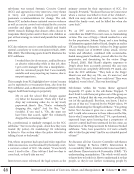
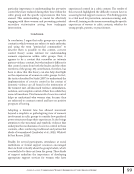
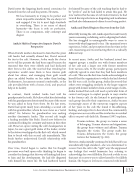
Post-hoc analysis of the significant overall group-
based differences in the mean ranks in the above table
reveals that evaluations by the Survivor &Professional
combined group are not significantly higher than the
IPV &Cult survivors. However, the IPV &Cult survivor
group scores significantly higher than Cult survivors
on several videos for how much the videos are rated as
educating and as validating experiences. Also, the IPV
&Cult survivor group’s score is significantly higher
than IPV survivors on a few videos for how much the
videos empower their score is approaching significant
on a couple of videos for how much the videos are
viewed as educating. When comparing Cult survivor
participants with IPV survivors, the mean rank for
Cult survivors is always lower than for IPV survivors
and sometimes significantly so or approaching
significant (on four video evaluations). The Survivor
&Professional group also scored significantly higher
than IPV survivors on several videos for evaluations
that ask about what empowers and motivates. The
Survivor &Professional group also scored significantly
higher than Cult survivors on several videos on what
educates, validates, and motivates. Overall results
suggest that participants with a combined experience
of different types of coercive control (IPV and Cult
experiences) may appreciate the model more, and the
Survivor &Professional group particularly, compared
to survivors of one type of experience.
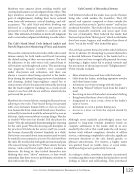
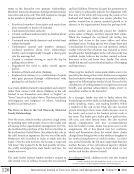
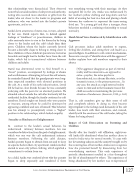
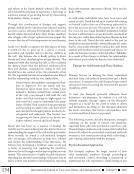
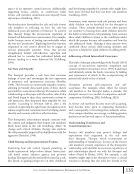
The study’s outcomes add to evidence for the benefits
Kate Amber and Roderick Dubrow-Marshall |An Investigation into the Efficacy of the PsychoSocial Quicksand Model™
For analysis across the participant groups, the survivor
and professional groups in the above table (*)were
combined as a Survivor &Professional group (n=14) to
allow for a survivor professional sample large enough
for analysis. Overall means and standard deviations
for answers to the five video evaluation questions and
total, for each video, are shown in Table 7 above.
Distribution analysis revealed that data on most of the
video evaluation questions were significantly positively
skewed (Shapiro-Wilk test p.05) across the participant
groups and videos. These results indicate that the
videos, and hence the model, were being more often
positively evaluated rather than negatively evaluated
across most of the evaluation questions. Results also
indicate that the model was being viewed favorably, in
general, by most of the participants in the study.
Analysis of differences in the video evaluations across
the participant groups (using the Kruskal-Wallis non-
parametric ANOVA) showed that on almost all the
video evaluation questions, there is no significant
difference in the mean ranks across the participant
groups. Along with the generally positively skewed
data, analysis indicates that, in general, the videos
appear to have been favorably viewed across the board.
Data on a total of seven of the video evaluation
questions, across different videos and questions, plus
one of the total evaluation scores (for Video 7), are
shown to be significant (p.05) (see Table 8 below).
Post-hoc analysis of the significant overall group-
based differences in the mean ranks in the above table
reveals that evaluations by the Survivor &Professional
combined group are not significantly higher than the
IPV &Cult survivors. However, the IPV &Cult survivor
group scores significantly higher than Cult survivors
on several videos for how much the videos are rated as
educating and as validating experiences. Also, the IPV
&Cult survivor group’s score is significantly higher
than IPV survivors on a few videos for how much the
videos empower their score is approaching significant
on a couple of videos for how much the videos are
viewed as educating. When comparing Cult survivor
participants with IPV survivors, the mean rank for
Cult survivors is always lower than for IPV survivors
and sometimes significantly so or approaching
significant (on four video evaluations). The Survivor
&Professional group also scored significantly higher
than IPV survivors on several videos for evaluations
that ask about what empowers and motivates. The
Survivor &Professional group also scored significantly
higher than Cult survivors on several videos on what
educates, validates, and motivates. Overall results
suggest that participants with a combined experience
of different types of coercive control (IPV and Cult
experiences) may appreciate the model more, and the
Survivor &Professional group particularly, compared
to survivors of one type of experience.
The study’s outcomes add to evidence for the benefits