27
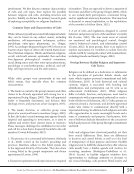
Jaime Simpson and Jodi Death |Pastor Sexual Exploitation of Adult Congregation Members
these overlapping roles are deliberately blurred to
normalise dependency and make boundary violations
appear legitimate or spiritually sanctioned (Celenza,
2004, 2011 Garland &Argueta, 2010). In this research,
although pastors served in a counselling role, only
one respondent reported that the pastor held a formal
counselling qualification. This is significant because it
indicates a lack of professional oversight in governance
and underscores the inherent risks associated with
unregulated pastoral counselling, as highlighted by one
respondent:
I had experienced severe clinical depression…
The pastor provided counselling support.
It was widely believed he was a trained
psychologist prior to entering into the ministry.
During a criminal investigation, this turned out
to be an unfounded qualification.
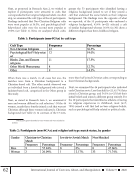
Furthermore, 32% of participants met with the pastor
for work-related meetings, while 43% interacted
with them in ministry contexts, illustrating how
perpetrators exploited their managerial authority to
breach ethical boundaries. For 33% of participants,
the pastor was viewed as a father figure, a dynamic that
aligns with the idea of professional incest, a term used
in therapeutic settings to describe sexual misconduct
by authority figures in positions of trust (Courtois &
Albert, 2021). Within faith communities, this dynamic
is particularly troubling, as it reinforces dependency,
submission, and loyalty, further deepening the power
imbalance between the pastor and the congregant. One
respondent observed:
He taught me many skills that at my young age
I did not have. My father was absent in my teen
life the pastor seemed to want to help guide
me and he did help me learn a lot of things.
This complicates my feelings towards him even
more.
By blurring pastoral, therapeutic, and managerial
roles, perpetrator pastors legitimise close personal
interactions, making it easier to disguise their
inappropriate behaviour as spiritual guidance (Celenza,
2004 Courtois &Alpert, 2021). This tactic highlights the
urgent need for clear professional boundaries, ethical
oversight, and independent reporting mechanisms to
prevent abuse within faith communities.
Tactic 4: Isolation
Isolation is a well-documented strategy in coercive
control (Stark, 2007) that prevents victims from seeking
help while strengthening the perpetrator’s influence
(Herman, 2023). This tactic aligns most closely with
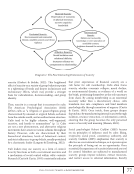
Stage 5, Priming the Target, in Sinnamon’s (2017)
model, where the perpetrator consolidates emotional
dependency and begins to normalise secrecy and
exclusivity. Isolation becomes a key mechanism for
priming the victim, ensuring the pastor’s influence
remains unchallenged by outside perspectives. While
Sinnamon (2017) emphasises the use of secrecy and
guilt to secure compliance, this study extends the model
by showing how isolation in faith communities is both
relational and spiritual, restricting access to support
networks and reframing separation from others as a
sign of divine intimacy or loyalty to the pastor.
Pastors strategically isolated congregation members
from other church leaders (62%), friends outside the
church (56%), friends inside the church (54%), and
family within the church (50%), all while befriending
those around them to create a network of allies who
could later be used to discredit the victim if allegations
arose. One respondent shared:
He encouraged me to seek advice from him and
not to trust my husband, my in-laws, my friends,
his wife.
Another stated:
The pastor convinced me that my husband
didn’t love me and that’s why he was away for
work so much.
This process results in resocialisation, gradually shifting
congregation members’ thoughts, beliefs, and values to
align with the pastors. One respondent described the
profound psychological impact of being so isolated,
stating:
I literally felt like he was ‘in my head.’ I couldn’t
think for myself anymore because the level of
his contact and bombardment was SO high.
At this stage, pastors foster a deep sense of dependency
by presenting themselves as the only trustworthy figure.
Jaime Simpson and Jodi Death |Pastor Sexual Exploitation of Adult Congregation Members
these overlapping roles are deliberately blurred to
normalise dependency and make boundary violations
appear legitimate or spiritually sanctioned (Celenza,
2004, 2011 Garland &Argueta, 2010). In this research,
although pastors served in a counselling role, only
one respondent reported that the pastor held a formal
counselling qualification. This is significant because it
indicates a lack of professional oversight in governance
and underscores the inherent risks associated with
unregulated pastoral counselling, as highlighted by one
respondent:
I had experienced severe clinical depression…
The pastor provided counselling support.
It was widely believed he was a trained
psychologist prior to entering into the ministry.
During a criminal investigation, this turned out
to be an unfounded qualification.
Furthermore, 32% of participants met with the pastor
for work-related meetings, while 43% interacted
with them in ministry contexts, illustrating how
perpetrators exploited their managerial authority to
breach ethical boundaries. For 33% of participants,
the pastor was viewed as a father figure, a dynamic that
aligns with the idea of professional incest, a term used
in therapeutic settings to describe sexual misconduct
by authority figures in positions of trust (Courtois &
Albert, 2021). Within faith communities, this dynamic
is particularly troubling, as it reinforces dependency,
submission, and loyalty, further deepening the power
imbalance between the pastor and the congregant. One
respondent observed:
He taught me many skills that at my young age
I did not have. My father was absent in my teen
life the pastor seemed to want to help guide
me and he did help me learn a lot of things.
This complicates my feelings towards him even
more.
By blurring pastoral, therapeutic, and managerial
roles, perpetrator pastors legitimise close personal
interactions, making it easier to disguise their
inappropriate behaviour as spiritual guidance (Celenza,
2004 Courtois &Alpert, 2021). This tactic highlights the
urgent need for clear professional boundaries, ethical
oversight, and independent reporting mechanisms to
prevent abuse within faith communities.
Tactic 4: Isolation
Isolation is a well-documented strategy in coercive
control (Stark, 2007) that prevents victims from seeking
help while strengthening the perpetrator’s influence
(Herman, 2023). This tactic aligns most closely with
Stage 5, Priming the Target, in Sinnamon’s (2017)
model, where the perpetrator consolidates emotional
dependency and begins to normalise secrecy and
exclusivity. Isolation becomes a key mechanism for
priming the victim, ensuring the pastor’s influence
remains unchallenged by outside perspectives. While
Sinnamon (2017) emphasises the use of secrecy and
guilt to secure compliance, this study extends the model
by showing how isolation in faith communities is both
relational and spiritual, restricting access to support
networks and reframing separation from others as a
sign of divine intimacy or loyalty to the pastor.
Pastors strategically isolated congregation members
from other church leaders (62%), friends outside the
church (56%), friends inside the church (54%), and
family within the church (50%), all while befriending
those around them to create a network of allies who
could later be used to discredit the victim if allegations
arose. One respondent shared:
He encouraged me to seek advice from him and
not to trust my husband, my in-laws, my friends,
his wife.
Another stated:
The pastor convinced me that my husband
didn’t love me and that’s why he was away for
work so much.
This process results in resocialisation, gradually shifting
congregation members’ thoughts, beliefs, and values to
align with the pastors. One respondent described the
profound psychological impact of being so isolated,
stating:
I literally felt like he was ‘in my head.’ I couldn’t
think for myself anymore because the level of
his contact and bombardment was SO high.
At this stage, pastors foster a deep sense of dependency
by presenting themselves as the only trustworthy figure.