International Journal of Coercion, Abuse, and Manipulation Volume 9 2026 6
the SAIGE Counseling Competencies and WPATH
Standards of Care into their practice, both of which
emphasize cultural humility, informed consent, and
identity-affirming approaches. Trauma-informed
care for TGD survivors must explicitly name and
counteract stigma at every level—through inclusive
language, visible affirmation, systemic advocacy,
and collaborative treatment planning. By doing so,
clinicians not only reduce the risk of malpractice but
also create therapeutic spaces where survivors can
reclaim agency, dignity, and relational safety.
Gaps in the Literature
Research often overlooks how trans women of color
and bisexual trans women face higher risks of sexual
and physical violence, focusing instead on White,
heterosexual TGD individuals (King et al., 2021
Messinger &Guadalupe-Diaz, 2021 NCAVP, 2016).
To obtain accurate data, studies need to include more
representative populations and address factors like
sexuality, socioeconomic status, and race to better
support T-IPV survivors.
Moreover, due to the evolving nature of gender identity,
many studies struggle to define TGD populations
operationally, which results in varied samples that
may exclude non-binary individuals and other gender-
nonconforming groups (de Vries, 2014 Marrow
et al., 2024). Additionally, the tendency towards
underreporting within the TGD community further
limits the availability of data for researchers. Studies
have shown that formal victim assistance services
and help-giving resources—such as police, healthcare
professionals, hotlines, and community shelters—are
significantly underutilized by T-IPV survivors, leaving
researchers with minimal data from these sources
(Kurdyla et al., 2021).
A Relational Framework
Given that IPV is an inherently violating and relationally
wounding experience, the counseling process and
counseling relationship should center on relational
safety and emotional security. Survivors, particularly
in the TGD community, often experience not only
the betrayal and harm from their partner but also
compounded disconnection from family, community,
and institutions that may already marginalize them
(Henry et al., 2021 Rogers, 2016 Singh &Moss,
2016). Many T-IPV survivors report feeling invisible
or disbelieved by service providers, law enforcement,
or even victim support spaces that center cisgender
narratives, which only serves to reify relational
alienation and internalized shame (Marrow et al., 2024
Beyer et al., 2022 Kussin-Shoptaw et al., 2017). For
these reasons, connection, care, and relational stability
must be centered when working with TGD survivors of
IPV (Bowling et al., 2020).
Mental health professionals are afforded the
distinct opportunity—and charged with the ethical
responsibility—to act as agents of change and
promote meaningful individual and social growth.
They are uniquely positioned to catalyze fundamental
systemic change and make meaningful contributions
to individual and public wellness. To meet these
standards and deliver effective services, clinicians
must actively advocate for their clients, both during
and outside the traditional 50-minute therapy hour. To
support counselors in this mission, the authors suggest
a seven-element relational model for working with
TGD survivors of violence and enhancing professional
competency.
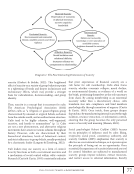
This model provides a non-linear framework of
treatment elements for clinicians to consider, which
can be adapted to individual needs and treatment goals.
These treatment recommendations can be remembered
using the acronym SINCERE: signs, information,
nuance, continuing education and advocacy,
resources, and establishing. At its core, SINCERE is
a trauma-informed framework that centers relational
safety (the intentional creation of emotionally secure,
identity-affirming, and socially embedded therapeutic
relationships) as the foundation for effective counseling
with survivors of T-IPV.
Signs
Clinicians must recognize the indicators of T-IPV
and remain vigilant about factors that could heighten
a client’s risk of exposure to violence. Signs of T-IPV
typically fall under five main categories: emotional
and psychological abuse, physical abuse, sexual abuse,
financial abuse, and gender-based abuse or exploitation
(King et al., 2021 Marrow et al., 2024). Someone
experiencing one or a combination of these five forms
the SAIGE Counseling Competencies and WPATH
Standards of Care into their practice, both of which
emphasize cultural humility, informed consent, and
identity-affirming approaches. Trauma-informed
care for TGD survivors must explicitly name and
counteract stigma at every level—through inclusive
language, visible affirmation, systemic advocacy,
and collaborative treatment planning. By doing so,
clinicians not only reduce the risk of malpractice but
also create therapeutic spaces where survivors can
reclaim agency, dignity, and relational safety.
Gaps in the Literature
Research often overlooks how trans women of color
and bisexual trans women face higher risks of sexual
and physical violence, focusing instead on White,
heterosexual TGD individuals (King et al., 2021
Messinger &Guadalupe-Diaz, 2021 NCAVP, 2016).
To obtain accurate data, studies need to include more
representative populations and address factors like
sexuality, socioeconomic status, and race to better
support T-IPV survivors.
Moreover, due to the evolving nature of gender identity,
many studies struggle to define TGD populations
operationally, which results in varied samples that
may exclude non-binary individuals and other gender-
nonconforming groups (de Vries, 2014 Marrow
et al., 2024). Additionally, the tendency towards
underreporting within the TGD community further
limits the availability of data for researchers. Studies
have shown that formal victim assistance services
and help-giving resources—such as police, healthcare
professionals, hotlines, and community shelters—are
significantly underutilized by T-IPV survivors, leaving
researchers with minimal data from these sources
(Kurdyla et al., 2021).
A Relational Framework
Given that IPV is an inherently violating and relationally
wounding experience, the counseling process and
counseling relationship should center on relational
safety and emotional security. Survivors, particularly
in the TGD community, often experience not only
the betrayal and harm from their partner but also
compounded disconnection from family, community,
and institutions that may already marginalize them
(Henry et al., 2021 Rogers, 2016 Singh &Moss,
2016). Many T-IPV survivors report feeling invisible
or disbelieved by service providers, law enforcement,
or even victim support spaces that center cisgender
narratives, which only serves to reify relational
alienation and internalized shame (Marrow et al., 2024
Beyer et al., 2022 Kussin-Shoptaw et al., 2017). For
these reasons, connection, care, and relational stability
must be centered when working with TGD survivors of
IPV (Bowling et al., 2020).
Mental health professionals are afforded the
distinct opportunity—and charged with the ethical
responsibility—to act as agents of change and
promote meaningful individual and social growth.
They are uniquely positioned to catalyze fundamental
systemic change and make meaningful contributions
to individual and public wellness. To meet these
standards and deliver effective services, clinicians
must actively advocate for their clients, both during
and outside the traditional 50-minute therapy hour. To
support counselors in this mission, the authors suggest
a seven-element relational model for working with
TGD survivors of violence and enhancing professional
competency.
This model provides a non-linear framework of
treatment elements for clinicians to consider, which
can be adapted to individual needs and treatment goals.
These treatment recommendations can be remembered
using the acronym SINCERE: signs, information,
nuance, continuing education and advocacy,
resources, and establishing. At its core, SINCERE is
a trauma-informed framework that centers relational
safety (the intentional creation of emotionally secure,
identity-affirming, and socially embedded therapeutic
relationships) as the foundation for effective counseling
with survivors of T-IPV.
Signs
Clinicians must recognize the indicators of T-IPV
and remain vigilant about factors that could heighten
a client’s risk of exposure to violence. Signs of T-IPV
typically fall under five main categories: emotional
and psychological abuse, physical abuse, sexual abuse,
financial abuse, and gender-based abuse or exploitation
(King et al., 2021 Marrow et al., 2024). Someone
experiencing one or a combination of these five forms