International Journal of Coercion, Abuse, and Manipulation Volume 9 2026 106
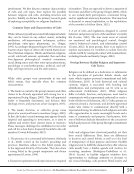
These considerations are particularly relevant when
studying high-demand religious groups where
emotionality and conformity are strongly elicited. In
such contexts, the concept of the rational actor is not
only inadequate but also misleading.
Ultimately, TRE stands on shaky ground in many
respects. By ignoring the realities of manipulation,
emotional involvement, cultural framing, and social
pressure, it loses its claim to neutrality. Although it
dresses itself up in a language of science, TRE represents
a clearly ideological position, closely aligned with the
deregulation claim and based on a rather romanticized
notion of individual autonomy.
Ideological Underpinning: Paleo-Libertarianism,
Cult Apologetics, and Soft Power
Libertarianism is a political philosophy centered on
the idea of individual freedom, minimal interference
by the state up to and including its complete abolition
(in this case, anarcho-capitalism), and the primacy of
the free market. In practice, it assumes that free market
transactions can replace the state in the provision of
all services, including security and the legal system
(Cooper, Binder, Kidder, 2024 Rothbard, 1982
Friedman, 1973 Slobodian, 2025). Broadly speaking,
there are two main variants: left-libertarianism, which
focuses on personal freedoms, such as free speech, sexual
autonomy, and civil liberties, and right-libertarianism,
which is predominantly economic in orientation and
emphasizes property rights and deregulation. The term
“paleo-libertarianism,” introduced by Lew Rockwell
in 1990, marks a significant shift within American
libertarian thought. It is a right-wing variant that
combines radical trust in the free market with a deep
commitment to traditional moral values. This school of
thought thus breaks away from cultural liberalism and
instead adheres to religious and familial values rooted
in pre-modern Christian doctrine. Influential figures
such as Ludwig von Mises and Murray Rothbard laid
the intellectual foundations for this current belief
by advocating a form of praxeological rationalism,
summarized in von Mises’s statement, “Human action
is always rational” (1949).
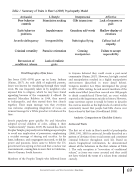
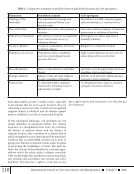
The Theory of Religious Economy (TRE) fits
perfectly with the paleo-libertarian assumptions. Both
approaches are based on a view of social life that sees
the state as an inappropriate constraint that prevents
the full development of human transactions. For both
views, individual decisions are inherently rational
and state intervention inherently suspect. From
this perspective, it is a logical conclusion for paleo-
libertarians that religion is a commodity and that even
coercive or abusive religious environments can be seen
as legitimate offerings that are not imposed but available
on the shelves of the spiritual supermarket. It seems
increasingly clear that this convergence is not limited
to a mirror image on the issue of religious freedom
that happens to morph into ideological support for the
actions of cult defenders, but often appears to be a kind
of intentional and pragmatic cultural alignment. The
conceptual and strategic parallels that link these two
areas are explained below.
A Shared Belief in Rational Action
Principle of Non-Aggression
The basis of libertarianism is the “principle of non-
aggression.” Based on the assumption shared by
libertarians and TRE theorists that individuals are
sovereign actors capable of making rational choices,
any individual or collective action that conflicts with
individual choices is aggression. Rothbard (1982)
asserts that an individual is his own master and that
any coercion—especially by the state—is illegitimate.
Similarly, cult apologists such as Richardson (1993) or
Zeller (2017), and quasi-cult apologists like Stark and
Finke (2000), tend to reject notions of undue influence
or coercive persuasion on the basis of individual
sovereignty and a notion of rationality that fits with
the libertarian idea of “praxeology.” The notion echoes
Hans-Hermann Hoppe’s concept of a “community of
alliance,” in which individuals are assumed to freely
choose their moral and social environment, regardless
of how hierarchical, exclusive, or totalitarian it may be.
Voluntary Slavery
The parallel between radical, conservative
libertarianism and the defense of cults becomes
complete and even clearer when we move from
the legitimacy of religious worship to the ethical
evaluation of the follower’s alienation. This is the issue
of “voluntary slavery.” Walter Block (2003) argues that
voluntary slavery should be legally permissible if it is
based on a consensual contract between adults. Based
These considerations are particularly relevant when
studying high-demand religious groups where
emotionality and conformity are strongly elicited. In
such contexts, the concept of the rational actor is not
only inadequate but also misleading.
Ultimately, TRE stands on shaky ground in many
respects. By ignoring the realities of manipulation,
emotional involvement, cultural framing, and social
pressure, it loses its claim to neutrality. Although it
dresses itself up in a language of science, TRE represents
a clearly ideological position, closely aligned with the
deregulation claim and based on a rather romanticized
notion of individual autonomy.
Ideological Underpinning: Paleo-Libertarianism,
Cult Apologetics, and Soft Power
Libertarianism is a political philosophy centered on
the idea of individual freedom, minimal interference
by the state up to and including its complete abolition
(in this case, anarcho-capitalism), and the primacy of
the free market. In practice, it assumes that free market
transactions can replace the state in the provision of
all services, including security and the legal system
(Cooper, Binder, Kidder, 2024 Rothbard, 1982
Friedman, 1973 Slobodian, 2025). Broadly speaking,
there are two main variants: left-libertarianism, which
focuses on personal freedoms, such as free speech, sexual
autonomy, and civil liberties, and right-libertarianism,
which is predominantly economic in orientation and
emphasizes property rights and deregulation. The term
“paleo-libertarianism,” introduced by Lew Rockwell
in 1990, marks a significant shift within American
libertarian thought. It is a right-wing variant that
combines radical trust in the free market with a deep
commitment to traditional moral values. This school of
thought thus breaks away from cultural liberalism and
instead adheres to religious and familial values rooted
in pre-modern Christian doctrine. Influential figures
such as Ludwig von Mises and Murray Rothbard laid
the intellectual foundations for this current belief
by advocating a form of praxeological rationalism,
summarized in von Mises’s statement, “Human action
is always rational” (1949).
The Theory of Religious Economy (TRE) fits
perfectly with the paleo-libertarian assumptions. Both
approaches are based on a view of social life that sees
the state as an inappropriate constraint that prevents
the full development of human transactions. For both
views, individual decisions are inherently rational
and state intervention inherently suspect. From
this perspective, it is a logical conclusion for paleo-
libertarians that religion is a commodity and that even
coercive or abusive religious environments can be seen
as legitimate offerings that are not imposed but available
on the shelves of the spiritual supermarket. It seems
increasingly clear that this convergence is not limited
to a mirror image on the issue of religious freedom
that happens to morph into ideological support for the
actions of cult defenders, but often appears to be a kind
of intentional and pragmatic cultural alignment. The
conceptual and strategic parallels that link these two
areas are explained below.
A Shared Belief in Rational Action
Principle of Non-Aggression
The basis of libertarianism is the “principle of non-
aggression.” Based on the assumption shared by
libertarians and TRE theorists that individuals are
sovereign actors capable of making rational choices,
any individual or collective action that conflicts with
individual choices is aggression. Rothbard (1982)
asserts that an individual is his own master and that
any coercion—especially by the state—is illegitimate.
Similarly, cult apologists such as Richardson (1993) or
Zeller (2017), and quasi-cult apologists like Stark and
Finke (2000), tend to reject notions of undue influence
or coercive persuasion on the basis of individual
sovereignty and a notion of rationality that fits with
the libertarian idea of “praxeology.” The notion echoes
Hans-Hermann Hoppe’s concept of a “community of
alliance,” in which individuals are assumed to freely
choose their moral and social environment, regardless
of how hierarchical, exclusive, or totalitarian it may be.
Voluntary Slavery
The parallel between radical, conservative
libertarianism and the defense of cults becomes
complete and even clearer when we move from
the legitimacy of religious worship to the ethical
evaluation of the follower’s alienation. This is the issue
of “voluntary slavery.” Walter Block (2003) argues that
voluntary slavery should be legally permissible if it is
based on a consensual contract between adults. Based