63
Yasmin Ali Williams and Chitra Raghavan |Do Prior Religious Beliefs Play A Role in Cult Susceptibility
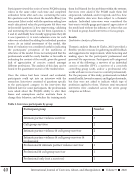
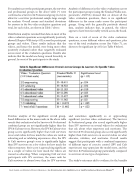
As indicated in Research Aims 2a and 2b, we examined
whether the mean age joined and mean years of time
involved in a cult differed by whether participants
selected a cult that matched their previous religious
background. The participants in the Christian-to-
Christian match group joined on average at 21.95
years old and stayed for an average of 16.9 years (n=1
excluded for missing information). The non-matched
group joined on average at 25.48 years old (n=4
excluded for missing information) and stayed for an
average of 12.15 years.
For our participants’ post-cult religious affiliation
(n=113, n=2 excluded for missing information), 25.7%
(n=29) stated they consider themselves religious with
19.5% (n=22) stating they consider themselves affiliated
with organized religion. Of the 113 participants, 69.0%
(n=78) stated they consider themselves spiritual.
Discussion
In the current study, we sought to understand the role of
prior religious views on susceptibility to cult affiliation.
As a start, we examined the number of participants
that came from a religious background prior to joining
a cultic group. Unexpectedly, a significant minority
identified as being born into and/or raised in a cult. This
suggests that intergenerational transmission is common
within cultic communities or, alternatively, we may have
oversampled in this participant pool—which begets
the interesting question of whether such participants
wished to tell their perhaps poorly understood stories.
Overall, Neo-Christian religious groups were by far the
most transmitted group. Participants indicated lengthy
engagement, and, in one case, membership reached up
to seven generations. The longevity of membership in
groups that are exploitative is not well understood. For
example, are SGAs able to reenter civil society without
significant hardship? What kinds of identity and
psychological damage might exploitative cults create
when someone is raised in a cult? These results suggest
that future research should specifically examine SGAs
and cults’ ability to continually entrap and exploit its
members and families.
When we interviewed those participants who were non-
SGAs and who joined a cult as adults, nearly everyone
reported a religious background. This number, around
84%, is slightly higher than the national average of
Americans who identify as having a formal religion
(77% of Americans [Wormald, 2022]) and a sample
of roughly three-quarters of Christians also suggests
a higher occurrence of Christians in this sample than
in the national sample (63% of Americans [Wormald,
2022]). Additionally, participants who identified as
atheist were around 16%, which is slightly lower than
the national average of about 23%. Taken together, these
results narratively suggest a participant profile that is
slightly more identified with religion and slightly less
atheist than the national average. Broadly, this picture
suggests that prior religious beliefs may play some role
in cult affiliation. These findings suggest that a more
detailed examination of religious identification prior
to cult membership including information on prior
beliefs, commitment, and exposure to formal religion
prior to joining can address this first question more
stringently than we are able to with descriptive data.
An alternate explanation is that prior religious belief
does not influence cult susceptibility at all. Rather
cults exist because most Americans have some sort of
religious belief (primarily Christian) and corrupt and
abusive leaders pervert religious practices for their
own benefit. Membership is simply drawn from a
larger culture that is already predisposed to religion,
with targeted seduction and persuasion of members
who are vulnerable for different reasons.
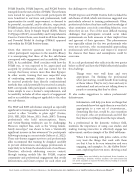
We had expected that participants would gravitate
towards their own religious beliefs, but we found that
just less than half stayed within their religion of origin
the other half explored different groups including
psychological and self-help related and other world
phenomena. The second most popular cult type after
Christian-based cults was psychological/self-help-
related. While the overall numbers were still quite
low (n=12, 10.43%), this trend is possibly due to the
prevalence of psychology in the media, school, and
everyday life and the importance of psychology as a tool
of self-actualization in modern life. While the numbers
are relatively modest, these self-help groups operate
by masquerading as credible forms of psychology. For
example, one group was led by two counselors who
practiced love-bombing: a coordinated technique
that involves flattery, displays of affection, extreme
attention, and touching (Coates, 2011 Singer, 2003).
The leaders offered free counseling sessions with
the promise of healing, but the participant reported
Yasmin Ali Williams and Chitra Raghavan |Do Prior Religious Beliefs Play A Role in Cult Susceptibility
As indicated in Research Aims 2a and 2b, we examined
whether the mean age joined and mean years of time
involved in a cult differed by whether participants
selected a cult that matched their previous religious
background. The participants in the Christian-to-
Christian match group joined on average at 21.95
years old and stayed for an average of 16.9 years (n=1
excluded for missing information). The non-matched
group joined on average at 25.48 years old (n=4
excluded for missing information) and stayed for an
average of 12.15 years.
For our participants’ post-cult religious affiliation
(n=113, n=2 excluded for missing information), 25.7%
(n=29) stated they consider themselves religious with
19.5% (n=22) stating they consider themselves affiliated
with organized religion. Of the 113 participants, 69.0%
(n=78) stated they consider themselves spiritual.
Discussion
In the current study, we sought to understand the role of
prior religious views on susceptibility to cult affiliation.
As a start, we examined the number of participants
that came from a religious background prior to joining
a cultic group. Unexpectedly, a significant minority
identified as being born into and/or raised in a cult. This
suggests that intergenerational transmission is common
within cultic communities or, alternatively, we may have
oversampled in this participant pool—which begets
the interesting question of whether such participants
wished to tell their perhaps poorly understood stories.
Overall, Neo-Christian religious groups were by far the
most transmitted group. Participants indicated lengthy
engagement, and, in one case, membership reached up
to seven generations. The longevity of membership in
groups that are exploitative is not well understood. For
example, are SGAs able to reenter civil society without
significant hardship? What kinds of identity and
psychological damage might exploitative cults create
when someone is raised in a cult? These results suggest
that future research should specifically examine SGAs
and cults’ ability to continually entrap and exploit its
members and families.
When we interviewed those participants who were non-
SGAs and who joined a cult as adults, nearly everyone
reported a religious background. This number, around
84%, is slightly higher than the national average of
Americans who identify as having a formal religion
(77% of Americans [Wormald, 2022]) and a sample
of roughly three-quarters of Christians also suggests
a higher occurrence of Christians in this sample than
in the national sample (63% of Americans [Wormald,
2022]). Additionally, participants who identified as
atheist were around 16%, which is slightly lower than
the national average of about 23%. Taken together, these
results narratively suggest a participant profile that is
slightly more identified with religion and slightly less
atheist than the national average. Broadly, this picture
suggests that prior religious beliefs may play some role
in cult affiliation. These findings suggest that a more
detailed examination of religious identification prior
to cult membership including information on prior
beliefs, commitment, and exposure to formal religion
prior to joining can address this first question more
stringently than we are able to with descriptive data.
An alternate explanation is that prior religious belief
does not influence cult susceptibility at all. Rather
cults exist because most Americans have some sort of
religious belief (primarily Christian) and corrupt and
abusive leaders pervert religious practices for their
own benefit. Membership is simply drawn from a
larger culture that is already predisposed to religion,
with targeted seduction and persuasion of members
who are vulnerable for different reasons.
We had expected that participants would gravitate
towards their own religious beliefs, but we found that
just less than half stayed within their religion of origin
the other half explored different groups including
psychological and self-help related and other world
phenomena. The second most popular cult type after
Christian-based cults was psychological/self-help-
related. While the overall numbers were still quite
low (n=12, 10.43%), this trend is possibly due to the
prevalence of psychology in the media, school, and
everyday life and the importance of psychology as a tool
of self-actualization in modern life. While the numbers
are relatively modest, these self-help groups operate
by masquerading as credible forms of psychology. For
example, one group was led by two counselors who
practiced love-bombing: a coordinated technique
that involves flattery, displays of affection, extreme
attention, and touching (Coates, 2011 Singer, 2003).
The leaders offered free counseling sessions with
the promise of healing, but the participant reported