99
Andréa Lagorse |Understanding Women’s Experiences in Cultic Groups in Québec
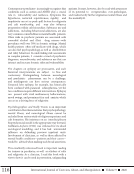
particular importance is understanding the pervasive
control they have endured during their time within the
cultic group and the specific repercussions that have
ensued. This understanding is crucial for effectively
engaging with these women and preventing potential
secondary victimization arising from inadequate
intervention.
Conclusion
In conclusion, I argue that cultic groups are a specific
context in which women are subject to male authority,
and using the term “patriarchal communities” to
describe them is possible. In this context, coercive
control theory seems relevant for understanding
women’s experiences within cultic groups. First, it
appears to be a context that resembles an intimate
partner violence context, but what makes it different is
that control comes from both the leader and the other
members of the group. My contribution, therefore, has
been to show that this theory can also help shed light
on the experiences of women in cultic groups. In fact,
the tactics described by Stark (2007) to understand the
implementation of coercive control in the context of
domestic violence are all found in the testimonies of
the women I met. All discussed violence, intimidation,
isolation, and complete control of their lives while they
were cult members. This framework of coercive control
helps us understand why women stay, because they
are subjected to constant control and have no positive
prospects of leaving.
Adopting a feminist lens has allowed movement
beyond a simplistic or pathologizing view of women’s
involvement in cultic groups to consider how gendered
power structures shape their experiences. It also brings
attention to the structural and symbolic violence that
underpins the mechanisms of coercive control in these
contexts, often reinforcing traditional and patriarchal
ideals of womanhood (Lamboley et al., 2022 Whitsett
&Post Rosow, 2020).
Finally, for several participants, attendance at social
institutions or formal support resources encouraged
them to think critically about the group’s beliefs, which
eventually led to their exit from the group. These kinds
of support underline the importance of developing
appropriate support services for women who have
experienced control in a cultic context. The results of
this research highlighted the difficulty women have in
accessing formal support resources. This finding points
to a vital need for prevention, awareness-raising, and,
above all, training on the issues surrounding the specific
experiences of women in cultic contexts, whether for
young people, parents, or practitioners.
Andréa Lagorse |Understanding Women’s Experiences in Cultic Groups in Québec
particular importance is understanding the pervasive
control they have endured during their time within the
cultic group and the specific repercussions that have
ensued. This understanding is crucial for effectively
engaging with these women and preventing potential
secondary victimization arising from inadequate
intervention.
Conclusion
In conclusion, I argue that cultic groups are a specific
context in which women are subject to male authority,
and using the term “patriarchal communities” to
describe them is possible. In this context, coercive
control theory seems relevant for understanding
women’s experiences within cultic groups. First, it
appears to be a context that resembles an intimate
partner violence context, but what makes it different is
that control comes from both the leader and the other
members of the group. My contribution, therefore, has
been to show that this theory can also help shed light
on the experiences of women in cultic groups. In fact,
the tactics described by Stark (2007) to understand the
implementation of coercive control in the context of
domestic violence are all found in the testimonies of
the women I met. All discussed violence, intimidation,
isolation, and complete control of their lives while they
were cult members. This framework of coercive control
helps us understand why women stay, because they
are subjected to constant control and have no positive
prospects of leaving.
Adopting a feminist lens has allowed movement
beyond a simplistic or pathologizing view of women’s
involvement in cultic groups to consider how gendered
power structures shape their experiences. It also brings
attention to the structural and symbolic violence that
underpins the mechanisms of coercive control in these
contexts, often reinforcing traditional and patriarchal
ideals of womanhood (Lamboley et al., 2022 Whitsett
&Post Rosow, 2020).
Finally, for several participants, attendance at social
institutions or formal support resources encouraged
them to think critically about the group’s beliefs, which
eventually led to their exit from the group. These kinds
of support underline the importance of developing
appropriate support services for women who have
experienced control in a cultic context. The results of
this research highlighted the difficulty women have in
accessing formal support resources. This finding points
to a vital need for prevention, awareness-raising, and,
above all, training on the issues surrounding the specific
experiences of women in cultic contexts, whether for
young people, parents, or practitioners.