75
Zahra Choudhury |Scarcity as Latent Architecture
Scarcity as Latent Architecture:
Parasociality, Digital In-Groups, and Cultic Radicalization
Zahra Choudhury1
Abstract: Scarcity is not merely an economic condition it is a psychological and sociotechnical architecture that shapes how
humans perceive threat, form identities, and become embedded in radical groups. This paper reframes scarcity (material,
informational, affective, and ecological) as a latent condition that amplifies mechanisms of cultic manipulation, including
parasocial attachments, algorithmic amplification, and identity fusion. I propose a multi-level model in which scarcity
functions as a background ecology rather than a singular cause, intensifying cognitive narrowing, emotional contagion, and
digital in-group formation. Using QAnon and other digitally networked cultic movements as illustrative cases, this paper
positions scarcity as a conceptual provocation for cultic studies, an invitation to integrate psychological, technological, and
cultural mechanisms into a unified framework of deprivation-driven radicalization.
Keywords: scarcity, cults, parasocial relationships, radicalization, algorithm, framework
1 Correspondence concerning this article should be addressed to Zahra Choudhury, Email: zc2351@nyu.edu
The power of population is so superior to the power of
the earth to produce subsistence for man.
(Malthus, 1798)
Scarcity has long haunted classical thought, political
economy, and human psychology. Malthus (1798)
warned of the relentless tension between population
growth and limited resources, a theme echoed
in modern discourses on economic inequality,
environmental collapse, and social fragmentation.
Yet, while scarcity has been recognized as a driver of
material deprivation, psychological research has only
recently begun to uncover its profound cognitive and
social effects. Scarcity narrows attentional bandwidth,
increases threat sensitivity, and constrains mental
flexibility, reshaping not only individual decision-
making but also the collective dynamics of identity and
belonging (Mani, Mullainathan, Shafir, &Zhao, 2013
Shah, Mullainathan, &Shafir, 2012).
Scarcity may have driven early human adaptations
and decision-making, with research showing resource
scarcity drove lethal aggression in prehistoric human
societies (Allen et. al, 2016). Contemporary ever-
occurring events, including inflation, war, and supply
chain issues for basic items in a post-pandemic world,
further illustrate troubling trends towards real-world
scarcity. The cost-of-living crisis is not the only scarcity
concern for the modern human in today’s highly
digitized and algorithmically controlled echo-chamber
reality, the contemporary human also contends with a
scarcity of information and critical thinking. Scarcity
may, after all, possess a deeper function. Going beyond
merely a situational stressor, it is a cognitive and social
ecology that organizes how people interpret reality,
seek belonging, and respond to perceived threats in
both real-world and digital spaces.
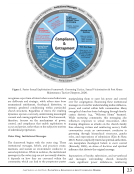
This paper argues that scarcity is more than a
background variable. It is a latent architecture that
provides the cognitive, emotional, and social conditions
under which parasocial attachment, algorithmic
reinforcement, and cultic belonging converge. When
informational overload, social isolation, and ecological
anxiety intersect with economic precarity, they generate
an environment primed for radicalization. Digital
ecosystems exploit this vulnerability, transforming
deprivation into ideological entrapment. Weaponizing
real fears of scarcity and offering interpersonal
fulfillment that is often absent in highly industrialized
societies, extremist groups may become cohesive and
further radicalized.
By integrating psychological theory, media studies,
and cultural analysis, I argue that scarcity binds
together disparate mechanisms of manipulation into a
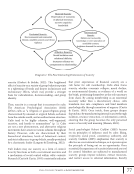
coherent framework, proposing an integrative model
that unites psychological, cultural, and technological
mechanisms under a single conceptual lens. Rather
than claiming sufficiency, this article asks scholars to
doi: 10.54208/1000/0009/006
Zahra Choudhury |Scarcity as Latent Architecture
Scarcity as Latent Architecture:
Parasociality, Digital In-Groups, and Cultic Radicalization
Zahra Choudhury1
Abstract: Scarcity is not merely an economic condition it is a psychological and sociotechnical architecture that shapes how
humans perceive threat, form identities, and become embedded in radical groups. This paper reframes scarcity (material,
informational, affective, and ecological) as a latent condition that amplifies mechanisms of cultic manipulation, including
parasocial attachments, algorithmic amplification, and identity fusion. I propose a multi-level model in which scarcity
functions as a background ecology rather than a singular cause, intensifying cognitive narrowing, emotional contagion, and
digital in-group formation. Using QAnon and other digitally networked cultic movements as illustrative cases, this paper
positions scarcity as a conceptual provocation for cultic studies, an invitation to integrate psychological, technological, and
cultural mechanisms into a unified framework of deprivation-driven radicalization.
Keywords: scarcity, cults, parasocial relationships, radicalization, algorithm, framework
1 Correspondence concerning this article should be addressed to Zahra Choudhury, Email: zc2351@nyu.edu
The power of population is so superior to the power of
the earth to produce subsistence for man.
(Malthus, 1798)
Scarcity has long haunted classical thought, political
economy, and human psychology. Malthus (1798)
warned of the relentless tension between population
growth and limited resources, a theme echoed
in modern discourses on economic inequality,
environmental collapse, and social fragmentation.
Yet, while scarcity has been recognized as a driver of
material deprivation, psychological research has only
recently begun to uncover its profound cognitive and
social effects. Scarcity narrows attentional bandwidth,
increases threat sensitivity, and constrains mental
flexibility, reshaping not only individual decision-
making but also the collective dynamics of identity and
belonging (Mani, Mullainathan, Shafir, &Zhao, 2013
Shah, Mullainathan, &Shafir, 2012).
Scarcity may have driven early human adaptations
and decision-making, with research showing resource
scarcity drove lethal aggression in prehistoric human
societies (Allen et. al, 2016). Contemporary ever-
occurring events, including inflation, war, and supply
chain issues for basic items in a post-pandemic world,
further illustrate troubling trends towards real-world
scarcity. The cost-of-living crisis is not the only scarcity
concern for the modern human in today’s highly
digitized and algorithmically controlled echo-chamber
reality, the contemporary human also contends with a
scarcity of information and critical thinking. Scarcity
may, after all, possess a deeper function. Going beyond
merely a situational stressor, it is a cognitive and social
ecology that organizes how people interpret reality,
seek belonging, and respond to perceived threats in
both real-world and digital spaces.
This paper argues that scarcity is more than a
background variable. It is a latent architecture that
provides the cognitive, emotional, and social conditions
under which parasocial attachment, algorithmic
reinforcement, and cultic belonging converge. When
informational overload, social isolation, and ecological
anxiety intersect with economic precarity, they generate
an environment primed for radicalization. Digital
ecosystems exploit this vulnerability, transforming
deprivation into ideological entrapment. Weaponizing
real fears of scarcity and offering interpersonal
fulfillment that is often absent in highly industrialized
societies, extremist groups may become cohesive and
further radicalized.
By integrating psychological theory, media studies,
and cultural analysis, I argue that scarcity binds
together disparate mechanisms of manipulation into a
coherent framework, proposing an integrative model
that unites psychological, cultural, and technological
mechanisms under a single conceptual lens. Rather
than claiming sufficiency, this article asks scholars to
doi: 10.54208/1000/0009/006