International Journal of Coercion, Abuse, and Manipulation Volume 9 2026 44
While participants who are professionals suggested
training them sensitively, survivors often preferred
a more confrontational approach. Participants
interviewed, whether survivors, professionals, or
both, emphasized problematic, widespread bias, lack
of training, and minimal, if any, clear professional
understanding of coercive control. Interviewees
highlighted how these challenges grew when
professionals were unable to accept the reality of glaring
systemic failure. In response to the question, “Did
you feel like what the system did was worse, on par,
or not quite as bad as what the perpetrator did?” P12
responded as follows regarding the female detective’s
investigation of her rapist in HvsF: “It was almost
worse, worse because it shook my belief in justice...I
mean it was a sex crime detective, and it was a female.
She just...She tried to gaslight me.”
Participants concluded from victim-blaming responses
like this that contextualizing coercive control adequately
within systems is an immediate high priority. The sub-
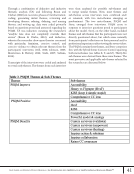
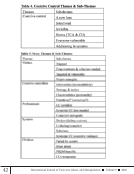
theme Comprehensive CC Lens is integral to the PSQM
and appears within several themes. Interviewees viewed
this sub-theme as mandatory to protect survivors.
The CC Lens contextualizes the major concepts of
coercive control into a new lens through which system
professionals may better perceive situations and
improve system-wide policies and procedures.
P5, an extremist group survivor and survivor of
IPV, discusses DARVO (deny, attack, reverse victim
and offender), which is a key component of the
model. DARVO compounds survivors’ trauma when
professionals fail to appropriately contextualize
coercive control and recognize that survivors’
responses are adaptations to coercive control, rather
than character defects. The following quote is from the
Comprehensive CC subtheme.
footage...a lot of learners...need it to be engaging.
When you’re going through something like
this, you’re incredibly incapacitated...you can’t
speak up for yourself. You need somebody else
to do it for you. And things don’t make sense,
and you can’t express yourself clearly. And they
(professionals) just use that as more ammunition
against you. “See, she can’t remember stuff.
She’s incoherent. She’s inconsistent. She must
be lying.” (P5)
P5’s quote also includes themes and sub-themes from
the Story meta-theme. Targeted &Vulnerable (T&V)
under the Victim and Professional Arrogance (PA) sub-
themes under the Systems theme are associated with
systemic coercive control and institutional betrayal
(Smith &Freyd, 2014).
KISS, the third accessibility sub-theme recommends
to “keep it [the PSQM training] simple, stupid.” P10,
a cult and IPV survivor and professional, discusses
this sub-theme within PSQM Positive and adds the
sub-theme Powerful Model &Analogy (PM&A), “The
quicksand model’s brilliant, because it’s easy for the
mind to understand it. And, also, the same with the
videos.” Every interviewee found the quicksand model
and/or analogy to be powerful, making PM&A one of
the study’s most pervasive sub-themes as the following
quotes illustrate.
Participants showed appreciation for simplifying
coercive control’s complexity, facilitating systemic
change, and validating and empowering survivors. P7
states, “It summarized relevant models in a framework
that made clear sense to those who are familiar as well
as new to the concept.” P9 reiterated:
Another quote covers the sub-themes Centers Survivors
(Empowers) and PM&A under PSQM Benefits and
PSQM Positive respectively.
Participants illustrate how centering survivors benefits
them in three important ways: through empowerment,
validation, and healing, under the Validates subtheme.
P5 stated, “Because that is what happened to me.
So, just seeing the words on the page, reflecting my
own experience, that...really hit home.” P2 reported
similarly, “That I knew I wasn’t crazy. I’ve always
known it, but just validated... ‘You’ve always known
Walking through the model was really exciting
to me because I thought, “Oh my gosh! This is
another way we can put that experience into
words for people who can actually help people
who were like me.” So, I’m really excited!”
The double-bind one...“Oh, this is describing
exactly how, no matter what, you can’t win...Oh,
I’m losing no matter what I do.” And that was
actually really empowering because I remember
thinking “Oh, if I’m gonna lose either way, then
I might as well get out, right?” (P9)
While participants who are professionals suggested
training them sensitively, survivors often preferred
a more confrontational approach. Participants
interviewed, whether survivors, professionals, or
both, emphasized problematic, widespread bias, lack
of training, and minimal, if any, clear professional
understanding of coercive control. Interviewees
highlighted how these challenges grew when
professionals were unable to accept the reality of glaring
systemic failure. In response to the question, “Did
you feel like what the system did was worse, on par,
or not quite as bad as what the perpetrator did?” P12
responded as follows regarding the female detective’s
investigation of her rapist in HvsF: “It was almost
worse, worse because it shook my belief in justice...I
mean it was a sex crime detective, and it was a female.
She just...She tried to gaslight me.”
Participants concluded from victim-blaming responses
like this that contextualizing coercive control adequately
within systems is an immediate high priority. The sub-
theme Comprehensive CC Lens is integral to the PSQM
and appears within several themes. Interviewees viewed
this sub-theme as mandatory to protect survivors.
The CC Lens contextualizes the major concepts of
coercive control into a new lens through which system
professionals may better perceive situations and
improve system-wide policies and procedures.
P5, an extremist group survivor and survivor of
IPV, discusses DARVO (deny, attack, reverse victim
and offender), which is a key component of the
model. DARVO compounds survivors’ trauma when
professionals fail to appropriately contextualize
coercive control and recognize that survivors’
responses are adaptations to coercive control, rather
than character defects. The following quote is from the
Comprehensive CC subtheme.
footage...a lot of learners...need it to be engaging.
When you’re going through something like
this, you’re incredibly incapacitated...you can’t
speak up for yourself. You need somebody else
to do it for you. And things don’t make sense,
and you can’t express yourself clearly. And they
(professionals) just use that as more ammunition
against you. “See, she can’t remember stuff.
She’s incoherent. She’s inconsistent. She must
be lying.” (P5)
P5’s quote also includes themes and sub-themes from
the Story meta-theme. Targeted &Vulnerable (T&V)
under the Victim and Professional Arrogance (PA) sub-
themes under the Systems theme are associated with
systemic coercive control and institutional betrayal
(Smith &Freyd, 2014).
KISS, the third accessibility sub-theme recommends
to “keep it [the PSQM training] simple, stupid.” P10,
a cult and IPV survivor and professional, discusses
this sub-theme within PSQM Positive and adds the
sub-theme Powerful Model &Analogy (PM&A), “The
quicksand model’s brilliant, because it’s easy for the
mind to understand it. And, also, the same with the
videos.” Every interviewee found the quicksand model
and/or analogy to be powerful, making PM&A one of
the study’s most pervasive sub-themes as the following
quotes illustrate.
Participants showed appreciation for simplifying
coercive control’s complexity, facilitating systemic
change, and validating and empowering survivors. P7
states, “It summarized relevant models in a framework
that made clear sense to those who are familiar as well
as new to the concept.” P9 reiterated:
Another quote covers the sub-themes Centers Survivors
(Empowers) and PM&A under PSQM Benefits and
PSQM Positive respectively.
Participants illustrate how centering survivors benefits
them in three important ways: through empowerment,
validation, and healing, under the Validates subtheme.
P5 stated, “Because that is what happened to me.
So, just seeing the words on the page, reflecting my
own experience, that...really hit home.” P2 reported
similarly, “That I knew I wasn’t crazy. I’ve always
known it, but just validated... ‘You’ve always known
Walking through the model was really exciting
to me because I thought, “Oh my gosh! This is
another way we can put that experience into
words for people who can actually help people
who were like me.” So, I’m really excited!”
The double-bind one...“Oh, this is describing
exactly how, no matter what, you can’t win...Oh,
I’m losing no matter what I do.” And that was
actually really empowering because I remember
thinking “Oh, if I’m gonna lose either way, then
I might as well get out, right?” (P9)