International Journal of Coercion, Abuse, and Manipulation Volume 9 2026 40
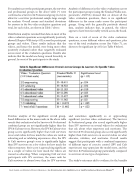
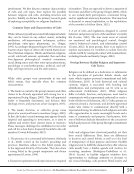
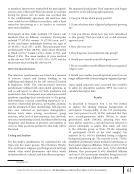
Participants viewed the series of seven PSQM training
videos in the same order each time and completed
evaluation forms after each one, containing the same
five questions each time about the model’s efficacy (on
nine-point Likert scale) with the questions asking how
much educational value the participants felt there was
in the model (question 1), how empowering, validating
and motivating the model was for them (questions 2,
3 and 4) and finally how visually appropriate they felt
it was (question 5). A total evaluation score for each
video was calculated by adding the individual question
scores. As an initial assessment of the model, this
form of evaluation was considered useful in indicating
the participants’ perception of the usefulness or
otherwise of the model. It was not anticipated that the
professionals would be overly familiar or favorable in
evaluating the content of the model, given the general
lack of appreciation of coercive control amongst
different professions. The analysis of this data can be
found in the quantitative section of the results below.
Once the videos had been viewed and evaluated,
participants could opt into an interview with the
researcher. Interviews consisted of questions specific
to the participant’s category. In the interviews that
followed later for some participants, the professionals
were asked about the PSQM’s ability to alter their
biases and assumptions and/or motivate them to
change their behavior, and whether the training made
them feel blamed for the problems within the systems.
Survivors were asked if the PSQM made them feel
empowered, validated, and/or inspired, and if so, how.
The qualitative data were then subject to a thematic
analysis. Individual interviews were considered the
best way to initially gauge participants’ appreciation of
the model and without the influence of others that can
be found in group-based interviews or focus groups.
Results
Qualitative Analysis of Interviews
Thematic analysis (Braun &Clarke, 2013) provided a
flexible, yet direct means for gathering model feedback
and suggestions for improvement, while honoring and
making space for the participants’ professional and
personal life experiences. Participants self-categorized
as one of the following: a survivor of an individual
coercive controller (IPV), a survivor of a coercively
controlling group (cult), and/or a professional who
works with survivors of coercive control (professional).
For the purposes of this study, professionals included
mental health, law enforcement, and legal professionals,
but they were not asked to indicate which type of
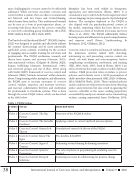
profession applied to them. Thirteen semi-structured
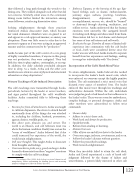
interviews were conducted across the seven group
categories as follows.
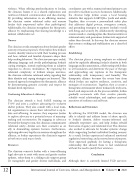
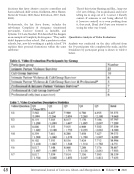
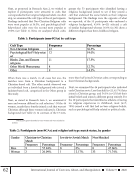
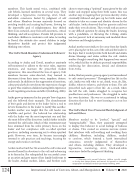
Participant group Number
Intimate partner violence survivor 3
Cult group survivor 2
Intimate partner violence &cult group survivor 2
Intimate partner violence &cult group survivor &
professional
2
Professional &intimate partner violence survivor 1
Professional &cult group survivor 1
Professional only (not a survivor) 2
Table 2. Interview participants by group
Participants viewed the series of seven PSQM training
videos in the same order each time and completed
evaluation forms after each one, containing the same
five questions each time about the model’s efficacy (on
nine-point Likert scale) with the questions asking how
much educational value the participants felt there was
in the model (question 1), how empowering, validating
and motivating the model was for them (questions 2,
3 and 4) and finally how visually appropriate they felt
it was (question 5). A total evaluation score for each
video was calculated by adding the individual question
scores. As an initial assessment of the model, this
form of evaluation was considered useful in indicating
the participants’ perception of the usefulness or
otherwise of the model. It was not anticipated that the
professionals would be overly familiar or favorable in
evaluating the content of the model, given the general
lack of appreciation of coercive control amongst
different professions. The analysis of this data can be
found in the quantitative section of the results below.
Once the videos had been viewed and evaluated,
participants could opt into an interview with the
researcher. Interviews consisted of questions specific
to the participant’s category. In the interviews that
followed later for some participants, the professionals
were asked about the PSQM’s ability to alter their
biases and assumptions and/or motivate them to
change their behavior, and whether the training made
them feel blamed for the problems within the systems.
Survivors were asked if the PSQM made them feel
empowered, validated, and/or inspired, and if so, how.
The qualitative data were then subject to a thematic
analysis. Individual interviews were considered the
best way to initially gauge participants’ appreciation of
the model and without the influence of others that can
be found in group-based interviews or focus groups.
Results
Qualitative Analysis of Interviews
Thematic analysis (Braun &Clarke, 2013) provided a
flexible, yet direct means for gathering model feedback
and suggestions for improvement, while honoring and
making space for the participants’ professional and
personal life experiences. Participants self-categorized
as one of the following: a survivor of an individual
coercive controller (IPV), a survivor of a coercively
controlling group (cult), and/or a professional who
works with survivors of coercive control (professional).
For the purposes of this study, professionals included
mental health, law enforcement, and legal professionals,
but they were not asked to indicate which type of
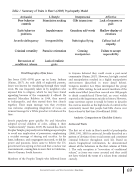
profession applied to them. Thirteen semi-structured
interviews were conducted across the seven group
categories as follows.
Participant group Number
Intimate partner violence survivor 3
Cult group survivor 2
Intimate partner violence &cult group survivor 2
Intimate partner violence &cult group survivor &
professional
2
Professional &intimate partner violence survivor 1
Professional &cult group survivor 1
Professional only (not a survivor) 2
Table 2. Interview participants by group