International Journal of Coercion, Abuse, and Manipulation Volume 9 2026 18
Pastor Sexual Exploitation of Adult
Congregation Members
Jaime Simpson1 and Jodi Death2
Abstract: This article examines the Pastor Sexual Exploitation Framework, developed from the lived experiences of adult
congregation members who were victims of sexual violence perpetrated by pastors or church leaders within Evangelical and
Pentecostal Christian faith communities in Australia. Sexual grooming and coercion of adults by pastors remain under-
researched phenomena, with no comprehensive examination or national data on the patterns and tactics used by pastors to
coerce sexual activity from adults within their congregations. This exploratory study addresses this gap by drawing from the
responses of thirty-three participants who completed an online survey, which included both closed and open-ended questions.
The findings reveal a clear pattern of ongoing grooming tactics and coercive controlling behaviours that lead to the systemic
entrapment of adult congregation members. Furthermore, significant harms were reported, impacting the respondents’
spiritual, psychological, physical, relational, financial, and emotional well-being. This research frames pastor sexual misconduct
involving adult congregation members as sexual coercion and sexual exploitation, placing their experiences within the context
of gender-based sexual violence.
Keywords: adult clergy sexual abuse adult sexual grooming clergy sexual misconduct #churchtoo DARVO Evangelical,
Pentecostal Christian faith communities.
1 Corresponding author. Jaime.Simpson@uon.edu.au
Master of Philosophy, Master of Counselling, Bachelor of Counselling, Graduate Cert Domestic Violence
2 Associate Professor, Faculty of Creative Industries, Education and Social Justice, Queensland University of Technology, Queensland
Clergy-perpetrated child sexual grooming has been
extensively examined in academic research. However,
adult clergy sexual grooming remains significantly
underexplored despite its profound impacts on
survivors. In this article, the terms pastor and clergy
are used interchangeably to refer to individuals who
hold positions of leadership and authority within
Christian faith communities. When a member of the
clergy abuses their position of authority to groom and
sexually exploit an adult congregant, these actions are
often dismissed as a moral failing or mischaracterised
as a consensual relationship between two adults. Such
framings tend, for the most part, to overlook clearly
predatory tactics and minimise the role of coercion
facilitated through clergy influence and authority (de
Weger, 2016 Kennedy, 2009).
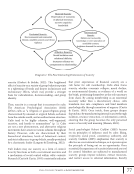
This article introduces the Pastor Sexual Exploitation
Framework, a visual model illustrating how adult
sexual grooming occurs and is sustained within faith
communities. Developed from data collected from
adults who experienced sexual harassment, grooming,
or abuse by pastors in Australian Evangelical and
Pentecostal Christian faith communities, this
framework provides a comprehensive tool that may
assist in detecting, deterring, and preventing adult
sexual grooming in religious settings. Therapists can
also use the framework to help clients understand the
grooming process, their experiences of entrapment,
and the traumatic impacts that resulted.
Background
Sexual exploitation in religious contexts is not an
isolated event but is situated within interconnected
social and institutional structures (Campbell,
Dworkin, &Cabral, 2009 Simpson, 2025). Sexual
violence remains a pervasive issue across religious
institutions and Australian society as a whole. As a
form of deeply entrenched, gender-based violence,
it impacts individuals from all demographic groups,
with the majority of victims being women and
children (Australian Institute of Health and Welfare
[AIHW], 2020). According to the Australian Bureau
of Statistics (ABS) (2023), more than one in five
women (22%) and one in sixteen men (6.1%) have
experienced sexual violence since the age of 15.
doi: 10.54208/1000/0009/002
Pastor Sexual Exploitation of Adult
Congregation Members
Jaime Simpson1 and Jodi Death2
Abstract: This article examines the Pastor Sexual Exploitation Framework, developed from the lived experiences of adult
congregation members who were victims of sexual violence perpetrated by pastors or church leaders within Evangelical and
Pentecostal Christian faith communities in Australia. Sexual grooming and coercion of adults by pastors remain under-
researched phenomena, with no comprehensive examination or national data on the patterns and tactics used by pastors to
coerce sexual activity from adults within their congregations. This exploratory study addresses this gap by drawing from the
responses of thirty-three participants who completed an online survey, which included both closed and open-ended questions.
The findings reveal a clear pattern of ongoing grooming tactics and coercive controlling behaviours that lead to the systemic
entrapment of adult congregation members. Furthermore, significant harms were reported, impacting the respondents’
spiritual, psychological, physical, relational, financial, and emotional well-being. This research frames pastor sexual misconduct
involving adult congregation members as sexual coercion and sexual exploitation, placing their experiences within the context
of gender-based sexual violence.
Keywords: adult clergy sexual abuse adult sexual grooming clergy sexual misconduct #churchtoo DARVO Evangelical,
Pentecostal Christian faith communities.
1 Corresponding author. Jaime.Simpson@uon.edu.au
Master of Philosophy, Master of Counselling, Bachelor of Counselling, Graduate Cert Domestic Violence
2 Associate Professor, Faculty of Creative Industries, Education and Social Justice, Queensland University of Technology, Queensland
Clergy-perpetrated child sexual grooming has been
extensively examined in academic research. However,
adult clergy sexual grooming remains significantly
underexplored despite its profound impacts on
survivors. In this article, the terms pastor and clergy
are used interchangeably to refer to individuals who
hold positions of leadership and authority within
Christian faith communities. When a member of the
clergy abuses their position of authority to groom and
sexually exploit an adult congregant, these actions are
often dismissed as a moral failing or mischaracterised
as a consensual relationship between two adults. Such
framings tend, for the most part, to overlook clearly
predatory tactics and minimise the role of coercion
facilitated through clergy influence and authority (de
Weger, 2016 Kennedy, 2009).
This article introduces the Pastor Sexual Exploitation
Framework, a visual model illustrating how adult
sexual grooming occurs and is sustained within faith
communities. Developed from data collected from
adults who experienced sexual harassment, grooming,
or abuse by pastors in Australian Evangelical and
Pentecostal Christian faith communities, this
framework provides a comprehensive tool that may
assist in detecting, deterring, and preventing adult
sexual grooming in religious settings. Therapists can
also use the framework to help clients understand the
grooming process, their experiences of entrapment,
and the traumatic impacts that resulted.
Background
Sexual exploitation in religious contexts is not an
isolated event but is situated within interconnected
social and institutional structures (Campbell,
Dworkin, &Cabral, 2009 Simpson, 2025). Sexual
violence remains a pervasive issue across religious
institutions and Australian society as a whole. As a
form of deeply entrenched, gender-based violence,
it impacts individuals from all demographic groups,
with the majority of victims being women and
children (Australian Institute of Health and Welfare
[AIHW], 2020). According to the Australian Bureau
of Statistics (ABS) (2023), more than one in five
women (22%) and one in sixteen men (6.1%) have
experienced sexual violence since the age of 15.
doi: 10.54208/1000/0009/002