45
Kate Amber and Roderick Dubrow-Marshall |An Investigation into the Efficacy of the PsychoSocial Quicksand Model™
what you’re talking about.’”
The idea that the PSQM essentially inoculates survivors
against feeling “crazy” was repeated by several
interviewees. Feeling “crazy” is so frequent in survivor
populations that the literature has termed many
coercively controlling abuse tactics “crazy-making”
(Simon, 2022). P3 describes her insights gleaned from
the PSQM, in the Healing subtheme: “Recently, I’ve
been more...partly because of your model, more aware
of the damage ...the harm that (coercive control) did
to me.”
Centering the experiences of survivors and the
importance of psychoeducation are both emphasized
in the literature (Hill, 2020 Mandel &Wright, 2019
Phoenix, 2007 Whitworth, 2016). Participants found
these elements critical to empowerment, healing, and
validation, and they were reflected in their comments.
Several survivors expressed hope and excitement for
possible future harm reduction by incorporating the
PSQM into training. P6, for example, commented
on precisely these points, in the Empowers, Validates
and Healing subthemes: “So yeah, the validation
and the empowerment...understanding...is part of the
psychoeducation...getting educated...empowers me
to be, like, responsible...“OK, now I know. Now I can
watch out for it.”
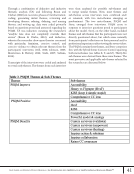
Within the PSQM Benefits theme are sub-themes
pertaining to benefits for professional practice and
systemic transformation. The following examples show
how participants viewed the PSQM’s potential benefits.
P9 expressed hopefulness for the possibilities, in the
Raises Awareness subtheme: “I’m so excited about
your work...This is so cool, so cool!” P3 illustrates the
Inspires Action subtheme: “I think that anything that
gives us more awareness is really important.” While
P13’s quote is an example of the Inspires Collaboration
subtheme: “I just want you to know there’s an open
invitation to have a conversation about collaborating.”
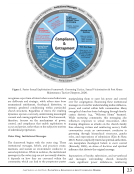
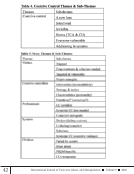
The hybrid theme Coercive Control was found in the
PSQM and Story meta-themes, and sub-themes echo
the literature’s emphasis on the invisibility of coercive
control, the need for a new lens (Stark, 2007 Weiner,
2017), and a more controversial sub-theme, Intentional.
For example, within the Invisible subtheme, P8 stated:
“Because in the beginning, they don’t come off pulling
out a knife. In the beginning, of course, you sink into
the quicksand very slowly.” P1 reported similarly, from
The New Lens subtheme: “It cuts a clean space that
people can look at things freshly, without bringing a
lot of baggage with them. And I think that’s one of the
great benefits of using that term [coercive control].”
P7 identified personal impacts, in the Intentional
subtheme: “She would smooth things over so nice they
didn’t suspect anything...It was intentional, and she
was very good at trying to explain it away and cover it
up and gaslight me.”
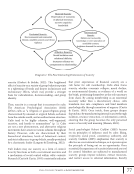
The second meta-theme, Story, is comprised of themes
and sub-themes from participants’ life experiences
that exposure to the PSQM indirectly elicited. Themes
include Professionals, Coercive Controllers, Victims,
Systems, and Children. While interviewees’ experiences
were not the research focus, and therefore not analyzed
to the same degree as PSQM, this meta-theme gleaned
substantial and valuable information.
New research proposes that “coercive violence” be
recognized as a distinct form of IPV and defined as:
Monterrosa and Hattery (2022) suggest that coercive
violence is differentiated from coercive control
by opening victims up to coercion and/or state-
sanctioned violence. For example, threatening to
obtain custody of a victim’s child is coercive control,
but contacting child protective services to lodge false
allegations against the victim is coercive violence. To
emphasize the systemic nature of coercive violence,
the researcher expanded on the three contexts of “the
state” proposed by Monterrosa and Hattery (2022)
(the legal system, law enforcement, and healthcare) to
include the other systems where coercive controllers
abuse by proxy: family, community, and cults. This
The double-bind one...“Oh, this is describing
exactly how, no matter what, you can’t win...Oh,
I’m losing no matter what I do.” And that was
actually really empowering because I remember
thinking “Oh, if I’m gonna lose either way, then
I might as well get out, right?” (P9)
A form of intimate partner violence in which the
abuser intentionally engages in acts that expose
his partner to state surveillance and violence at
the behest of institutions or the state, including
the child welfare system and the criminal legal
system (Monterrosa &Hattery, 2022, p.1).
Kate Amber and Roderick Dubrow-Marshall |An Investigation into the Efficacy of the PsychoSocial Quicksand Model™
what you’re talking about.’”
The idea that the PSQM essentially inoculates survivors
against feeling “crazy” was repeated by several
interviewees. Feeling “crazy” is so frequent in survivor
populations that the literature has termed many
coercively controlling abuse tactics “crazy-making”
(Simon, 2022). P3 describes her insights gleaned from
the PSQM, in the Healing subtheme: “Recently, I’ve
been more...partly because of your model, more aware
of the damage ...the harm that (coercive control) did
to me.”
Centering the experiences of survivors and the
importance of psychoeducation are both emphasized
in the literature (Hill, 2020 Mandel &Wright, 2019
Phoenix, 2007 Whitworth, 2016). Participants found
these elements critical to empowerment, healing, and
validation, and they were reflected in their comments.
Several survivors expressed hope and excitement for
possible future harm reduction by incorporating the
PSQM into training. P6, for example, commented
on precisely these points, in the Empowers, Validates
and Healing subthemes: “So yeah, the validation
and the empowerment...understanding...is part of the
psychoeducation...getting educated...empowers me
to be, like, responsible...“OK, now I know. Now I can
watch out for it.”
Within the PSQM Benefits theme are sub-themes
pertaining to benefits for professional practice and
systemic transformation. The following examples show
how participants viewed the PSQM’s potential benefits.
P9 expressed hopefulness for the possibilities, in the
Raises Awareness subtheme: “I’m so excited about
your work...This is so cool, so cool!” P3 illustrates the
Inspires Action subtheme: “I think that anything that
gives us more awareness is really important.” While
P13’s quote is an example of the Inspires Collaboration
subtheme: “I just want you to know there’s an open
invitation to have a conversation about collaborating.”
The hybrid theme Coercive Control was found in the
PSQM and Story meta-themes, and sub-themes echo
the literature’s emphasis on the invisibility of coercive
control, the need for a new lens (Stark, 2007 Weiner,
2017), and a more controversial sub-theme, Intentional.
For example, within the Invisible subtheme, P8 stated:
“Because in the beginning, they don’t come off pulling
out a knife. In the beginning, of course, you sink into
the quicksand very slowly.” P1 reported similarly, from
The New Lens subtheme: “It cuts a clean space that
people can look at things freshly, without bringing a
lot of baggage with them. And I think that’s one of the
great benefits of using that term [coercive control].”
P7 identified personal impacts, in the Intentional
subtheme: “She would smooth things over so nice they
didn’t suspect anything...It was intentional, and she
was very good at trying to explain it away and cover it
up and gaslight me.”
The second meta-theme, Story, is comprised of themes
and sub-themes from participants’ life experiences
that exposure to the PSQM indirectly elicited. Themes
include Professionals, Coercive Controllers, Victims,
Systems, and Children. While interviewees’ experiences
were not the research focus, and therefore not analyzed
to the same degree as PSQM, this meta-theme gleaned
substantial and valuable information.
New research proposes that “coercive violence” be
recognized as a distinct form of IPV and defined as:
Monterrosa and Hattery (2022) suggest that coercive
violence is differentiated from coercive control
by opening victims up to coercion and/or state-
sanctioned violence. For example, threatening to
obtain custody of a victim’s child is coercive control,
but contacting child protective services to lodge false
allegations against the victim is coercive violence. To
emphasize the systemic nature of coercive violence,
the researcher expanded on the three contexts of “the
state” proposed by Monterrosa and Hattery (2022)
(the legal system, law enforcement, and healthcare) to
include the other systems where coercive controllers
abuse by proxy: family, community, and cults. This
The double-bind one...“Oh, this is describing
exactly how, no matter what, you can’t win...Oh,
I’m losing no matter what I do.” And that was
actually really empowering because I remember
thinking “Oh, if I’m gonna lose either way, then
I might as well get out, right?” (P9)
A form of intimate partner violence in which the
abuser intentionally engages in acts that expose
his partner to state surveillance and violence at
the behest of institutions or the state, including
the child welfare system and the criminal legal
system (Monterrosa &Hattery, 2022, p.1).