International Journal of Coercion, Abuse, and Manipulation Volume 9 2026 80
loyalty into cultic cohesion. Repeated exposure deepens
these attachments until parasocial bonds resemble
quasi-religious devotion. These dynamics transform
parasociality from a benign media phenomenon into
a mechanism of radicalization, particularly when
scarcity primes individuals for dependence.
Integrating Scarcity, Parasociality, and Digital
Belonging
Scarcity interacts powerfully with digital systems,
transforming individual vulnerability into a process
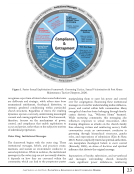
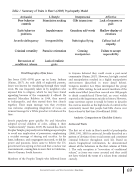
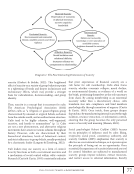
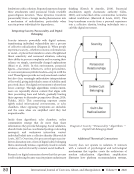
of collective radicalization (Diagram 2). When people
experience scarcity—whether economic, informational,
or social—it places their minds in a state of heightened
threat sensitivity and narrowed attention, reducing
their ability to process complexity and increasing their
reliance on simple, emotionally charged explanations
(Mani et al., 2013). In this environment, parasocial
figures—charismatic influencers, online personalities,
or even anonymous symbolic leaders—step in to fill the
void. These figures provide not only emotional comfort
but also clear, seemingly authoritative interpretations
of the world, giving individuals a sense of stability amid
perceived chaos. The digital environment is where these
forces converge. Through algorithmic reinforcement,
users are repeatedly shown content that aligns with
their preexisting fears and beliefs, gradually limiting
their exposure to alternative perspectives (Beam, 2014
Tufekci, 2015). This constricting exposure creates
tightly sealed informational environments, or echo
chambers, where opposing viewpoints are excluded,
and the same ideas are amplified until they feel
unquestionable.
Inside these algorithmic echo chambers, online
communities emerge that do more than share
information they provide belonging. Social validation,
shared rituals (such as coordinated posting or decoding
messages), and continuous interaction convert
individual beliefs into a collective identity (Marwick &
Lewis, 2017). Over time, this process reshapes scarcity-
driven alienation into a form of digital cultic belonging
that is emotionally intense, cognitively closed to outside
evidence, and reinforced by constant social feedback.
Research on digital extremism shows that this process
is self-reinforcing because scarcity primes exclusionary
thinking (Krosch &Amodio, 2014). Parasocial
attachments supply charismatic authority (Giles,
2002), and networked online communities normalize
radical worldviews (Marwick &Lewis, 2017). This
loop transforms scarcity from a personal experience
into a collective identity, binding individuals into a
cult-like digital movement.
Diagram 2: Scarcity → Parasociality → Algorithmic →
Digital Cult Belonging Model
Additional Theoretical Connections
Scarcity does not operate in isolation. It interacts
with a network of psychological and technological
mechanisms that together create the architecture of
modern radicalization. Algorithmic amplification
illustrates how platform recommendation systems,
loyalty into cultic cohesion. Repeated exposure deepens
these attachments until parasocial bonds resemble
quasi-religious devotion. These dynamics transform
parasociality from a benign media phenomenon into
a mechanism of radicalization, particularly when
scarcity primes individuals for dependence.
Integrating Scarcity, Parasociality, and Digital
Belonging
Scarcity interacts powerfully with digital systems,
transforming individual vulnerability into a process
of collective radicalization (Diagram 2). When people
experience scarcity—whether economic, informational,
or social—it places their minds in a state of heightened
threat sensitivity and narrowed attention, reducing
their ability to process complexity and increasing their
reliance on simple, emotionally charged explanations
(Mani et al., 2013). In this environment, parasocial
figures—charismatic influencers, online personalities,
or even anonymous symbolic leaders—step in to fill the
void. These figures provide not only emotional comfort
but also clear, seemingly authoritative interpretations
of the world, giving individuals a sense of stability amid
perceived chaos. The digital environment is where these
forces converge. Through algorithmic reinforcement,
users are repeatedly shown content that aligns with
their preexisting fears and beliefs, gradually limiting
their exposure to alternative perspectives (Beam, 2014
Tufekci, 2015). This constricting exposure creates
tightly sealed informational environments, or echo
chambers, where opposing viewpoints are excluded,
and the same ideas are amplified until they feel
unquestionable.
Inside these algorithmic echo chambers, online
communities emerge that do more than share
information they provide belonging. Social validation,
shared rituals (such as coordinated posting or decoding
messages), and continuous interaction convert
individual beliefs into a collective identity (Marwick &
Lewis, 2017). Over time, this process reshapes scarcity-
driven alienation into a form of digital cultic belonging
that is emotionally intense, cognitively closed to outside
evidence, and reinforced by constant social feedback.
Research on digital extremism shows that this process
is self-reinforcing because scarcity primes exclusionary
thinking (Krosch &Amodio, 2014). Parasocial
attachments supply charismatic authority (Giles,
2002), and networked online communities normalize
radical worldviews (Marwick &Lewis, 2017). This
loop transforms scarcity from a personal experience
into a collective identity, binding individuals into a
cult-like digital movement.
Diagram 2: Scarcity → Parasociality → Algorithmic →
Digital Cult Belonging Model
Additional Theoretical Connections
Scarcity does not operate in isolation. It interacts
with a network of psychological and technological
mechanisms that together create the architecture of
modern radicalization. Algorithmic amplification
illustrates how platform recommendation systems,