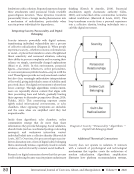
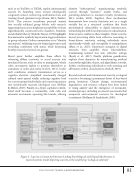
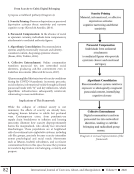
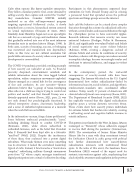
9
Ruby Cramer and Sarah Stillwell |SINCERE: A Relational Safety Model for Counselors
lifestyles. For example, a bisexual TGD woman is more
likely than a heterosexual TGD woman to experience
stalking and other forms of IPV more than once within
a lifetime, which might entail further safety planning
or different treatment goals in therapy (NCAVP, 2016
Whitfield et al., 2021). A TGD person with a diagnosis
of HIV is significantly more likely to be subjected to
IPV more than once in a lifetime than a TGD person
who is HIV negative (Gonzalez-Guarda et al., 2021
James et al., 2016).
Moreover, some survivors of T-IPV may identify being
mistreated or abused by individuals who also endure
gender-based violence or marginalization, which may
further complicate a survivor’s narrative and feelings
towards their own experiences with violence (Marrow
et al., 2024 Messinger &Guadalupe-Diaz, 2021).
This dynamic can lead to abusers leveraging their
own vulnerability against survivors in an attempt to
sidestep accountability and to maintain a dominant
position in conversations about violence. These are just
a few examples of the many reasons why it is critical to
honor the uniquely complex nature of the experiences
of T-IPV survivors, and to effectively navigate nuance
in the counseling space.
Continuing Education &Advocacy
Continuous learning and advocacy signal a clinician’s
commitment to justice and accountability. TGD clients
perceive greater safety and therapeutic relational
outcomes when providers actively challenge oppressive
systems and stay current with best practices (Singh
&Moss, 2016 Leitch, 2022). Therefore, developing
multicultural competence in working with survivors
of T-IPV is integral to creating relational safety and
should be treated as an ongoing professional quest.
Maintaining an awareness of modern methods and
literature in counseling is a general requirement
of the field, but this is especially important when
working with marginalized populations such as gender
expansive clients, due to the ever-evolving nature of
their sociopolitical landscape (Kattari et al., 2020).
To find continuing education opportunities, one
may look to universities, conferences, seminars,
workshops, or local mental health professionals. For
example, FORGE is an established, premier provider of
affirmative training for providers and aims to develop
resilience and networks of help within the TGD
community (Munson &Cook-Daniels, 2020). Many
continuing education opportunities regarding the queer
and TGD communities can be found at any time of the
year via the American Counseling Association (ACA),
more specifically through social justice divisions of the
ACA or through the Society for Sexual, Affectional,
Intersex, and Gender Expansive Identities (SAIGE).
Through education on T-IPV, counselors become more
equipped to help survivors and to advocate for this
population more effectively. After counselors cultivate
an understanding of the current sociopolitical climate
and ways to help survivors of T-IPV, they can advocate
more knowledgeably and fruitfully.
Moreover, coercive control theory posits the necessity
of systemic advocacy in working with IPV survivors,
emphasizing that if IPV is about entrapment, then
counselors must challenge the social structures that
enable abusers to exploit survivors’ vulnerabilities
(Tolmie, Smith, &Wilson, 2024). Therefore, clinicians
should endeavor to be advocates both inside and
outside of the counseling space. Advocacy in a broader
sense may look like working with other professionals to
help develop inclusive shelters, clinics, support groups,
trauma response services, and other community
supports, while advocacy in a more immediate sense
may look like engaging in community efforts and
leading or participating in local social justice groups,
organizations, or movements (Ratts et al., 2018).
Advocacy in a client-counselor capacity may entail
naming barriers to wellness or resources, identifying
the significance of the counselor’s own cultural
and sociopolitical location in relation to a client’s,
recognizing the impacts of systemic oppression in
relation to a client’s experiences and needs, empowering
a client to self-advocate, sharing appropriate resources,
developing self-advocacy action plans, and assisting
clients in executing advocacy plans (Ratts et al., 2018).
Resources
Providing survivors of violence with well-vetted
resources and community supports is a vital step in
responding to experiences of abuse (Munson &Cook-
Daniels, 2020 Kattari et al., 2020 ACA, 2010). From
a coercive control perspective, resources are not just
supports but lifelines that counteract entrapment
(Tolmie, Smith, &Wilson, 2024). Survivors often
Ruby Cramer and Sarah Stillwell |SINCERE: A Relational Safety Model for Counselors
lifestyles. For example, a bisexual TGD woman is more
likely than a heterosexual TGD woman to experience
stalking and other forms of IPV more than once within
a lifetime, which might entail further safety planning
or different treatment goals in therapy (NCAVP, 2016
Whitfield et al., 2021). A TGD person with a diagnosis
of HIV is significantly more likely to be subjected to
IPV more than once in a lifetime than a TGD person
who is HIV negative (Gonzalez-Guarda et al., 2021
James et al., 2016).
Moreover, some survivors of T-IPV may identify being
mistreated or abused by individuals who also endure
gender-based violence or marginalization, which may
further complicate a survivor’s narrative and feelings
towards their own experiences with violence (Marrow
et al., 2024 Messinger &Guadalupe-Diaz, 2021).
This dynamic can lead to abusers leveraging their
own vulnerability against survivors in an attempt to
sidestep accountability and to maintain a dominant
position in conversations about violence. These are just
a few examples of the many reasons why it is critical to
honor the uniquely complex nature of the experiences
of T-IPV survivors, and to effectively navigate nuance
in the counseling space.
Continuing Education &Advocacy
Continuous learning and advocacy signal a clinician’s
commitment to justice and accountability. TGD clients
perceive greater safety and therapeutic relational
outcomes when providers actively challenge oppressive
systems and stay current with best practices (Singh
&Moss, 2016 Leitch, 2022). Therefore, developing
multicultural competence in working with survivors
of T-IPV is integral to creating relational safety and
should be treated as an ongoing professional quest.
Maintaining an awareness of modern methods and
literature in counseling is a general requirement
of the field, but this is especially important when
working with marginalized populations such as gender
expansive clients, due to the ever-evolving nature of
their sociopolitical landscape (Kattari et al., 2020).
To find continuing education opportunities, one
may look to universities, conferences, seminars,
workshops, or local mental health professionals. For
example, FORGE is an established, premier provider of
affirmative training for providers and aims to develop
resilience and networks of help within the TGD
community (Munson &Cook-Daniels, 2020). Many
continuing education opportunities regarding the queer
and TGD communities can be found at any time of the
year via the American Counseling Association (ACA),
more specifically through social justice divisions of the
ACA or through the Society for Sexual, Affectional,
Intersex, and Gender Expansive Identities (SAIGE).
Through education on T-IPV, counselors become more
equipped to help survivors and to advocate for this
population more effectively. After counselors cultivate
an understanding of the current sociopolitical climate
and ways to help survivors of T-IPV, they can advocate
more knowledgeably and fruitfully.
Moreover, coercive control theory posits the necessity
of systemic advocacy in working with IPV survivors,
emphasizing that if IPV is about entrapment, then
counselors must challenge the social structures that
enable abusers to exploit survivors’ vulnerabilities
(Tolmie, Smith, &Wilson, 2024). Therefore, clinicians
should endeavor to be advocates both inside and
outside of the counseling space. Advocacy in a broader
sense may look like working with other professionals to
help develop inclusive shelters, clinics, support groups,
trauma response services, and other community
supports, while advocacy in a more immediate sense
may look like engaging in community efforts and
leading or participating in local social justice groups,
organizations, or movements (Ratts et al., 2018).
Advocacy in a client-counselor capacity may entail
naming barriers to wellness or resources, identifying
the significance of the counselor’s own cultural
and sociopolitical location in relation to a client’s,
recognizing the impacts of systemic oppression in
relation to a client’s experiences and needs, empowering
a client to self-advocate, sharing appropriate resources,
developing self-advocacy action plans, and assisting
clients in executing advocacy plans (Ratts et al., 2018).
Resources
Providing survivors of violence with well-vetted
resources and community supports is a vital step in
responding to experiences of abuse (Munson &Cook-
Daniels, 2020 Kattari et al., 2020 ACA, 2010). From
a coercive control perspective, resources are not just
supports but lifelines that counteract entrapment
(Tolmie, Smith, &Wilson, 2024). Survivors often