39
Kate Amber and Roderick Dubrow-Marshall |An Investigation into the Efficacy of the PsychoSocial Quicksand Model™
Hill, 2020 Stark, 2007).
Despite growing awareness of coercive control
and strong links to domestic violence homicide
(Monckton-Smith, 2022 Domestic Violence Death
Review Team, 2020 Parliament of New South Wales
Joint Select Committee on Coercive Control, 2021),
the passage of legislation has not led to widespread
improvements in implementation (Bishop, 2016
Stark &Hester, 2019 Walklate &Fitz-Gibbon, 2021).
Coercive control’s complexity, combined with its
invisibility, makes raising awareness and educating the
public and professionals challenging (Fontes, 2015
Myhill &Hoyle, 2016 Stark, 2007 Weiner, 2017 ).
Coercive control reporting is increasing which will
likely continue (Mlambo-Ngcuka, 2020). Our already
overburdened systems need solutions that can slow,
and eventually reverse, the increased prevalence that
this reporting reflects. While progress is being made,
we must do more (Stark &Hester, 2019).
All parts of the system—support services,
police, courts—are overwhelmed by the
number of family violence incidents now
reported. Services are not currently equipped
to meet this high level of demand.
(Mlambo-Ngcuka, 2020)
Therefore, a new method of training is needed, one
that addresses coercive control across contexts, utilizes
a system’s approach to detection, intervention, and
prevention, and can be implemented easily, quickly,
and effectively across multi-disciplinary systems. The
PSQM adopts the perspective that coercive control
occurs in contexts other than domestic abuse and
expands the concept by identifying it as a pattern of
behavior within groups and systems, as well as in
relationships (Hassan, 1988 Hill, 2020 Smith &Freyd,
2014 Stark, 2007 Stein, 2016). The PSQM further
establishes and defines coercive control as the pattern
of behaviors foundational to oppression, positioning
it as a worldwide issue impacting everyone. It also
simplifies the complexity of coercive control globally,
making it accessible to all. The PQSM was developed
precisely to achieve these aims, and this research study
was undertaken to test the validity and efficacy of the
model in these regards.
Methodology
A mixed-methods study was developed to test the
PSQM, using a series of seven training videos lasting
between ten to fifteen minutes each. Ethical approval
for this study was granted by the University of Salford
School of Health and Society Ethics Panel. The videos
focused on educating and raising awareness for
professionals within the systems tasked with protecting
victims from the strategic and oppressive pattern of
coercive control. The study group comprised self-
identified mental health, law enforcement, and legal
system professionals (labeled professionals for the
study), as well as survivors of coercive control by an
individual (labeled intimate partner violence) and/
or coercively controlling groups (labeled cults). The
investigation into the PSQM’s efficacy and validity
proceeded to determine the following research
questions and objectives:
1. To what extent can the PSQM be validated as a
model that:
• Validates survivors’ experiences
• Empowers survivors
• Inspires survivors
• Overcomes professional bias
• Motivates professionals to fill systemic gaps
• Educates professionals quickly on the detection
and prevention of coercive control
2. To what extent does the above evidence for validity
of the model indicate that the PSQM has the potential
to:
• Prevent coercive control through education
• Hold perpetrators accountable through more
effective policies
• Save money and lives
Participants were recruited via professional contacts,
social media, websites, and email distributed by
relevant organizations. 451 people registered an interest
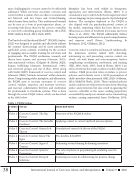
(via an online form), and 59 completed the study. After
completing an online participant information sheet
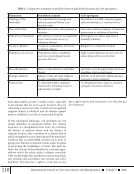
and consent form, participants were categorized into
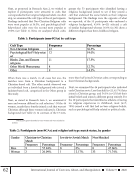
seven groups based on their status as professionals
and/or survivors of intimate partner violence, cults, or
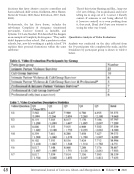
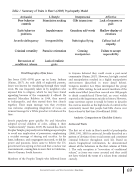
both (see Table 1 for the seven groups).
Kate Amber and Roderick Dubrow-Marshall |An Investigation into the Efficacy of the PsychoSocial Quicksand Model™
Hill, 2020 Stark, 2007).
Despite growing awareness of coercive control
and strong links to domestic violence homicide
(Monckton-Smith, 2022 Domestic Violence Death
Review Team, 2020 Parliament of New South Wales
Joint Select Committee on Coercive Control, 2021),
the passage of legislation has not led to widespread
improvements in implementation (Bishop, 2016
Stark &Hester, 2019 Walklate &Fitz-Gibbon, 2021).
Coercive control’s complexity, combined with its
invisibility, makes raising awareness and educating the
public and professionals challenging (Fontes, 2015
Myhill &Hoyle, 2016 Stark, 2007 Weiner, 2017 ).
Coercive control reporting is increasing which will
likely continue (Mlambo-Ngcuka, 2020). Our already
overburdened systems need solutions that can slow,
and eventually reverse, the increased prevalence that
this reporting reflects. While progress is being made,
we must do more (Stark &Hester, 2019).
All parts of the system—support services,
police, courts—are overwhelmed by the
number of family violence incidents now
reported. Services are not currently equipped
to meet this high level of demand.
(Mlambo-Ngcuka, 2020)
Therefore, a new method of training is needed, one
that addresses coercive control across contexts, utilizes
a system’s approach to detection, intervention, and
prevention, and can be implemented easily, quickly,
and effectively across multi-disciplinary systems. The
PSQM adopts the perspective that coercive control
occurs in contexts other than domestic abuse and
expands the concept by identifying it as a pattern of
behavior within groups and systems, as well as in
relationships (Hassan, 1988 Hill, 2020 Smith &Freyd,
2014 Stark, 2007 Stein, 2016). The PSQM further
establishes and defines coercive control as the pattern
of behaviors foundational to oppression, positioning
it as a worldwide issue impacting everyone. It also
simplifies the complexity of coercive control globally,
making it accessible to all. The PQSM was developed
precisely to achieve these aims, and this research study
was undertaken to test the validity and efficacy of the
model in these regards.
Methodology
A mixed-methods study was developed to test the
PSQM, using a series of seven training videos lasting
between ten to fifteen minutes each. Ethical approval
for this study was granted by the University of Salford
School of Health and Society Ethics Panel. The videos
focused on educating and raising awareness for
professionals within the systems tasked with protecting
victims from the strategic and oppressive pattern of
coercive control. The study group comprised self-
identified mental health, law enforcement, and legal
system professionals (labeled professionals for the
study), as well as survivors of coercive control by an
individual (labeled intimate partner violence) and/
or coercively controlling groups (labeled cults). The
investigation into the PSQM’s efficacy and validity
proceeded to determine the following research
questions and objectives:
1. To what extent can the PSQM be validated as a
model that:
• Validates survivors’ experiences
• Empowers survivors
• Inspires survivors
• Overcomes professional bias
• Motivates professionals to fill systemic gaps
• Educates professionals quickly on the detection
and prevention of coercive control
2. To what extent does the above evidence for validity
of the model indicate that the PSQM has the potential
to:
• Prevent coercive control through education
• Hold perpetrators accountable through more
effective policies
• Save money and lives
Participants were recruited via professional contacts,
social media, websites, and email distributed by
relevant organizations. 451 people registered an interest
(via an online form), and 59 completed the study. After
completing an online participant information sheet
and consent form, participants were categorized into
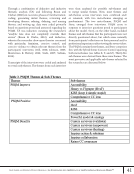
seven groups based on their status as professionals
and/or survivors of intimate partner violence, cults, or
both (see Table 1 for the seven groups).