69
Elizabeth Franken and Wind Goodfriend |Jim Jones
Brief Biography of Jim Jones
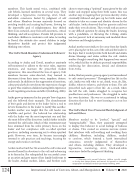
Jim Jones (1931–1978) grew up in Lynn, Indiana
(Guinn, 2017). An only child of neglectful parents,
Jones was known for wandering through their small
town. He was frequently taken in by neighbors who
exposed him to religion, which he may have found
appealing because of the community it offered. He
married Marceline Baldwin in 1949, they moved
to Indianapolis, and they started their first church
together. Their main message was that everyone
was welcome, emphasizing integration of races—an
unusual message for a White preacher in Indiana at the
time.
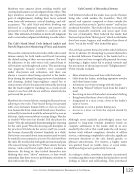
Jones’s popularity grew quickly. He and Marceline
adopted several children of color, calling it their
“rainbow family” (Guinn, 2017). He named his church
Peoples Temple, purposely not including an apostrophe
to avoid any implication of possession, emphasizing
a socialist message of sharing and sacrifice. As his
fame, influence, and congregants increased, so did his
power and paranoia. Jones came to believe the U.S.
government was spying on him and that a nuclear war
was imminent, causing him to move first to California,
then to Guyana, South America.
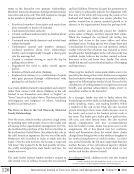
Members of the Peoples Temple who followed Jones
to Guyana believed they could create a post-racial
community (Guinn, 2017). However, his tight control
and manipulation resulted in a highly manipulative
environment (described in more detail below).
Congress member Leo Ryan investigated the group
in 1978 while visiting, he and several members of the
media were killed. Jones then coerced over 900 people
to drink cyanide-laced Flavor-Aid, an event widely
reported as the largest mass suicide in history. However,
some survivors report it would be better to describe
the event as murder, as the high levels of control in the
community meant that people had little choice over
their actions by that time (Goodfriend, 2024).
Analysis: Comparison to Checklist Criteria
Antisocial Traits
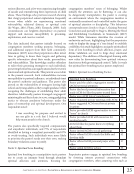
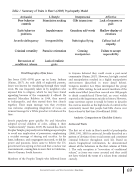
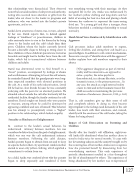
The first set of traits in Hare’s model of psychopathy
(1980, 1991, 2003) is antisocial, broadly described as a
pattern of deviance from social norms and consistent
criminal behavior throughout one’s life. Based on
Jones’s biographical information, he demonstrated
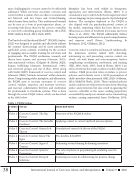
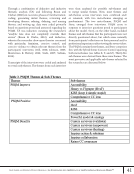
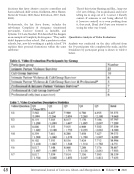
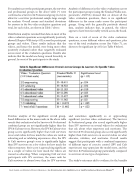
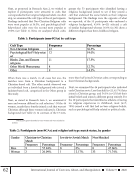
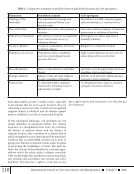
almost all the behaviors in the first column of Table
1. The only exception is “revocation of conditional
release,” as Jones was never arrested and thus could
not have violated the terms of a release from criminal
custody.
Elizabeth Franken and Wind Goodfriend |Jim Jones
Brief Biography of Jim Jones
Jim Jones (1931–1978) grew up in Lynn, Indiana
(Guinn, 2017). An only child of neglectful parents,
Jones was known for wandering through their small
town. He was frequently taken in by neighbors who
exposed him to religion, which he may have found
appealing because of the community it offered. He
married Marceline Baldwin in 1949, they moved
to Indianapolis, and they started their first church
together. Their main message was that everyone
was welcome, emphasizing integration of races—an
unusual message for a White preacher in Indiana at the
time.
Jones’s popularity grew quickly. He and Marceline
adopted several children of color, calling it their
“rainbow family” (Guinn, 2017). He named his church
Peoples Temple, purposely not including an apostrophe
to avoid any implication of possession, emphasizing
a socialist message of sharing and sacrifice. As his
fame, influence, and congregants increased, so did his
power and paranoia. Jones came to believe the U.S.
government was spying on him and that a nuclear war
was imminent, causing him to move first to California,
then to Guyana, South America.
Members of the Peoples Temple who followed Jones
to Guyana believed they could create a post-racial
community (Guinn, 2017). However, his tight control
and manipulation resulted in a highly manipulative
environment (described in more detail below).
Congress member Leo Ryan investigated the group
in 1978 while visiting, he and several members of the
media were killed. Jones then coerced over 900 people
to drink cyanide-laced Flavor-Aid, an event widely
reported as the largest mass suicide in history. However,
some survivors report it would be better to describe
the event as murder, as the high levels of control in the
community meant that people had little choice over
their actions by that time (Goodfriend, 2024).
Analysis: Comparison to Checklist Criteria
Antisocial Traits
The first set of traits in Hare’s model of psychopathy
(1980, 1991, 2003) is antisocial, broadly described as a
pattern of deviance from social norms and consistent
criminal behavior throughout one’s life. Based on
Jones’s biographical information, he demonstrated
almost all the behaviors in the first column of Table
1. The only exception is “revocation of conditional
release,” as Jones was never arrested and thus could
not have violated the terms of a release from criminal
custody.