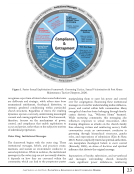
133
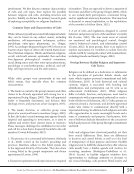
Lorna Goldberg |Intergenerational Transmission of Cult Trauma
David notes the lingering harsh moral conscience he
learned from the cult and his parents. He states,
Anika’s Shift in Perspective Impacts David’s
Perspective
When David’s mother disclosed to him that the prior
cult leader had sexually abused her, David severed
his ties to the cult. However, Anika made the choice
not to tell her parents she had been raped because she
reasoned that they were elderly and had dedicated
their lives to the cult. She worried that revealing her
experience would cause them to have intense guilt
about her abuse, and managing their guilt would
place an added burden on her rather than healing.
Furthermore, her parents seemed comfortable, as the
cult provided them with a house, food, and practical
help at its facility.
In contrast, David wished Anika had told his
grandparents the truth. He believes that his relationship
with his grandparents deteriorated because of the secret
he was asked to keep from them. By his late teens,
David had spent many years attending a second cult
with his grandmother, whom he now views as a “serial
cultist.” He believes his grandmother was seeking
another charismatic leader. This second cult taught
a healing modality like Reiki. David now believes he
continued looking for certainty and status in this other
cult. However, upon visiting the cult’s headquarters in
Japan, he saw a giant gold statue of the leader, similar
to the statues worshipped in the first cult, which caused
him to break with this second cult immediately. This
break further undermined David’s relationship with
his grandmother.
Over time, David began to realize that his thought
processes were built upon cultic thinking he began to
consider the damage that this way of thinking had done
to him and his development. He had felt disgusted
with himself his entire life. He had harbored hatred
We lose humanity in trying to be perfect and
attain impossible standards. We are always ‘on’
and engaged if we try to meet high standards
in everything. There is no sense of shared
humanity—the focus is only on perfection.
There is no compassion, only contempt and
disgust.
for himself because of the cult teaching that he had to
be “perfect,” and he had failed to attain this goal. He
now realizes that because of cult indoctrination, he had
viewed his imperfections as disgusting and nonhuman
and had also dehumanized others for not being perfect.
Anika and David Begin to Recover from the Cult
After fully leaving the cult, Anika spent her next twenty
years reassessing, redefining, and re-aligning her beliefs.
She has struggled in unimaginable ways to come to
terms with what happened to her. She examined every
experience, belief, and perception from her time in the
cult, reassessing and reconstructing them in a radically
different way.
In recent years, Anika and her husband joined two
support groups: a smaller one with former members
of her cult and a larger one with former members
from various cults. In the smaller group, participants
explicitly agreed to state that they had been members
of a cult. This was the first time Anika acknowledged to
herself that the organization to which she had devoted
her life was a cult. In this group, Anika discovered that
others were struggling similarly. In the larger support
group with former members from a wide range of cults,
Anika learned that each cult used a particular form of
control and jargon to exploit people in ways similar
to her former cult. As she listened to participants in
each group describe their experiences, Anika became
increasingly aware of the numerous negative aspects
of her years in the cult. She found it life-affirming,
healing, and supportive to hear about the commonality
of experience across cults and the similarities in residual
effects on post-cult daily life. Herman (1997) explains,
However, Anika initially continued to hold herself to an
unrealistically high standard—she was determined to
recover from the cult in the “right” way. She suppressed
any feelings that would humanize her, refusing to
acknowledge her own fallibility. She took a while to see
that part of recovery was to allow herself to be fallibly
human. She began to feel more connected with herself
Trauma isolates the group re-creates a sense
of belonging. Trauma shames and stigmatizes
the group bears witness and affirms. Trauma
degrades the victim. The group exalts her.
Trauma dehumanizes the victim the group
restores her humanity (p. 214).
Lorna Goldberg |Intergenerational Transmission of Cult Trauma
David notes the lingering harsh moral conscience he
learned from the cult and his parents. He states,
Anika’s Shift in Perspective Impacts David’s
Perspective
When David’s mother disclosed to him that the prior
cult leader had sexually abused her, David severed
his ties to the cult. However, Anika made the choice
not to tell her parents she had been raped because she
reasoned that they were elderly and had dedicated
their lives to the cult. She worried that revealing her
experience would cause them to have intense guilt
about her abuse, and managing their guilt would
place an added burden on her rather than healing.
Furthermore, her parents seemed comfortable, as the
cult provided them with a house, food, and practical
help at its facility.
In contrast, David wished Anika had told his
grandparents the truth. He believes that his relationship
with his grandparents deteriorated because of the secret
he was asked to keep from them. By his late teens,
David had spent many years attending a second cult
with his grandmother, whom he now views as a “serial
cultist.” He believes his grandmother was seeking
another charismatic leader. This second cult taught
a healing modality like Reiki. David now believes he
continued looking for certainty and status in this other
cult. However, upon visiting the cult’s headquarters in
Japan, he saw a giant gold statue of the leader, similar
to the statues worshipped in the first cult, which caused
him to break with this second cult immediately. This
break further undermined David’s relationship with
his grandmother.
Over time, David began to realize that his thought
processes were built upon cultic thinking he began to
consider the damage that this way of thinking had done
to him and his development. He had felt disgusted
with himself his entire life. He had harbored hatred
We lose humanity in trying to be perfect and
attain impossible standards. We are always ‘on’
and engaged if we try to meet high standards
in everything. There is no sense of shared
humanity—the focus is only on perfection.
There is no compassion, only contempt and
disgust.
for himself because of the cult teaching that he had to
be “perfect,” and he had failed to attain this goal. He
now realizes that because of cult indoctrination, he had
viewed his imperfections as disgusting and nonhuman
and had also dehumanized others for not being perfect.
Anika and David Begin to Recover from the Cult
After fully leaving the cult, Anika spent her next twenty
years reassessing, redefining, and re-aligning her beliefs.
She has struggled in unimaginable ways to come to
terms with what happened to her. She examined every
experience, belief, and perception from her time in the
cult, reassessing and reconstructing them in a radically
different way.
In recent years, Anika and her husband joined two
support groups: a smaller one with former members
of her cult and a larger one with former members
from various cults. In the smaller group, participants
explicitly agreed to state that they had been members
of a cult. This was the first time Anika acknowledged to
herself that the organization to which she had devoted
her life was a cult. In this group, Anika discovered that
others were struggling similarly. In the larger support
group with former members from a wide range of cults,
Anika learned that each cult used a particular form of
control and jargon to exploit people in ways similar
to her former cult. As she listened to participants in
each group describe their experiences, Anika became
increasingly aware of the numerous negative aspects
of her years in the cult. She found it life-affirming,
healing, and supportive to hear about the commonality
of experience across cults and the similarities in residual
effects on post-cult daily life. Herman (1997) explains,
However, Anika initially continued to hold herself to an
unrealistically high standard—she was determined to
recover from the cult in the “right” way. She suppressed
any feelings that would humanize her, refusing to
acknowledge her own fallibility. She took a while to see
that part of recovery was to allow herself to be fallibly
human. She began to feel more connected with herself
Trauma isolates the group re-creates a sense
of belonging. Trauma shames and stigmatizes
the group bears witness and affirms. Trauma
degrades the victim. The group exalts her.
Trauma dehumanizes the victim the group
restores her humanity (p. 214).