65
Yasmin Ali Williams and Chitra Raghavan |Do Prior Religious Beliefs Play A Role in Cult Susceptibility
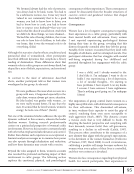
revisit their experiences because they were so aversive.
As such, we may have only interviewed those least
damaged by their cult experience, skewing the results.
In addition, the participants came from very diverse
backgrounds, making any kind of generalization
difficult. Despite such differences, participants’ stories
were often eerily similar suggesting some universality
of experience. Due to the surprisingly high number of
SGAs, in combination with the different cult types and
prior religions, our sample size for each group type was
rather small, which served as a limitation.
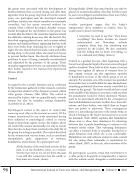
These findings indicate many different future paths.
First, what about religion draws men and women to
cults? The next step would be to further understand
the role of familiarity and structure to identify the
underlying reasons why religion is so intertwined with
cults. By understanding how religion is being misused
by these charismatic groups, preventative measures
can be implemented such as educating the public on
cult characteristics.
As noted earlier, how gender factors in exploitative cult
groups should be seriously examined. If indeed cults
are a form of violence against women, civil and legal
authorities need to consider remedies that address
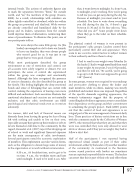
gender more directly. A second interesting finding that
warrants more research is on SGAs and the potential
damage of being raised in a cult. For example, several
SGAs in this study identified living on a commune and
being deprived of attending school. They noted that
their parents lied to the state by stating the students
were homeschooled when they were not schooled at all.
This lack of education inevitably led to obstacles and
limitations in their adult life that were undeserved and
preventable. These preliminary findings suggest that
more state interference is warranted due to the use of
religious beliefs to justify abuse in cultic communities.
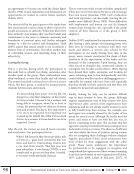
Cultic groups that exploit natural desires inherent
to the human condition (i.e., purpose, spirituality,
community) by masquerading as a religious group
epitomizes the need for the reevaluation of our religious
freedom exemptions that not only allow but promote
the continuation of these human rights violations.
Yasmin Ali Williams and Chitra Raghavan |Do Prior Religious Beliefs Play A Role in Cult Susceptibility
revisit their experiences because they were so aversive.
As such, we may have only interviewed those least
damaged by their cult experience, skewing the results.
In addition, the participants came from very diverse
backgrounds, making any kind of generalization
difficult. Despite such differences, participants’ stories
were often eerily similar suggesting some universality
of experience. Due to the surprisingly high number of
SGAs, in combination with the different cult types and
prior religions, our sample size for each group type was
rather small, which served as a limitation.
These findings indicate many different future paths.
First, what about religion draws men and women to
cults? The next step would be to further understand
the role of familiarity and structure to identify the
underlying reasons why religion is so intertwined with
cults. By understanding how religion is being misused
by these charismatic groups, preventative measures
can be implemented such as educating the public on
cult characteristics.
As noted earlier, how gender factors in exploitative cult
groups should be seriously examined. If indeed cults
are a form of violence against women, civil and legal
authorities need to consider remedies that address
gender more directly. A second interesting finding that
warrants more research is on SGAs and the potential
damage of being raised in a cult. For example, several
SGAs in this study identified living on a commune and
being deprived of attending school. They noted that
their parents lied to the state by stating the students
were homeschooled when they were not schooled at all.
This lack of education inevitably led to obstacles and
limitations in their adult life that were undeserved and
preventable. These preliminary findings suggest that
more state interference is warranted due to the use of
religious beliefs to justify abuse in cultic communities.
Cultic groups that exploit natural desires inherent
to the human condition (i.e., purpose, spirituality,
community) by masquerading as a religious group
epitomizes the need for the reevaluation of our religious
freedom exemptions that not only allow but promote
the continuation of these human rights violations.