31
Jaime Simpson and Jodi Death |Pastor Sexual Exploitation of Adult Congregation Members
I was mentally unwell I was triggered by
something, and it didn’t happen. I was told I
need a psychiatrist and medication.
This illustrates how such attacks exploit mental health
stigmas within faith communities. Furthermore,
in the “reverse victim and offender” phase, 44% of
participants reported that the pastor positioned himself
as the victim, with 15% stating that he accused them of
having a history of false allegations. Some respondents
also described being labelled a “Jezebel”, a term drawn
from Christian discourse and historically used to
sexualise and vilify women who resist male authority
or transgress patriarchal expectations (Collins, 2000
Pippin, 1995 Stark &Van Deventer, 2009). As Pippin
(1995) argues, Jezebel operates as a misogynistic “fantasy
space,” a cultural construct projecting moral panic
about female autonomy and desire. In this discourse,
Jezebel is portrayed as a “cheap harlot”, “evil”, “wicked”,
“calculating”, and “ruthless” (p. 221). This moral
panic extends beyond the individual woman to shape
congregational perceptions, legitimising suspicion
and judgement toward those accused of “seduction”.
Within church communities, such rhetoric reinforces
collective complicity, allowing abuse to be reframed as
a spiritual battle rather than a violation of power and
trust. Stark and Van Deventer (2009) further observe
that this trope has been repeatedly deployed to justify
sexual exploitation while absolving male perpetrators
of responsibility, particularly within racially and
religiously stratified contexts. In contemporary church
settings, invoking this label serves to moralise abuse,
frame women as seductresses, and shift blame away
from the perpetrator. These tactics force victims to
defend their credibility rather than hold the offender
accountable, deepening isolation and reinforcing a
culture of silence and complicity (Harsey &Freyd,
2020).
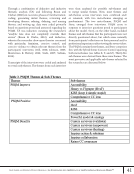
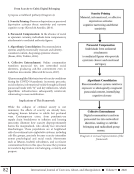
Together, these DARVO strategies function as a
powerful mechanism of coercive control, shielding
perpetrators and significantly obstructing victims’
ability to seek justice. By consolidating all the post-
abuse maintenance tactics, these findings illustrate a
complex pattern of coercive control, where spiritual,
personal, and rhetorical strategies are used to silence,
discredit, and manipulate victims. By recognising these
tactics, faith communities can strive for accountability
and provide support for survivors, rather than
nurturing a culture of impunity.
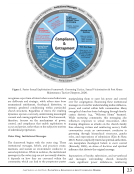
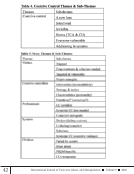
The Inner Circle: Compliance and Entrapment
The Pastor Sexual Exploitation of Adult Congregation
Members framework illustrates how institutional
messages, grooming tactics, sexual violence, and post-
abuse maintenance tactics collectively entrap ACMs,
creating a sustained cycle of power and control by the
pastor. The inner circle of compliance and entrapment
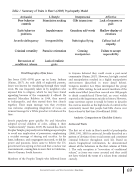
extends Sinnamon’s (2017) Seven-Stage Model of
Adult Sexual Grooming by shifting the analytic
focus from the perpetrator’s preparatory tactics to
the victim’s experience of ongoing subjugation and
constrained agency during the grooming process.
While Sinnamon’s (2017) model concludes with
Controlling the Victim, the Pastor Sexual Exploitation
Framework of Adult Congregation Members extends
the post-abuse maintenance stage by illustrating how
the ongoing dynamics of compliance and entrapment
generate significant and enduring harms for victim-
survivors.
The profound impact of pastor sexual exploitation on
the overall well-being of ACMs cannot be overstated
(Simpson, 2025). Consistent with other victim-based
studies (de Weger, 2016 Flynn, 2003 Garland, 2006
Garland &Arguta, 2010 Kennedy, 2009 Pooler &
Barros-Lane, 2022), the survivors in this survey have
faced significant harm. Respondents disclosed the
spiritual, emotional, financial, physical, relational, and
psychological injuries they have suffered (Simpson,
2025). These survivors, whose pre-abuse identities
were closely tied to their faith communities, experience
compounded trauma when their faith is exploited to
manipulate them into intimacy and to silence their
voices, a phenomenon referred to as “double betrayal”
(Freyd, 1996). The scars left by such abuse endure,
with many survivors continuing to grapple with these
feelings decades after the abuse took place (Simpson,
2025).
Limitations
This research has several limitations. The online
survey may have excluded individuals without internet
access, limiting reach. The small sample size restricts
generalisability to broader experiences of adult sexual
grooming in faith communities. The absence of
Jaime Simpson and Jodi Death |Pastor Sexual Exploitation of Adult Congregation Members
I was mentally unwell I was triggered by
something, and it didn’t happen. I was told I
need a psychiatrist and medication.
This illustrates how such attacks exploit mental health
stigmas within faith communities. Furthermore,
in the “reverse victim and offender” phase, 44% of
participants reported that the pastor positioned himself
as the victim, with 15% stating that he accused them of
having a history of false allegations. Some respondents
also described being labelled a “Jezebel”, a term drawn
from Christian discourse and historically used to
sexualise and vilify women who resist male authority
or transgress patriarchal expectations (Collins, 2000
Pippin, 1995 Stark &Van Deventer, 2009). As Pippin
(1995) argues, Jezebel operates as a misogynistic “fantasy
space,” a cultural construct projecting moral panic
about female autonomy and desire. In this discourse,
Jezebel is portrayed as a “cheap harlot”, “evil”, “wicked”,
“calculating”, and “ruthless” (p. 221). This moral
panic extends beyond the individual woman to shape
congregational perceptions, legitimising suspicion
and judgement toward those accused of “seduction”.
Within church communities, such rhetoric reinforces
collective complicity, allowing abuse to be reframed as
a spiritual battle rather than a violation of power and
trust. Stark and Van Deventer (2009) further observe
that this trope has been repeatedly deployed to justify
sexual exploitation while absolving male perpetrators
of responsibility, particularly within racially and
religiously stratified contexts. In contemporary church
settings, invoking this label serves to moralise abuse,
frame women as seductresses, and shift blame away
from the perpetrator. These tactics force victims to
defend their credibility rather than hold the offender
accountable, deepening isolation and reinforcing a
culture of silence and complicity (Harsey &Freyd,
2020).
Together, these DARVO strategies function as a
powerful mechanism of coercive control, shielding
perpetrators and significantly obstructing victims’
ability to seek justice. By consolidating all the post-
abuse maintenance tactics, these findings illustrate a
complex pattern of coercive control, where spiritual,
personal, and rhetorical strategies are used to silence,
discredit, and manipulate victims. By recognising these
tactics, faith communities can strive for accountability
and provide support for survivors, rather than
nurturing a culture of impunity.
The Inner Circle: Compliance and Entrapment
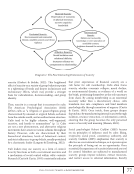
The Pastor Sexual Exploitation of Adult Congregation
Members framework illustrates how institutional
messages, grooming tactics, sexual violence, and post-
abuse maintenance tactics collectively entrap ACMs,
creating a sustained cycle of power and control by the
pastor. The inner circle of compliance and entrapment
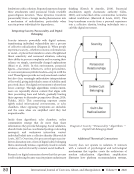
extends Sinnamon’s (2017) Seven-Stage Model of
Adult Sexual Grooming by shifting the analytic
focus from the perpetrator’s preparatory tactics to
the victim’s experience of ongoing subjugation and
constrained agency during the grooming process.
While Sinnamon’s (2017) model concludes with
Controlling the Victim, the Pastor Sexual Exploitation
Framework of Adult Congregation Members extends
the post-abuse maintenance stage by illustrating how
the ongoing dynamics of compliance and entrapment
generate significant and enduring harms for victim-
survivors.
The profound impact of pastor sexual exploitation on
the overall well-being of ACMs cannot be overstated
(Simpson, 2025). Consistent with other victim-based
studies (de Weger, 2016 Flynn, 2003 Garland, 2006
Garland &Arguta, 2010 Kennedy, 2009 Pooler &
Barros-Lane, 2022), the survivors in this survey have
faced significant harm. Respondents disclosed the
spiritual, emotional, financial, physical, relational, and
psychological injuries they have suffered (Simpson,
2025). These survivors, whose pre-abuse identities
were closely tied to their faith communities, experience
compounded trauma when their faith is exploited to
manipulate them into intimacy and to silence their
voices, a phenomenon referred to as “double betrayal”
(Freyd, 1996). The scars left by such abuse endure,
with many survivors continuing to grapple with these
feelings decades after the abuse took place (Simpson,
2025).
Limitations
This research has several limitations. The online
survey may have excluded individuals without internet
access, limiting reach. The small sample size restricts
generalisability to broader experiences of adult sexual
grooming in faith communities. The absence of