International Journal of Coercion, Abuse, and Manipulation Volume 9 2026 38
more challenging for coercive control to be effectively
addressed. When survivors encounter coercion and
control within a system, they are often re-traumatized,
not believed, and face biases and victim-blaming,
which harms them further. This institutional betrayal
can be seen as a form of post-separation abuse, co-
occurring with direct abuse by the coercive controller
or coercively controlling group (Goldstein, 2014 Hill,
2020 Smith &Freyd, 2014 Stark, 2007).
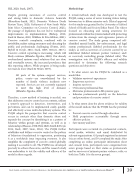
The PsychoSocial Quicksand Model™ (PSQM) (Amber,
2022) was designed to quickly and effectively address
the systems’ shortcomings and be more universally
applicable across contexts, including via the creation
of engaging and accessible training for survivors and
professionals. The PSQM synthesizes research and
theory from trauma and recovery (Herman, 2015),
state-sanctioned violence (Delgado &Melvin 2020),
human trafficking (Amnesty International, 1994),
and extremist groups and war (Lifton, 2014) along
with Stark’s (2007) framework of coercive control and
Johnson’s (2008) “intimate terrorism” within domestic
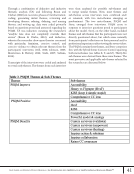
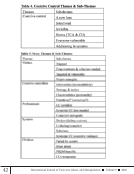
abuse. Using learning styles, metaphor, and alliteration,
the PSQM aims to increase awareness of coercive
control, validate, empower, and motivate survivors,
and increase collaboration between and motivation
for professionals to transform systems. This is done
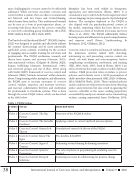
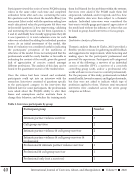
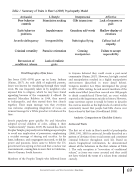
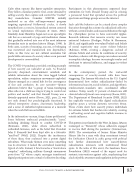
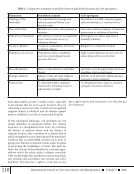
through the seven PSQM videos, which are described
in the table below.
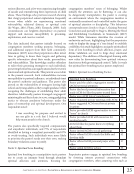
Table 1. PSQM videos
VIDEO
#
TITLE DESCRIPTION
Video 1 Coercive Control: The Big
Picture
Overview of the PSQM &videos
Video 2 Coercive Control: The Invisible
Pandemic
Applying context to current myths &misconceptions
Video 3 Coercive Control: Research &
Theory
Foundational research &theory of the PSQM
Video 4 Coercive Control: Know The
Signs
The doubles &DARVO
Video 5 Coercive Control: Signs of
Trauma
Reframing victim-blaming &shaming narratives
Video 6 Coercive Control: Systemic
Oppression
The role of systems in perpetuating &escalating coercive
control
Video 7 Coercive Control: Recap &
Solutions
Centering survivors &collaborating for positive change
Metaphor has been used widely in therapeutic
approaches and interventions (Burns, 2007). It is
considered a way in which both the therapist and client
can use language in processing aspects of psychological
distress. The metaphor deployed in the PSQM is
also aligned with the psychoeducational content of
the model, something which has been shown to be
efficacious as a form of treatment for trauma survivors
(Bass et al., 2016). The PQSM additionally utilizes
learning styles and alliteration to speed comprehension
and improve recall (Boers, Lindstromberg, &
Eyckmans, 2012 Gilakjani, 2012).
Coercive control is complex and nuanced. Additionally,
the numerous systems tasked with detecting,
intervening in, and preventing coercive control are
siloed, rife with biases and misconceptions, further
complicating coordination, motivation, and training
(Hill, 2020 Stark, 2007 Stark &Hester, 2019). Law
enforcement has the single-incidence model of physical
violence. Child protection relies on failure to protect
policies, and in family court, a 50/50 presumption of
child custody is often presumed (Hill, 2020 Goldstein,
2014 Myhill &Hoyle, 2016). These outdated policies
and procedures not only prevent victims from obtaining
justice and protection but also result in ignoring the
coercive controller as the cause, making perpetrator
accountability nearly non-existent and re-traumatizing
victims, causing exponential harm (Goldstein, 2014
more challenging for coercive control to be effectively
addressed. When survivors encounter coercion and
control within a system, they are often re-traumatized,
not believed, and face biases and victim-blaming,
which harms them further. This institutional betrayal
can be seen as a form of post-separation abuse, co-
occurring with direct abuse by the coercive controller
or coercively controlling group (Goldstein, 2014 Hill,
2020 Smith &Freyd, 2014 Stark, 2007).
The PsychoSocial Quicksand Model™ (PSQM) (Amber,
2022) was designed to quickly and effectively address
the systems’ shortcomings and be more universally
applicable across contexts, including via the creation
of engaging and accessible training for survivors and
professionals. The PSQM synthesizes research and
theory from trauma and recovery (Herman, 2015),
state-sanctioned violence (Delgado &Melvin 2020),
human trafficking (Amnesty International, 1994),
and extremist groups and war (Lifton, 2014) along
with Stark’s (2007) framework of coercive control and
Johnson’s (2008) “intimate terrorism” within domestic
abuse. Using learning styles, metaphor, and alliteration,
the PSQM aims to increase awareness of coercive
control, validate, empower, and motivate survivors,
and increase collaboration between and motivation
for professionals to transform systems. This is done
through the seven PSQM videos, which are described
in the table below.
Table 1. PSQM videos
VIDEO
#
TITLE DESCRIPTION
Video 1 Coercive Control: The Big
Picture
Overview of the PSQM &videos
Video 2 Coercive Control: The Invisible
Pandemic
Applying context to current myths &misconceptions
Video 3 Coercive Control: Research &
Theory
Foundational research &theory of the PSQM
Video 4 Coercive Control: Know The
Signs
The doubles &DARVO
Video 5 Coercive Control: Signs of
Trauma
Reframing victim-blaming &shaming narratives
Video 6 Coercive Control: Systemic
Oppression
The role of systems in perpetuating &escalating coercive
control
Video 7 Coercive Control: Recap &
Solutions
Centering survivors &collaborating for positive change
Metaphor has been used widely in therapeutic
approaches and interventions (Burns, 2007). It is
considered a way in which both the therapist and client
can use language in processing aspects of psychological
distress. The metaphor deployed in the PSQM is
also aligned with the psychoeducational content of
the model, something which has been shown to be
efficacious as a form of treatment for trauma survivors
(Bass et al., 2016). The PQSM additionally utilizes
learning styles and alliteration to speed comprehension
and improve recall (Boers, Lindstromberg, &
Eyckmans, 2012 Gilakjani, 2012).
Coercive control is complex and nuanced. Additionally,
the numerous systems tasked with detecting,
intervening in, and preventing coercive control are
siloed, rife with biases and misconceptions, further
complicating coordination, motivation, and training
(Hill, 2020 Stark, 2007 Stark &Hester, 2019). Law
enforcement has the single-incidence model of physical
violence. Child protection relies on failure to protect
policies, and in family court, a 50/50 presumption of
child custody is often presumed (Hill, 2020 Goldstein,
2014 Myhill &Hoyle, 2016). These outdated policies
and procedures not only prevent victims from obtaining
justice and protection but also result in ignoring the
coercive controller as the cause, making perpetrator
accountability nearly non-existent and re-traumatizing
victims, causing exponential harm (Goldstein, 2014