International Journal of Coercion, Abuse, and Manipulation Volume 9 2026 22
addressing the study’s research questions.
Procedure
Participants accessed the survey via a secure Qualtrics
link. The participant information sheet outlined the
study’s aims, inclusion criteria, anonymity, and support
services. Consent was provided electronically before
beginning the survey. No identifying information was
collected. The survey remained open for six months
and could be completed at the participant’s own pace,
with links to national counselling and crisis services
displayed throughout. The Queensland University
of Technology Human Research Ethics Committee
granted ethical approval.
Analysis
Quantitative data from closed items were analysed
descriptively to identify frequency patterns and trends
in grooming, coercion, and institutional responses.
Qualitative data were examined using reflexive
thematic analysis following Braun and Clarke’s (2006)
six-phase approach. All open-ended responses were
exported into Excel and Word for manual coding. The
researcher read and re-read each response to identify
patterns of meaning, assigning initial codes to salient
words, phrases, and concepts. These codes were then
grouped into broader categories and refined through
multiple iterations to generate themes that captured
respondents’ lived experiences of coercion, compliance,
and harm.
Theme development was inductive, though informed
by existing literature on trauma, power, and clergy
sexual exploitation (Biderman, 1957 Freyd, 1996
Kennedy, 2008 Herman, 1992 Sinnamon, 2017 Smith
&Freyd, 2014 Stark, 2007 van der Kolk, 2014). Codes
and emerging themes were continually compared
and refined to illustrate the relationships between
grooming, coercive control, and institutional response
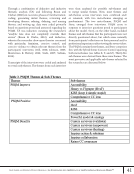
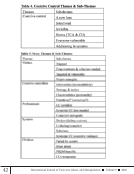
patterns. Five overarching themes were identified:
Grooming Tactics, Sexual Victimisation, Post-Abuse
Maintenance, Impacts, and Institutional Messages
each containing interconnected subthemes that
traced the movement from initial compliance to post-
abuse entrapment. This analytic process culminated
in the development of the Pastor Sexual Exploitation
Framework of Adult Congregation Members (Simpson,
2024), a conceptual model integrating survivor-derived
themes with established theories of power, coercion,
and professional boundary violation.
Results
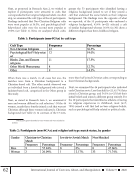
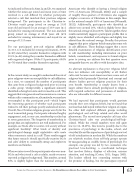
Of 33 respondents, 32 identified as women and one as
gender fluid. At the time of victimisation, respondents’
ages varied from 18 to 45 years, with an average age
of 24 years. Two respondents noted that the pastor
who abused them waited until they turned 18 before
initiating sexual contact. Many respondents reported
having sought spiritual guidance, counselling support,
career direction, or skill development from their pastor
during the period of abuse. The ages of the perpetrating
pastors at the time of the abuse ranged from 21 to
over 61 years, with an average age of 39 years. These
findings underscore a significant average age gap of 15
years between the pastor and the congregant.
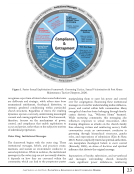
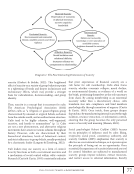
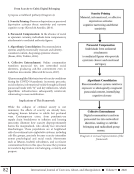
The thematic analysis of the data led to the development
of a visual framework titled Pastor Sexual Exploitation
of Adult Congregation Members: Grooming Tactics,
Sexual Victimisation, and Post-Abuse Maintenance
Tactics (Simpson, 2024) (Figure 1). This framework
illustrates how institutional messages create an
environment that enables pastors to exert power
and control over adult congregants. It operates from
the outside in, with broader institutional influences
facilitating the grooming tactics in the inner wheel. The
inner wheel outlines four grooming tactics that lead to
sexual victimisation: targeting the congregant’s sense
of belonging, spiritual love bombing, exploiting dual
roles, and isolation. These tactics are fluid, adapting to
the pastor’s need to maintain compliance. This process
ultimately results in sexual victimisation, which
occurs through two distinct forms: normalising sexual
content via sexual harassment and crossing sexual
boundaries. Once these boundaries are breached,
post-abuse maintenance tactics are employed to
sustain the congregant’s entrapment. This framework
is conceptually influenced by the Duluth Power
and Control Wheel (Domestic Abuse Intervention
Programs, n.d.), adapting its focus on coercion and
control to the specific dynamics of pastor sexual
exploitation in faith communities.
The framework does not assume all abusive conduct
by pastors is consciously premeditated. Instead, it
addressing the study’s research questions.
Procedure
Participants accessed the survey via a secure Qualtrics
link. The participant information sheet outlined the
study’s aims, inclusion criteria, anonymity, and support
services. Consent was provided electronically before
beginning the survey. No identifying information was
collected. The survey remained open for six months
and could be completed at the participant’s own pace,
with links to national counselling and crisis services
displayed throughout. The Queensland University
of Technology Human Research Ethics Committee
granted ethical approval.
Analysis
Quantitative data from closed items were analysed
descriptively to identify frequency patterns and trends
in grooming, coercion, and institutional responses.
Qualitative data were examined using reflexive
thematic analysis following Braun and Clarke’s (2006)
six-phase approach. All open-ended responses were
exported into Excel and Word for manual coding. The
researcher read and re-read each response to identify
patterns of meaning, assigning initial codes to salient
words, phrases, and concepts. These codes were then
grouped into broader categories and refined through
multiple iterations to generate themes that captured
respondents’ lived experiences of coercion, compliance,
and harm.
Theme development was inductive, though informed
by existing literature on trauma, power, and clergy
sexual exploitation (Biderman, 1957 Freyd, 1996
Kennedy, 2008 Herman, 1992 Sinnamon, 2017 Smith
&Freyd, 2014 Stark, 2007 van der Kolk, 2014). Codes
and emerging themes were continually compared
and refined to illustrate the relationships between
grooming, coercive control, and institutional response
patterns. Five overarching themes were identified:
Grooming Tactics, Sexual Victimisation, Post-Abuse
Maintenance, Impacts, and Institutional Messages
each containing interconnected subthemes that
traced the movement from initial compliance to post-
abuse entrapment. This analytic process culminated
in the development of the Pastor Sexual Exploitation
Framework of Adult Congregation Members (Simpson,
2024), a conceptual model integrating survivor-derived
themes with established theories of power, coercion,
and professional boundary violation.
Results
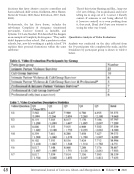
Of 33 respondents, 32 identified as women and one as
gender fluid. At the time of victimisation, respondents’
ages varied from 18 to 45 years, with an average age
of 24 years. Two respondents noted that the pastor
who abused them waited until they turned 18 before
initiating sexual contact. Many respondents reported
having sought spiritual guidance, counselling support,
career direction, or skill development from their pastor
during the period of abuse. The ages of the perpetrating
pastors at the time of the abuse ranged from 21 to
over 61 years, with an average age of 39 years. These
findings underscore a significant average age gap of 15
years between the pastor and the congregant.
The thematic analysis of the data led to the development
of a visual framework titled Pastor Sexual Exploitation
of Adult Congregation Members: Grooming Tactics,
Sexual Victimisation, and Post-Abuse Maintenance
Tactics (Simpson, 2024) (Figure 1). This framework
illustrates how institutional messages create an
environment that enables pastors to exert power
and control over adult congregants. It operates from
the outside in, with broader institutional influences
facilitating the grooming tactics in the inner wheel. The
inner wheel outlines four grooming tactics that lead to
sexual victimisation: targeting the congregant’s sense
of belonging, spiritual love bombing, exploiting dual
roles, and isolation. These tactics are fluid, adapting to
the pastor’s need to maintain compliance. This process
ultimately results in sexual victimisation, which
occurs through two distinct forms: normalising sexual
content via sexual harassment and crossing sexual
boundaries. Once these boundaries are breached,
post-abuse maintenance tactics are employed to
sustain the congregant’s entrapment. This framework
is conceptually influenced by the Duluth Power
and Control Wheel (Domestic Abuse Intervention
Programs, n.d.), adapting its focus on coercion and
control to the specific dynamics of pastor sexual
exploitation in faith communities.
The framework does not assume all abusive conduct
by pastors is consciously premeditated. Instead, it