1
Ruby Cramer and Sarah Stillwell |SINCERE: A Relational Safety Model for Counselors
SINCERE: A Relational Safety Model for Counselors
Working with Transgender and Gender Diverse
Survivors of Intimate Partner Violence
Ruby Cramer1 and Sarah Stillwell2
Abstract: Although intimate partner violence (IPV) is not new to the counseling field, there has been a significant rise in
cases involving survivors identifying as transgender and gender-diverse (TGD) individuals, who present with unique issues
of abuse, coercion, and manipulation not seen with cisgender partners. This sharp increase in transgender intimate partner
violence (T-IPV) necessitates that counselors are competent and ready to address these clients’ unique needs. The current body
of research on the treatment requirements for TGD survivors of IPV is limited. However, several studies offer insights into the
differences between the experiences of cisgender-IPV survivors and T-IPV survivors. Researchers suggest using a seven-element
model to support TGD survivors of violence and enhance professional competency among counselors. This model offers a
flexible framework of treatment elements that clinicians can tailor to meet the individual needs and goals of their clients.
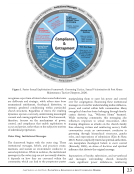
The recommended treatment approach can be remembered through the acronym SINCERE: signs, information, nuance,
continuing education and advocacy, resources, and establishing. Employing this trauma-informed counseling approach is
crucial for effectively serving this vulnerable and underserved population and fostering meaningful change.
Keywords: Intimate Partner Violence T-IPV Transgender Gender Diverse Identities TGD Trauma-Informed Counseling
1 Correspondence concerning this article should be addressed to Ruby Cramer, M.S., PLPC graduate of the Department of Counseling at Loyola University-
New Orleans. 6363 St. Charles Ave, Campus Box 66, New Orleans, LA 70118. Email: recramer@my.loyno.edu.
https://orcid.org/0000-0002-9702-2614
2 Sarah Stillwell, PhD, LPC-S, NCC, Assistant Professor in the Department of Counseling at Loyola University- New Orleans
https://orcid.org/0000-0001-8741-0974
SINCERE: A Relational Safety Model for Counselors
Working with Transgender and Gender Diverse
Survivors of Intimate Partner Violence
Transgender and gender-diverse people (TGD)
experience a notably high rate of intimate partner
violence (IPV), yet it remains understudied and
inadequately addressed (James et al., 2016 Kurdyla et
al., 2021). This paper discusses the existing literature
on IPV within the TGD community, highlights current
barriers to treatment, including the impacts of trauma,
manipulation, and coercion, explores clinical practices
and competency-building measures, and proposes
relational intervention strategies unique to this
population. This review will conclude with a proposed
relational framework for addressing the unique mental
health needs of this population.
The definition of IPV includes various forms of
violence or aggression (e.g., stalking, financial abuse,
psychological abuse, including manipulation and
coercion, physical abuse, sexual abuse) in relationships
with current or former spouses and dating partners
(CDC, 2024 Henry et al., 2021). Trans-specific IPV
(T-IPV) also involves specific threats of identity abuse
(e.g., outing) or using transphobia against an individual
as forms of coercive manipulation (Henry et al., 2021
Peitzmeier et al., 2021).
Regarding the mental health care of this underrepresented
population, studies have found that approximately
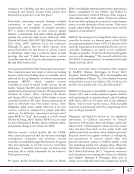
54% of TGD individuals have experienced intimate
partner violence (IPV) at least once in their lifetime
(Dolan &Conroy, 2021 Goode, 2023 James et al.,
2016). Additionally, a review of literature found
that TGD individuals reported experiencing sexual
coercion victimization in ranges of 7–49.1%, with that
percentage dramatically increasing to 53–70% when
additional minority statuses are factored in (Simpson
et al., 2024). The research presented here will enrich
the existing literature by outlining the current state
of this issue before introducing a proposed model of
doi: 10.54208/1000/0009/001
Ruby Cramer and Sarah Stillwell |SINCERE: A Relational Safety Model for Counselors
SINCERE: A Relational Safety Model for Counselors
Working with Transgender and Gender Diverse
Survivors of Intimate Partner Violence
Ruby Cramer1 and Sarah Stillwell2
Abstract: Although intimate partner violence (IPV) is not new to the counseling field, there has been a significant rise in
cases involving survivors identifying as transgender and gender-diverse (TGD) individuals, who present with unique issues
of abuse, coercion, and manipulation not seen with cisgender partners. This sharp increase in transgender intimate partner
violence (T-IPV) necessitates that counselors are competent and ready to address these clients’ unique needs. The current body
of research on the treatment requirements for TGD survivors of IPV is limited. However, several studies offer insights into the
differences between the experiences of cisgender-IPV survivors and T-IPV survivors. Researchers suggest using a seven-element
model to support TGD survivors of violence and enhance professional competency among counselors. This model offers a
flexible framework of treatment elements that clinicians can tailor to meet the individual needs and goals of their clients.
The recommended treatment approach can be remembered through the acronym SINCERE: signs, information, nuance,
continuing education and advocacy, resources, and establishing. Employing this trauma-informed counseling approach is
crucial for effectively serving this vulnerable and underserved population and fostering meaningful change.
Keywords: Intimate Partner Violence T-IPV Transgender Gender Diverse Identities TGD Trauma-Informed Counseling
1 Correspondence concerning this article should be addressed to Ruby Cramer, M.S., PLPC graduate of the Department of Counseling at Loyola University-
New Orleans. 6363 St. Charles Ave, Campus Box 66, New Orleans, LA 70118. Email: recramer@my.loyno.edu.
https://orcid.org/0000-0002-9702-2614
2 Sarah Stillwell, PhD, LPC-S, NCC, Assistant Professor in the Department of Counseling at Loyola University- New Orleans
https://orcid.org/0000-0001-8741-0974
SINCERE: A Relational Safety Model for Counselors
Working with Transgender and Gender Diverse
Survivors of Intimate Partner Violence
Transgender and gender-diverse people (TGD)
experience a notably high rate of intimate partner
violence (IPV), yet it remains understudied and
inadequately addressed (James et al., 2016 Kurdyla et
al., 2021). This paper discusses the existing literature
on IPV within the TGD community, highlights current
barriers to treatment, including the impacts of trauma,
manipulation, and coercion, explores clinical practices
and competency-building measures, and proposes
relational intervention strategies unique to this
population. This review will conclude with a proposed
relational framework for addressing the unique mental
health needs of this population.
The definition of IPV includes various forms of
violence or aggression (e.g., stalking, financial abuse,
psychological abuse, including manipulation and
coercion, physical abuse, sexual abuse) in relationships
with current or former spouses and dating partners
(CDC, 2024 Henry et al., 2021). Trans-specific IPV
(T-IPV) also involves specific threats of identity abuse
(e.g., outing) or using transphobia against an individual
as forms of coercive manipulation (Henry et al., 2021
Peitzmeier et al., 2021).
Regarding the mental health care of this underrepresented
population, studies have found that approximately
54% of TGD individuals have experienced intimate
partner violence (IPV) at least once in their lifetime
(Dolan &Conroy, 2021 Goode, 2023 James et al.,
2016). Additionally, a review of literature found
that TGD individuals reported experiencing sexual
coercion victimization in ranges of 7–49.1%, with that
percentage dramatically increasing to 53–70% when
additional minority statuses are factored in (Simpson
et al., 2024). The research presented here will enrich
the existing literature by outlining the current state
of this issue before introducing a proposed model of
doi: 10.54208/1000/0009/001