International Journal of Coercion, Abuse, and Manipulation Volume 9 2026 84
period enabled groups like Aum Shinrikyo to flourish
until tragedy forced recognition.
If scarcity is indeed a defining condition of the future
(driven by population growth, environmental collapse,
and increasingly unequal resource distribution [Evans,
2010 Homer-Dixon, 1994]), then these dynamics
will only intensify. Rising food insecurity, degraded
land, unsustainable water usage, and declining
energy resources will deepen collective deprivation.
Identifying how scarcity translates into radicalization
is therefore not just an academic exercise: it is a social
imperative. Understanding these pathways may allow
us to disrupt the conditions that transform ordinary
people into members of dangerous, insular movements.
Conclusion
In a utopian society where scarcity has been replenished
with abundance, would radicalization be possible? If
global basic necessities were met, would the experience
of perceived deprivation be possible? Scarcity is not
merely a backdrop for radicalization it is the latent
architecture through which psychological, social,
and technological mechanisms converge to produce
cult-like behavior in the digital age. From QAnon
to YamatoQ, these movements reveal how material
deprivation, informational voids, and social isolation
create fertile ground for parasocial attachments,
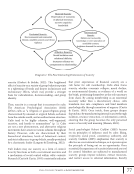
algorithmic echo chambers, and tightly fused in-group
identities. As climate change, inequality, and epistemic
instability deepen, the conditions that allow scarcity to
radicalize ordinary individuals will only become more
pervasive.
Deeper research on the convergence of parasocial
attachments, cultic relationships, and scarcity as a
biopsychosociological substrate is needed. To address
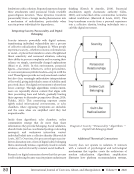
this, I advocate for a multi-method research agenda.
• Experimental priming can manipulate scarcity
salience to test its effects on parasocial attachment
and in-group consolidation.
• Network analysis can map how scarcity-linked
narratives cluster and spread across online
communities.
• Longitudinal studies can track whether sustained
scarcity predicts increasing ideological rigidity and
digital cultic involvement.
• Qualitative inquiry (through interviews with ex-
cult members and online radicalization survivors)
can uncover the lived experience of scarcity in ways
that quantitative data cannot.
Together, such research would bridge micro-level
psychological processes with meso-level network
dynamics, advancing a unified science of scarcity-
driven radicalization.
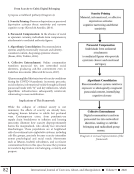
The implications for intervention are clear: tackling
radicalization requires addressing scarcity itself. This
requirement means implementing scarcity-mitigation
policies to reduce economic precarity, creating digital
literacy inoculation programs to counter informational
scarcity, enforcing algorithmic transparency regulation
to disrupt amplification loops, and adapting cult
exit frameworks to address parasocial and scarcity-
linked vulnerabilities explicitly. By confronting
scarcity not only as a socioeconomic challenge but
as a psychological and technological risk factor, we
can begin to dismantle the conditions that transform
alienation into extremism.
The lure of contrarian ideas is always part of human
thought systems. Yet, as the world grows connected in
newer, more intimate ways, the consequences of radical
ideas have further-reaching effects than originally
expected. In contemporary times, the current analysis
expects a resurgence of online cult-like behavior that
can have serious repercussions on a sociopolitical
level. On an existential level, scarcity has shaped group
behavior throughout the history of humanity and
will perhaps continue to do so in newer, drastic ways.
Inoculation against radical extremism can only stem
from understanding the epistemic causes underlying it
in our current societal structure.
period enabled groups like Aum Shinrikyo to flourish
until tragedy forced recognition.
If scarcity is indeed a defining condition of the future
(driven by population growth, environmental collapse,
and increasingly unequal resource distribution [Evans,
2010 Homer-Dixon, 1994]), then these dynamics
will only intensify. Rising food insecurity, degraded
land, unsustainable water usage, and declining
energy resources will deepen collective deprivation.
Identifying how scarcity translates into radicalization
is therefore not just an academic exercise: it is a social
imperative. Understanding these pathways may allow
us to disrupt the conditions that transform ordinary
people into members of dangerous, insular movements.
Conclusion
In a utopian society where scarcity has been replenished
with abundance, would radicalization be possible? If
global basic necessities were met, would the experience
of perceived deprivation be possible? Scarcity is not
merely a backdrop for radicalization it is the latent
architecture through which psychological, social,
and technological mechanisms converge to produce
cult-like behavior in the digital age. From QAnon
to YamatoQ, these movements reveal how material
deprivation, informational voids, and social isolation
create fertile ground for parasocial attachments,
algorithmic echo chambers, and tightly fused in-group
identities. As climate change, inequality, and epistemic
instability deepen, the conditions that allow scarcity to
radicalize ordinary individuals will only become more
pervasive.
Deeper research on the convergence of parasocial
attachments, cultic relationships, and scarcity as a
biopsychosociological substrate is needed. To address
this, I advocate for a multi-method research agenda.
• Experimental priming can manipulate scarcity
salience to test its effects on parasocial attachment
and in-group consolidation.
• Network analysis can map how scarcity-linked
narratives cluster and spread across online
communities.
• Longitudinal studies can track whether sustained
scarcity predicts increasing ideological rigidity and
digital cultic involvement.
• Qualitative inquiry (through interviews with ex-
cult members and online radicalization survivors)
can uncover the lived experience of scarcity in ways
that quantitative data cannot.
Together, such research would bridge micro-level
psychological processes with meso-level network
dynamics, advancing a unified science of scarcity-
driven radicalization.
The implications for intervention are clear: tackling
radicalization requires addressing scarcity itself. This
requirement means implementing scarcity-mitigation
policies to reduce economic precarity, creating digital
literacy inoculation programs to counter informational
scarcity, enforcing algorithmic transparency regulation
to disrupt amplification loops, and adapting cult
exit frameworks to address parasocial and scarcity-
linked vulnerabilities explicitly. By confronting
scarcity not only as a socioeconomic challenge but
as a psychological and technological risk factor, we
can begin to dismantle the conditions that transform
alienation into extremism.
The lure of contrarian ideas is always part of human
thought systems. Yet, as the world grows connected in
newer, more intimate ways, the consequences of radical
ideas have further-reaching effects than originally
expected. In contemporary times, the current analysis
expects a resurgence of online cult-like behavior that
can have serious repercussions on a sociopolitical
level. On an existential level, scarcity has shaped group
behavior throughout the history of humanity and
will perhaps continue to do so in newer, drastic ways.
Inoculation against radical extremism can only stem
from understanding the epistemic causes underlying it
in our current societal structure.