77
Zahra Choudhury |Scarcity as Latent Architecture
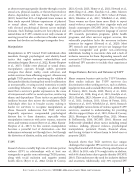
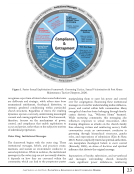
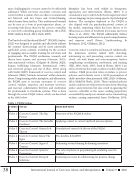
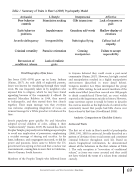
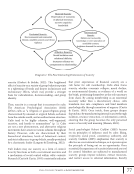
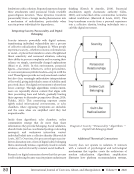
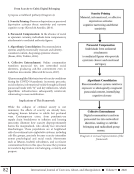
Diagram 1: The Four Interacting Dimensions of Scarcity
scarcity (Diekert &Brekke, 2022). This heightened
effect of scarcity on a variety of group behaviors points
to a tightening of bonds and deeper inclusionary and
exclusionary effects, which may provide a stronger
basis for radicalization, decision-making, and group
identity.
Thus, scarcity is a concept that is necessary for cults.
The American Psychological Association (2022)
defines cults as “a religious or quasi-religious group
characterized by unusual or atypical beliefs, seclusion
from the outside world, and an authoritarian structure.
Cults tend to be highly cohesive, well-organized,
secretive, and hostile to nonmembers” (p. 1). Cults
are not a new phenomenon, and alternative religious
movements have arisen in various schisms throughout
history. However, cults are characterized by their
hierarchical structures, levels of behavioral control,
and strict adherence to group beliefs, usually postulated
by a charismatic leader (Langone &Eisenberg, 2022).
Cult leaders may use scarcity as a form of control.
Scarcity functions as both a recruitment narrative and
a mechanism of social control within cultic contexts.
Research (Curtis &Curtis, 1993) consistently indicates
that prior experiences of financial scarcity are a
risk factor for cult membership. Cults often frame
scarcity, whether economic collapse, moral decline,
or environmental disaster, as evidence of a world on
the brink, positioning themselves as the sole sanctuary
from chaos. By casting membership as an existential
necessity rather than a discretionary choice, cults
transform fear into compliance and bind members
psychologically through narratives of urgency (Curtis
&Curtis, 1993). Once inside, these groups deepen
dependence by manufacturing internal scarcity through
isolation, resource extraction, or information control,
ensuring that the group becomes the only perceived
source of security and meaning (Hassan, 2021).
Social psychologist Robert Cialdini (2005) focuses
on six principles of influence used by cults: liking,
reciprocity, social proof, consistency, authority, and
scarcity. Cialdini (2005) emphasizes that scarcity is
effective as a recruitment technique, as it operates upon
the principle of losing out on an opportunity. Once
recruited, the experience of scarcity is later used as a tool
for control. Members are subjected to manufactured
scarcity: groups impose isolation, extract resources,
and restrict access to external information, thereby
Zahra Choudhury |Scarcity as Latent Architecture
Diagram 1: The Four Interacting Dimensions of Scarcity
scarcity (Diekert &Brekke, 2022). This heightened
effect of scarcity on a variety of group behaviors points
to a tightening of bonds and deeper inclusionary and
exclusionary effects, which may provide a stronger
basis for radicalization, decision-making, and group
identity.
Thus, scarcity is a concept that is necessary for cults.
The American Psychological Association (2022)
defines cults as “a religious or quasi-religious group
characterized by unusual or atypical beliefs, seclusion
from the outside world, and an authoritarian structure.
Cults tend to be highly cohesive, well-organized,
secretive, and hostile to nonmembers” (p. 1). Cults
are not a new phenomenon, and alternative religious
movements have arisen in various schisms throughout
history. However, cults are characterized by their
hierarchical structures, levels of behavioral control,
and strict adherence to group beliefs, usually postulated
by a charismatic leader (Langone &Eisenberg, 2022).
Cult leaders may use scarcity as a form of control.
Scarcity functions as both a recruitment narrative and
a mechanism of social control within cultic contexts.
Research (Curtis &Curtis, 1993) consistently indicates
that prior experiences of financial scarcity are a
risk factor for cult membership. Cults often frame
scarcity, whether economic collapse, moral decline,
or environmental disaster, as evidence of a world on
the brink, positioning themselves as the sole sanctuary
from chaos. By casting membership as an existential
necessity rather than a discretionary choice, cults
transform fear into compliance and bind members
psychologically through narratives of urgency (Curtis
&Curtis, 1993). Once inside, these groups deepen
dependence by manufacturing internal scarcity through
isolation, resource extraction, or information control,
ensuring that the group becomes the only perceived
source of security and meaning (Hassan, 2021).
Social psychologist Robert Cialdini (2005) focuses
on six principles of influence used by cults: liking,
reciprocity, social proof, consistency, authority, and
scarcity. Cialdini (2005) emphasizes that scarcity is
effective as a recruitment technique, as it operates upon
the principle of losing out on an opportunity. Once
recruited, the experience of scarcity is later used as a tool
for control. Members are subjected to manufactured
scarcity: groups impose isolation, extract resources,
and restrict access to external information, thereby