61
Yasmin Ali Williams and Chitra Raghavan |Do Prior Religious Beliefs Play A Role in Cult Susceptibility
or members. Interviewers transcribed the participants’
answers onto a Microsoft Word document in real time
during the phone call no audio was recorded due
to the confidentiality agreement. All interview data
were coded by two different researchers, with a third
researcher functioning as a tie breaker to maintain
inter-rater reliability.
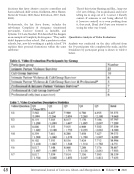
Participants in this study included 115 former cult
members from six different continents. Participants
included 77 (67.0%) women, 31 (27.0%) men, and 7
(6.1%) non-binary individuals between the ages of
18–68 (M =41.25, SD =12.09). The participants were
predominately White (80.9%), while others identified
as Black (6.1%),2
1
Latinx (4.3%), Asian (1.7%), and
Mixed (7.0%). The mean number of years involved
in the cult was 19.87 (M =19.87, SD =12.07) and the
mean years since leaving the cult was 6.4.
Interview Questionnaire
The interview questionnaire was based on a measure
of coercive control and trauma bonding in sex
trafficking and adapted for the cult context (Doychak
&Raghavan, 2018). The semi-structured interview
questionnaire utilized both open-ended questions, as
well as self-report, to allow for both qualitative and
quantitative data. Participants were asked open-ended
questions regarding their introduction to the group,
indoctrination, coercive controlling experiences as a
member, relationship dynamics, spirituality, apostasy,
and the aftermath of their membership. Self-reported
data were collected on participant demographics,
distress levels when joining, recruitment, group
structure, roles, level of indoctrination, time involved,
time since membership ceased, fearfulness after leaving
(frequency and duration, if present), and number of
coercers. Only questions pertinent to this study will be
discussed.
Coding and Analysis
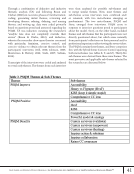
For this study’s classification, we condensed the cult
types into five major groups: Neo-Christian Hindu,
Zen, and Eastern religious psychological and self-help
related other world phenomena and other, which
includes political, cultural, and miscellaneous groups.
2 Rounding error.
We examined participants’ brief responses and longer
narratives to the following eight questions.
1. Can you tell me which group you left?
2. If any, what was your religious background growing
up?
3. Can you tell me about how you were introduced
to [the group]? Did you seek it out or did someone
approach you?
4. How old were you?
5. How long were you involved in [the group]?
6. Would you consider yourself religious now?
7. Do you consider yourself affiliated with any organized
religion now?
8. Would you consider yourself spiritual, even if you no
longer affiliate with a formal religion/organized group?
Open ended responses were converted into variables
to allow for descriptive analyses. SPSS was used to
calculate descriptive data.
Results
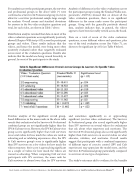
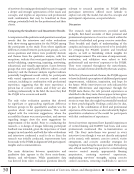
As described in Research Aim 1, we first wished
to explore the existing religious backgrounds of
participants. Unexpectedly, of the 115 participants,
over forty percent (n=52, 45.2%) indicated that they
were second-generation adults (SGAs) or multi-
generational adults (MGAs), meaning they were
born and/or raised in a cult and had not selected or
joined volitionally as adults. This study will refer
to the collective group as SGAs. Of the remaining
63 participants (54.8% of the total sample), the
majority (n=53, 84.1%) identified having a religious
background growing up. The majority (n=46, 73.0%)
identified Christianity, which includes Catholicism, as
their initial religious affiliation. Others (n=10 15.9%)
identified as atheists and a few (n=5 7.9%) identified
Judaism. One participant (1.6%) identified Sikhism
and one (1.6%) participant identified being born into
one cult and joining a different cult as an adult.
Yasmin Ali Williams and Chitra Raghavan |Do Prior Religious Beliefs Play A Role in Cult Susceptibility
or members. Interviewers transcribed the participants’
answers onto a Microsoft Word document in real time
during the phone call no audio was recorded due
to the confidentiality agreement. All interview data
were coded by two different researchers, with a third
researcher functioning as a tie breaker to maintain
inter-rater reliability.
Participants in this study included 115 former cult
members from six different continents. Participants
included 77 (67.0%) women, 31 (27.0%) men, and 7
(6.1%) non-binary individuals between the ages of
18–68 (M =41.25, SD =12.09). The participants were
predominately White (80.9%), while others identified
as Black (6.1%),2
1
Latinx (4.3%), Asian (1.7%), and
Mixed (7.0%). The mean number of years involved
in the cult was 19.87 (M =19.87, SD =12.07) and the
mean years since leaving the cult was 6.4.
Interview Questionnaire
The interview questionnaire was based on a measure
of coercive control and trauma bonding in sex
trafficking and adapted for the cult context (Doychak
&Raghavan, 2018). The semi-structured interview
questionnaire utilized both open-ended questions, as
well as self-report, to allow for both qualitative and
quantitative data. Participants were asked open-ended
questions regarding their introduction to the group,
indoctrination, coercive controlling experiences as a
member, relationship dynamics, spirituality, apostasy,
and the aftermath of their membership. Self-reported
data were collected on participant demographics,
distress levels when joining, recruitment, group
structure, roles, level of indoctrination, time involved,
time since membership ceased, fearfulness after leaving
(frequency and duration, if present), and number of
coercers. Only questions pertinent to this study will be
discussed.
Coding and Analysis
For this study’s classification, we condensed the cult
types into five major groups: Neo-Christian Hindu,
Zen, and Eastern religious psychological and self-help
related other world phenomena and other, which
includes political, cultural, and miscellaneous groups.
2 Rounding error.
We examined participants’ brief responses and longer
narratives to the following eight questions.
1. Can you tell me which group you left?
2. If any, what was your religious background growing
up?
3. Can you tell me about how you were introduced
to [the group]? Did you seek it out or did someone
approach you?
4. How old were you?
5. How long were you involved in [the group]?
6. Would you consider yourself religious now?
7. Do you consider yourself affiliated with any organized
religion now?
8. Would you consider yourself spiritual, even if you no
longer affiliate with a formal religion/organized group?
Open ended responses were converted into variables
to allow for descriptive analyses. SPSS was used to
calculate descriptive data.
Results
As described in Research Aim 1, we first wished
to explore the existing religious backgrounds of
participants. Unexpectedly, of the 115 participants,
over forty percent (n=52, 45.2%) indicated that they
were second-generation adults (SGAs) or multi-
generational adults (MGAs), meaning they were
born and/or raised in a cult and had not selected or
joined volitionally as adults. This study will refer
to the collective group as SGAs. Of the remaining
63 participants (54.8% of the total sample), the
majority (n=53, 84.1%) identified having a religious
background growing up. The majority (n=46, 73.0%)
identified Christianity, which includes Catholicism, as
their initial religious affiliation. Others (n=10 15.9%)
identified as atheists and a few (n=5 7.9%) identified
Judaism. One participant (1.6%) identified Sikhism
and one (1.6%) participant identified being born into
one cult and joining a different cult as an adult.