21
Jaime Simpson and Jodi Death |Pastor Sexual Exploitation of Adult Congregation Members
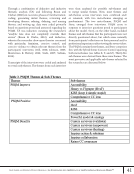
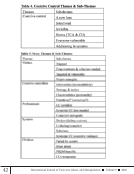
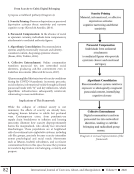
The primary author’s research identified these
additional dynamics, leading to the development of
the Pastor Sexual Exploitation Framework of Adult
Congregation Members.
Method
This exploratory mixed-method study is part of a larger
project (Simpson, 2024), using an anonymous online
survey hosted on the Qualtrics platform. The survey
combined closed-ended items (quantitative) and open-
ended questions (qualitative), enabling both pattern
identification and narrative responses. The design
was guided by a trauma-informed feminist approach,
recognising that survivors’ lived experiences constitute
legitimate sources of knowledge shaped by gender,
power, and theology (Braun &Clarke, 2006 Herman,
1992).
Participant and Recruitment
Purposive sampling was employed to recruit
participants. Advertisements were disseminated on
social media platforms, including Facebook, Instagram,
LinkedIn, and X. Additionally, requests for assistance
in promoting the survey were sent to academics,
counsellors, lawyers, journalists, podcast groups,
advocates, and survivor networks. The survey was
open to individuals who self-identified as either having
experienced an inappropriate intimate relationship
with a pastor or church leader in an Evangelical or
Pentecostal Australian Christian faith community
or having been sexually harassed, sexually abused,
manipulated by, or sexually pursued by a pastor from
the age of 18.
Language Considerations
While this study defines clergy sexual misconduct
against adults as sexual exploitation, the phrase
“inappropriate intimate relationship” was intentionally
included in recruitment materials. This wording
aligns with the common language used in media and
church discussions about clergy sexual misconduct.
Considering that language influences disclosure,
solely using terms like “sexual abuse” might have
discouraged participation from individuals who do not
yet understand their experiences in those terms.
Materials
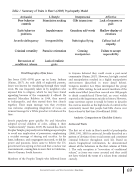
The survey was structured around key themes: (1)
common grooming tactics, (2) patterns of perpetrator
behaviours and coercion, (3) features of sexual
harassment, (4) professional sexual boundary violations,
(5) impacts on adult congregation members’ well-being,
and (6) the institutional responses to disclosure. Items
addressing grooming and coercion were informed by
Sinnamon’s (2017) Seven-Stage Model of Adult Sexual
Grooming, Biderman’s (1957) Chart of Coercion,
the Power and Control Wheel (Domestic Violence
Prevention Centre, 2017), and Kennedy’s (2009)
Clergy Sexual Exploitation Power and Control Wheel.
Questions exploring sexual harassment were adapted
from the Australian Human Rights Commission’s
(2022) national workplace survey, recognising parallels
between occupational and religious settings where
authority can be misused. Items relating to professional
boundary violations and sexual coercion were inspired
by the Sexual Experiences Survey (Koss, Abbey, et al.,
2007) they were constructed by the author to reflect
the institutional and pastoral context. Questions
examining the impacts of abuse drew on prior research
into clergy sexual exploitation, child grooming, and
sexual trauma (Chaves &Garland, 2009 Flynn, 2003,
2008 Garland &Argueta, 2010 Kennedy, 2009 Wolf &
Pruitt, 2019). Finally, questions regarding institutional
responses incorporated betrayal trauma theory (Freyd,
1996, 1997) and previous victim-based studies of
church misconduct.
The survey comprised 119 items organised into thematic
sections: Participant Information Sheet, Consent (2),
Personal Characteristics (12), Childhood Experiences
(12), Faith Background (7), Characteristics of the Pastor
(16), Experiences of Sexual Misconduct (41), Impacts
of Misconduct (14), Church Responses (11), and
Current Circumstances (4). Most items were multiple-
choice questions, allowing respondents to select more
than one applicable option. Each section also included
open-ended questions that invited participants to
elaborate on their experiences, forming the qualitative
component of the study. This mixed-format design
enabled the collection of both descriptive and narrative
data, offering a comprehensive understanding of
the dynamics, impacts, and institutional responses
surrounding adult clergy sexual exploitation. The
resulting dataset provided a robust foundation for
Jaime Simpson and Jodi Death |Pastor Sexual Exploitation of Adult Congregation Members
The primary author’s research identified these
additional dynamics, leading to the development of
the Pastor Sexual Exploitation Framework of Adult
Congregation Members.
Method
This exploratory mixed-method study is part of a larger
project (Simpson, 2024), using an anonymous online
survey hosted on the Qualtrics platform. The survey
combined closed-ended items (quantitative) and open-
ended questions (qualitative), enabling both pattern
identification and narrative responses. The design
was guided by a trauma-informed feminist approach,
recognising that survivors’ lived experiences constitute
legitimate sources of knowledge shaped by gender,
power, and theology (Braun &Clarke, 2006 Herman,
1992).
Participant and Recruitment
Purposive sampling was employed to recruit
participants. Advertisements were disseminated on
social media platforms, including Facebook, Instagram,
LinkedIn, and X. Additionally, requests for assistance
in promoting the survey were sent to academics,
counsellors, lawyers, journalists, podcast groups,
advocates, and survivor networks. The survey was
open to individuals who self-identified as either having
experienced an inappropriate intimate relationship
with a pastor or church leader in an Evangelical or
Pentecostal Australian Christian faith community
or having been sexually harassed, sexually abused,
manipulated by, or sexually pursued by a pastor from
the age of 18.
Language Considerations
While this study defines clergy sexual misconduct
against adults as sexual exploitation, the phrase
“inappropriate intimate relationship” was intentionally
included in recruitment materials. This wording
aligns with the common language used in media and
church discussions about clergy sexual misconduct.
Considering that language influences disclosure,
solely using terms like “sexual abuse” might have
discouraged participation from individuals who do not
yet understand their experiences in those terms.
Materials
The survey was structured around key themes: (1)
common grooming tactics, (2) patterns of perpetrator
behaviours and coercion, (3) features of sexual
harassment, (4) professional sexual boundary violations,
(5) impacts on adult congregation members’ well-being,
and (6) the institutional responses to disclosure. Items
addressing grooming and coercion were informed by
Sinnamon’s (2017) Seven-Stage Model of Adult Sexual
Grooming, Biderman’s (1957) Chart of Coercion,
the Power and Control Wheel (Domestic Violence
Prevention Centre, 2017), and Kennedy’s (2009)
Clergy Sexual Exploitation Power and Control Wheel.
Questions exploring sexual harassment were adapted
from the Australian Human Rights Commission’s
(2022) national workplace survey, recognising parallels
between occupational and religious settings where
authority can be misused. Items relating to professional
boundary violations and sexual coercion were inspired
by the Sexual Experiences Survey (Koss, Abbey, et al.,
2007) they were constructed by the author to reflect
the institutional and pastoral context. Questions
examining the impacts of abuse drew on prior research
into clergy sexual exploitation, child grooming, and
sexual trauma (Chaves &Garland, 2009 Flynn, 2003,
2008 Garland &Argueta, 2010 Kennedy, 2009 Wolf &
Pruitt, 2019). Finally, questions regarding institutional
responses incorporated betrayal trauma theory (Freyd,
1996, 1997) and previous victim-based studies of
church misconduct.
The survey comprised 119 items organised into thematic
sections: Participant Information Sheet, Consent (2),
Personal Characteristics (12), Childhood Experiences
(12), Faith Background (7), Characteristics of the Pastor
(16), Experiences of Sexual Misconduct (41), Impacts
of Misconduct (14), Church Responses (11), and
Current Circumstances (4). Most items were multiple-
choice questions, allowing respondents to select more
than one applicable option. Each section also included
open-ended questions that invited participants to
elaborate on their experiences, forming the qualitative
component of the study. This mixed-format design
enabled the collection of both descriptive and narrative
data, offering a comprehensive understanding of
the dynamics, impacts, and institutional responses
surrounding adult clergy sexual exploitation. The
resulting dataset provided a robust foundation for