79
Zahra Choudhury |Scarcity as Latent Architecture
issues (Halperin, 1982).
Research does not point to a singular identifying
tendency of a group towards violence, but indicates that
external opposition can reinforce tendencies in a group
toward violent reactions (Mayer, 2001). Apocalyptic
thinking creates an atmosphere conducive to the
legitimization of violence (Mayer, 2001), which makes
doomsday cults a greater risk for enacting violence, as
has been historically witnessed by subway sarin-gas
attacks carried out by Aum Shinrikyo (Simons, 2006)
and the violence at Waco (Melton, 2022).
Integrated threat theory (Stephan and Stephan, 2000)
states that in-group members are primed with the
expectation that out-group members will harm them.
When an individual feels deprived as a group member,
they may place higher emphasis on their group
identity and view themselves as more ‘correct.’ This
heightened group identity may lead to a dangerous
cognitive evaluation of superiority, further leading to
violence. Scarcity can perhaps enhance this experience
of deprivation. In such situations, radicalization
and groupthink go hand in hand. The interest of
the group becomes the interest of the individual.
Extremism is transformed into an expression of goal
commitment ideological zeal represents an expression
of commitment to a central goal and, consequently,
extreme behaviors are indirect expressions of this
group radicalization (Klein and Kruglanski, 2013).
In the context of resource scarcity, realistic group
conflict theory states (Jackson, 1993) that competition
for limited resources between groups leads to
increased conflict. These conflicts of interest lead to the
development of in-group norms that create hostility
towards the out-group, backed by punishment and
rejection of those in-group members who deviate
from group norms. This hostility heightens in-group
cohesion and can cause further aggression between
groups (Sherif et al., 1961). Research (Doosje et al.,
2013) also indicates a pathway between radical belief
systems and violence, which starts with feelings of
collective deprivation, continues with symbolic threats,
in-group superiority, and attitudes moving towards
violence. Resource scarcity, therefore, can strengthen
group cohesion and can lead to conflict and further
radicalization, which is a relevant risk to cult groups
due to their exploitative and highly cohesive structures.
Parasocial Relationships as Mediators
Parasocial relationships are one-sided psychological
bonds usually formed with media personalities.
The term was first coined in the 1950s to describe
the “illusion of intimacy” viewers experienced
with characters on-screen. These relationships are
usually non-reciprocal but invoke intense feelings of
connection and belonging (Psychology Today, 2025).
Parasocial relationships represent a crucial pathway
through which scarcity is translated into cult-like
behavior. Under informational scarcity, parasocial
figures function as epistemic authorities, supplying
simplified answers and reinforcing certainty in
otherwise chaotic informational landscapes (Bond,
2022 Giles, 2002). In contexts of affective scarcity,
such as loneliness, these figures fulfill unmet emotional
needs, providing symbolic intimacy that fosters deep
loyalty (Harper &Prawitz, 2022 Tukachinsky et al.,
2020 ).Emotional scarcity—the absence of meaningful
human connection, intimacy, and purpose—may also
mediate the relationship between scarcity and cult-like
behavior. Individuals deprived of emotional support
or community may turn to parasocial relationships
and insular online groups as a form of compensatory
belonging.
Under scarcity, parasociality assumes an adaptive
function it furnishes individuals with a simulated
form of social anchoring in contexts where material or
affective supports are lacking. Recent findings linking
parasocial attachments to conspiracy endorsement
(Enders et al., 2023 Harper &Prawitz, 2022) suggest
that these relational structures may act as gateways to
belief radicalization, particularly when coupled with
informational scarcity and algorithmic reinforcement.
Digital environments may intensify these dynamics.
Through algorithmic exposure and repetitive
engagement, parasocial attachments evolve into
powerful, self-reinforcing psychological dependencies
(Tukachinsky &Stever, 2019). In movements such as
QAnon, anonymous figures like “Q” become avatars of
trust, while influencers act as gateways to increasingly
insular communities, effectively converting parasocial
Zahra Choudhury |Scarcity as Latent Architecture
issues (Halperin, 1982).
Research does not point to a singular identifying
tendency of a group towards violence, but indicates that
external opposition can reinforce tendencies in a group
toward violent reactions (Mayer, 2001). Apocalyptic
thinking creates an atmosphere conducive to the
legitimization of violence (Mayer, 2001), which makes
doomsday cults a greater risk for enacting violence, as
has been historically witnessed by subway sarin-gas
attacks carried out by Aum Shinrikyo (Simons, 2006)
and the violence at Waco (Melton, 2022).
Integrated threat theory (Stephan and Stephan, 2000)
states that in-group members are primed with the
expectation that out-group members will harm them.
When an individual feels deprived as a group member,
they may place higher emphasis on their group
identity and view themselves as more ‘correct.’ This
heightened group identity may lead to a dangerous
cognitive evaluation of superiority, further leading to
violence. Scarcity can perhaps enhance this experience
of deprivation. In such situations, radicalization
and groupthink go hand in hand. The interest of
the group becomes the interest of the individual.
Extremism is transformed into an expression of goal
commitment ideological zeal represents an expression
of commitment to a central goal and, consequently,
extreme behaviors are indirect expressions of this
group radicalization (Klein and Kruglanski, 2013).
In the context of resource scarcity, realistic group
conflict theory states (Jackson, 1993) that competition
for limited resources between groups leads to
increased conflict. These conflicts of interest lead to the
development of in-group norms that create hostility
towards the out-group, backed by punishment and
rejection of those in-group members who deviate
from group norms. This hostility heightens in-group
cohesion and can cause further aggression between
groups (Sherif et al., 1961). Research (Doosje et al.,
2013) also indicates a pathway between radical belief
systems and violence, which starts with feelings of
collective deprivation, continues with symbolic threats,
in-group superiority, and attitudes moving towards
violence. Resource scarcity, therefore, can strengthen
group cohesion and can lead to conflict and further
radicalization, which is a relevant risk to cult groups
due to their exploitative and highly cohesive structures.
Parasocial Relationships as Mediators
Parasocial relationships are one-sided psychological
bonds usually formed with media personalities.
The term was first coined in the 1950s to describe
the “illusion of intimacy” viewers experienced
with characters on-screen. These relationships are
usually non-reciprocal but invoke intense feelings of
connection and belonging (Psychology Today, 2025).
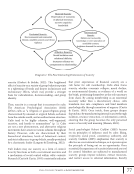
Parasocial relationships represent a crucial pathway
through which scarcity is translated into cult-like
behavior. Under informational scarcity, parasocial
figures function as epistemic authorities, supplying
simplified answers and reinforcing certainty in
otherwise chaotic informational landscapes (Bond,
2022 Giles, 2002). In contexts of affective scarcity,
such as loneliness, these figures fulfill unmet emotional
needs, providing symbolic intimacy that fosters deep
loyalty (Harper &Prawitz, 2022 Tukachinsky et al.,
2020 ).Emotional scarcity—the absence of meaningful
human connection, intimacy, and purpose—may also
mediate the relationship between scarcity and cult-like
behavior. Individuals deprived of emotional support
or community may turn to parasocial relationships
and insular online groups as a form of compensatory
belonging.
Under scarcity, parasociality assumes an adaptive
function it furnishes individuals with a simulated
form of social anchoring in contexts where material or
affective supports are lacking. Recent findings linking
parasocial attachments to conspiracy endorsement
(Enders et al., 2023 Harper &Prawitz, 2022) suggest
that these relational structures may act as gateways to
belief radicalization, particularly when coupled with
informational scarcity and algorithmic reinforcement.
Digital environments may intensify these dynamics.
Through algorithmic exposure and repetitive
engagement, parasocial attachments evolve into
powerful, self-reinforcing psychological dependencies
(Tukachinsky &Stever, 2019). In movements such as
QAnon, anonymous figures like “Q” become avatars of
trust, while influencers act as gateways to increasingly
insular communities, effectively converting parasocial