Cultic Studies Journal, Vol. 2 No. 1 1985, Page 96
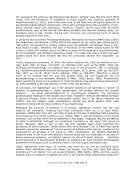
may not be given messages. Or he may be kept so busy working that he never has ―time‖
for you. Or he may be indoctrinated to believe that you are ―of the devil‖ and should be
avoided. Sometimes, in fact, he may be sent away with no notice of where he has gone.
And in some groups, he may hear lurid stories about parents who had their child abducted
and deprogrammed.
In considering these barriers, it is important not to let your frustration and anger impair
your judgment., No matter how unfair the barrier may seem to you, it Is real, and it must
be dealt with. A ―cut-your-losses‖ attitude can often be helpful. Such an attitude
acknowledges the barrier‘s reality and induces you to focus on what you can do to diminish
harm, rather than set things right. In other words, don‘t lose your cool. Make the best of a
bad situation.
Treat the communication barrier as a problem to be solved, preferably, if possible, with the
participation of your child. Define clearly what the problem is, e.g., ―We leave messages and
don‘t hear from you for weeks.‖ Analyze the factors contributing to the problem, e.g.,
messages are not reliably taken, or, your child says he is so busy he forgets to call. Ask
your child what possible solutions he can think of. Then offer some of your own, e.g., you
call him at work, you buy a non-removable message pad and pencil for the residence
(which, if messages are purposely not given to him, will demonstrate this fact to him). By
problem-solving with your child, you not only increase the likelihood of coming up with a
solution, but you also increase the likelihood of his realizing, or not being able to rationalize,
the cult‘s interfering with your communications, should such interference occur.
Lastly, parents should try to appreciate their child‘s perspective, no matter how manipulated
he may seem to them. To him, his perceptions are true.
Very often, one of the most troublesome perceptions interfering with communication is the
fear of an involuntary deprogramming. As parents stereotype cults, cults stereotype
parents. Furthermore, especially in a destructive group, negative stereotyping of parents
and others in the ―outside world‖ magnifies group cohesiveness by generating a we-they
mentality.
Parents should try to ―respond,‖ not ―react‖ to this we-they mentality and the
deprogramming fears which It frequently engenders. Treat it as a communication barrier, a
problem to be solved. If parents have a reasonable level of rapport with their child, it rarely
hurts to ask bluntly, ―Are you seeing us less because you are afraid of deprogramming?‖ If
the child answers yes, you can tell him that you‘re not planning a deprogramming. If he
seems skeptical, ask him for suggestions on what you can do to reassure him. Perhaps you
can meet more often on ―neutral‖ ground, e.g., a restaurant. If you are thereby able to
overcome a fear of deprogramming, you will most likely improve your rapport with your
child and increase the likelihood that he will agree to hear the other side of the story by
speaking voluntarily with critics of the group. In other words, if you agree to assuage his
fears, he may later reciprocate by talking to a third party in order to assuage your fears
about his welfare.
Modeling
Thus far, I have discussed procedures for collecting information and building trust through
effective communicating. In attempting to accomplish these goals, you should keep in mind
that you are a model for your child. If in your communications with your child you show a
willingness to admit error, your child becomes more likely to own up to his mistakes and
misconceptions. In the communication process, you will also have an opportunity to model a
willingness to negotiate and compromise. In so doing, you are showing your capacity to
change, which will make it easier for your child to change. Very often, people expect ―the
other guy‖ to change first. This strategy may work if the other person does in fact change
may not be given messages. Or he may be kept so busy working that he never has ―time‖
for you. Or he may be indoctrinated to believe that you are ―of the devil‖ and should be
avoided. Sometimes, in fact, he may be sent away with no notice of where he has gone.
And in some groups, he may hear lurid stories about parents who had their child abducted
and deprogrammed.
In considering these barriers, it is important not to let your frustration and anger impair
your judgment., No matter how unfair the barrier may seem to you, it Is real, and it must
be dealt with. A ―cut-your-losses‖ attitude can often be helpful. Such an attitude
acknowledges the barrier‘s reality and induces you to focus on what you can do to diminish
harm, rather than set things right. In other words, don‘t lose your cool. Make the best of a
bad situation.
Treat the communication barrier as a problem to be solved, preferably, if possible, with the
participation of your child. Define clearly what the problem is, e.g., ―We leave messages and
don‘t hear from you for weeks.‖ Analyze the factors contributing to the problem, e.g.,
messages are not reliably taken, or, your child says he is so busy he forgets to call. Ask
your child what possible solutions he can think of. Then offer some of your own, e.g., you
call him at work, you buy a non-removable message pad and pencil for the residence
(which, if messages are purposely not given to him, will demonstrate this fact to him). By
problem-solving with your child, you not only increase the likelihood of coming up with a
solution, but you also increase the likelihood of his realizing, or not being able to rationalize,
the cult‘s interfering with your communications, should such interference occur.
Lastly, parents should try to appreciate their child‘s perspective, no matter how manipulated
he may seem to them. To him, his perceptions are true.
Very often, one of the most troublesome perceptions interfering with communication is the
fear of an involuntary deprogramming. As parents stereotype cults, cults stereotype
parents. Furthermore, especially in a destructive group, negative stereotyping of parents
and others in the ―outside world‖ magnifies group cohesiveness by generating a we-they
mentality.
Parents should try to ―respond,‖ not ―react‖ to this we-they mentality and the
deprogramming fears which It frequently engenders. Treat it as a communication barrier, a
problem to be solved. If parents have a reasonable level of rapport with their child, it rarely
hurts to ask bluntly, ―Are you seeing us less because you are afraid of deprogramming?‖ If
the child answers yes, you can tell him that you‘re not planning a deprogramming. If he
seems skeptical, ask him for suggestions on what you can do to reassure him. Perhaps you
can meet more often on ―neutral‖ ground, e.g., a restaurant. If you are thereby able to
overcome a fear of deprogramming, you will most likely improve your rapport with your
child and increase the likelihood that he will agree to hear the other side of the story by
speaking voluntarily with critics of the group. In other words, if you agree to assuage his
fears, he may later reciprocate by talking to a third party in order to assuage your fears
about his welfare.
Modeling
Thus far, I have discussed procedures for collecting information and building trust through
effective communicating. In attempting to accomplish these goals, you should keep in mind
that you are a model for your child. If in your communications with your child you show a
willingness to admit error, your child becomes more likely to own up to his mistakes and
misconceptions. In the communication process, you will also have an opportunity to model a
willingness to negotiate and compromise. In so doing, you are showing your capacity to
change, which will make it easier for your child to change. Very often, people expect ―the
other guy‖ to change first. This strategy may work if the other person does in fact change