Cultic Studies Journal, Vol. 2 No. 1 1985, Page 49
techniques), the greater the likelihood that the specific clinical pathology of a cult-induced
dissociative disorder will result and, subsequently, the greater the number of readjustment
problems the individual will face when he leaves the group. Even those who do not develop
the cult dissociative disorder will, when they leave their group, confront adjustment
problems of a culture-shock nature (psychopathic types excluded).
The etiology of the cult dissociative disorder derives from the extremist cult conversion
process itself, which consists of a mixture of personal vulnerability factors and cult milieu
factors. In essence, the personal pre-cult factors (ongoing distress, disillusionment in a
frustrated seeker, lack of an intrinsic belief/value system, moderately dysfunctional family
system, and dependent personality tendencies, particularly if there is ego impairment in
differentiation) make an individual more susceptible to the cult conversion tactics of
selective behavioral conditioning through peer pressure and the deceptive induction of a
dissociative state (which comes about through isolation and the following practices that
work together to suspend central nervous system functioning, and thereby, independent
critical thinking: information control, overload, or manipulation emotional overstimulation
or manipulation physical debilitation via sleep deprivation, diet manipulation, or fatigue
―not thinking‖ practices such as chanting and religious mystical rituals).
This author has suggested that extremist cult conversion can best be explained by
integrating Clark‘s (1977, 1978, 1979a, 1979b) dissociation theory of conversion with
Spero‘s (1977, 1980, 1982) ego-regression model, which emphasizes dedifferentiation
(or extension) of ego boundaries. Dedifferentiation and isolation work together to decrease
reality testing, which, when linked with suspension of CNS functioning (as induced by
isolation and mind-control tactics), leads to the dissociative state.
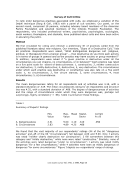
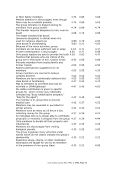
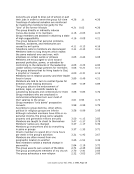
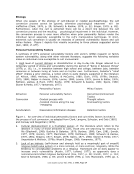
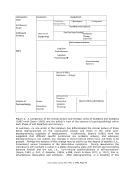
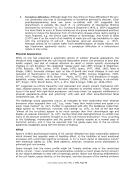
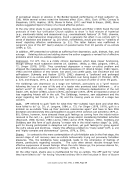
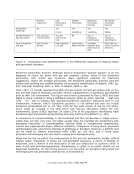
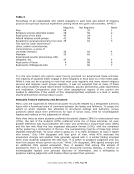
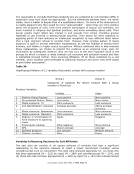
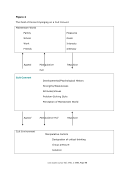
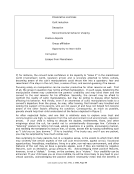
Furthermore, a comparison of Masterson‘s object relational view of the borderline
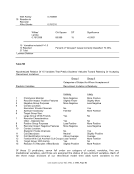
personality disorder (see Figure 5), Beahrs‘ (1982) analysis of the multiple personality (and
the mystical experience), and Spero‘s and Clark‘s views of the cult-induced disorder appears
not only to support the author‘s view of the cult-induced dissociative disorder as a mixture
of dissociation and dedifferentiation/extension, but also provides much insight into
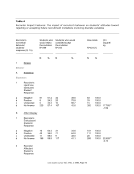
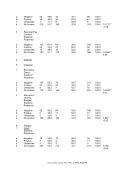
differential diagnosis (see Figure 4).
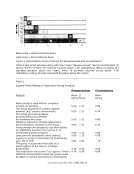
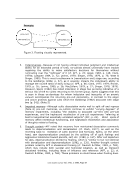
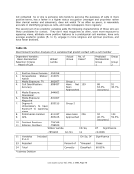
In comparing dissociation to water, we get a vivid picture of what happens to the cult-
induced disorder during the suggested stages of cult departure and recovery. Due to the
cult‘s reinforcement via dedifferentiation, the cultist‘s dissociation will remain quite stable,
i.e., ―frozen,‖ while in the cult. However, once this extensive reinforcement is broken
through during reevaluation, the dissociative ―ice‖ turns to ―slush‖ as manifested clinically
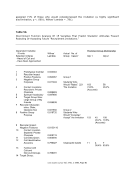
by ambivalence and floating (see Figure 3) during the post-deprogramming stage of cult
recovery. The reemergence of the pre-cult personality will then see the return of much
affect, most particularly anger, i.e., ―steam,‖ which, after it cools down, will give the ex-
cultist the self-confidence and ego strength necessary to integrate his cult experiences with
his extra-cult life. Only after his ―water‖ temperature, or ego ―thermostat,‖ has been
returned to its pre-cult condition (with him in control) will the ex-cultist be able to sustain a
normal level of functioning in the world outside the cult, provided, of course, that a healthy
pre-cult personality has emerged.
Footnotes
(Note 1). Beckford(1978) provides the most extensive analysis of the methological problems
inherent in studying the cult phenomenon, and his recommendations for research would go
far in producing philosophically unbiased research results (cf. Ash, 1984a).
(Note 2). Conway and Siegelman (1978) have pointed out that the process/phenomena of
―shutting off the mind, of not thinking ...is the underlying appeal of nearly every religious
cult and mass therapy in America today‖ (p. 58), and that linearly every cult employs some
techniques), the greater the likelihood that the specific clinical pathology of a cult-induced
dissociative disorder will result and, subsequently, the greater the number of readjustment
problems the individual will face when he leaves the group. Even those who do not develop
the cult dissociative disorder will, when they leave their group, confront adjustment
problems of a culture-shock nature (psychopathic types excluded).
The etiology of the cult dissociative disorder derives from the extremist cult conversion
process itself, which consists of a mixture of personal vulnerability factors and cult milieu
factors. In essence, the personal pre-cult factors (ongoing distress, disillusionment in a
frustrated seeker, lack of an intrinsic belief/value system, moderately dysfunctional family
system, and dependent personality tendencies, particularly if there is ego impairment in
differentiation) make an individual more susceptible to the cult conversion tactics of
selective behavioral conditioning through peer pressure and the deceptive induction of a
dissociative state (which comes about through isolation and the following practices that
work together to suspend central nervous system functioning, and thereby, independent
critical thinking: information control, overload, or manipulation emotional overstimulation
or manipulation physical debilitation via sleep deprivation, diet manipulation, or fatigue
―not thinking‖ practices such as chanting and religious mystical rituals).
This author has suggested that extremist cult conversion can best be explained by
integrating Clark‘s (1977, 1978, 1979a, 1979b) dissociation theory of conversion with
Spero‘s (1977, 1980, 1982) ego-regression model, which emphasizes dedifferentiation
(or extension) of ego boundaries. Dedifferentiation and isolation work together to decrease
reality testing, which, when linked with suspension of CNS functioning (as induced by
isolation and mind-control tactics), leads to the dissociative state.
Furthermore, a comparison of Masterson‘s object relational view of the borderline
personality disorder (see Figure 5), Beahrs‘ (1982) analysis of the multiple personality (and
the mystical experience), and Spero‘s and Clark‘s views of the cult-induced disorder appears
not only to support the author‘s view of the cult-induced dissociative disorder as a mixture
of dissociation and dedifferentiation/extension, but also provides much insight into
differential diagnosis (see Figure 4).
In comparing dissociation to water, we get a vivid picture of what happens to the cult-
induced disorder during the suggested stages of cult departure and recovery. Due to the
cult‘s reinforcement via dedifferentiation, the cultist‘s dissociation will remain quite stable,
i.e., ―frozen,‖ while in the cult. However, once this extensive reinforcement is broken
through during reevaluation, the dissociative ―ice‖ turns to ―slush‖ as manifested clinically
by ambivalence and floating (see Figure 3) during the post-deprogramming stage of cult
recovery. The reemergence of the pre-cult personality will then see the return of much
affect, most particularly anger, i.e., ―steam,‖ which, after it cools down, will give the ex-
cultist the self-confidence and ego strength necessary to integrate his cult experiences with
his extra-cult life. Only after his ―water‖ temperature, or ego ―thermostat,‖ has been
returned to its pre-cult condition (with him in control) will the ex-cultist be able to sustain a
normal level of functioning in the world outside the cult, provided, of course, that a healthy
pre-cult personality has emerged.
Footnotes
(Note 1). Beckford(1978) provides the most extensive analysis of the methological problems
inherent in studying the cult phenomenon, and his recommendations for research would go
far in producing philosophically unbiased research results (cf. Ash, 1984a).
(Note 2). Conway and Siegelman (1978) have pointed out that the process/phenomena of
―shutting off the mind, of not thinking ...is the underlying appeal of nearly every religious
cult and mass therapy in America today‖ (p. 58), and that linearly every cult employs some