Cultic Studies Journal, Vol. 2 No. 1 1985, Page 12
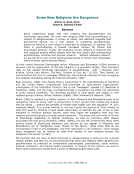
Some New Religions Are Dangerous
Arthur A. Dole, Ph.D.
Steve K. Dubrow Eichel
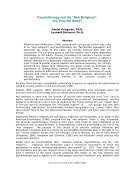
Abstract
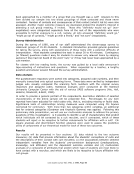
Some researchers allege that new religions and psychotherapy are
functionally equivalent. Yet many new religions differ from psychotherapy in
respect to dangerousness. A survey of expert cult watchers suggests that
documented abuses, not a rival religion or competing psychotherapy,
determine whether a new religion is described as dangerous. In addition, the
trend in psychotherapy is toward increased concern for ethical and
accountable behavior. Finally, the resistance of new religions to impartial and
well designed studies differs sharply from the free inquiry that characterizes
psychotherapy outcome and process research. Without adequate research,
we are forced to rely on the personal testimonies of former new religionists,
many of whom report adverse effects.
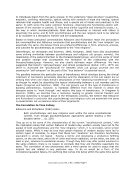
In their recent American Psychologist article, Kilbourne and Richardson (1994) present a
spurious case for appreciation of the new religions in a pluralistic society. Their argument
rests on the alleged functional equivalence of psychotherapy with ―...Moonies, Hare
Krishna, Divine Light Mission, The Way, Children of God, etc.‖ (P.239). They Identify six
commonalities but omit or underplay differences. Documented instances of drug smuggling
and weapons stockpiling among the Krishnas (Knutson, 1980
Raid uncovers, 1980), Sun Myung Moon‘s involvement in the manufacturing of munitions
and the United States Congressional Sub-Committee on International Organizations‘
investigation of the Unification Church‘s role in the ―Koreagate‖ scandal (cf. Boettcher &
Freedman, 1980), and the mass suicides/homicides in Jonestown are either not mentioned
or given cursory treatment. The mounting evidence of child abuse and neglect in new
religious groups (Gaines, Wilson, Redican, &Baffi, 1984 Markowitz &Halperin, 1984
Rudin, 1984) is handled in a similar manner. In fact, Kilbourne and Richardson seem to be
castigating critics for being ―soft‖ or ethnocentric in their concern that ―infants and children
may be raised ...without the benefits of middle-class health care and education‖ (P. 247,
emphasis added). It is unclear whether or not they include the practice of ―flirty fishing‖ (a
term first used by Children of God leader David Berg to describe the use of sex to gain
members or influence political figures) when they report the allegation that ―the new
religions sometimes practice strange sexual behaviors.‖ The arrest and conviction of Church
of Scientology leadership on federal conspiracy, as well as numerous other abuses
associated with that group (Schecter, 1980a, 1980b), are also left unmentioned. Many other
serious claims of destructive behaviors and actions do not appear in Kilbourne and
Richardson‘s list of ―allegations (and) threats to the family,‖ while those that do are
summarized in half of one paragraph, and then dismissed in one sentence: ―Even though
these allegations can be refuted by data from studies of new religious groups, the
allegations still persist‖ (p.247).
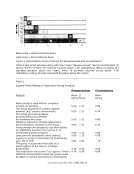
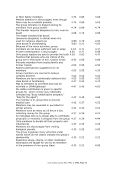
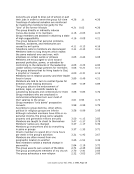
We maintain that the issue of destructiveness or dangerousness is central to the cult/new
religion debate, and that it is on this dimension that some new religions differ radically from
psychotherapy as practiced by credentialed psychologists. psychiatrists, social workers,
pastoral counselors, and mental health counselors. In support of this opinion, we wish to
share some preliminary results from a series of attitude studies about cults.
Some New Religions Are Dangerous
Arthur A. Dole, Ph.D.
Steve K. Dubrow Eichel
Abstract
Some researchers allege that new religions and psychotherapy are
functionally equivalent. Yet many new religions differ from psychotherapy in
respect to dangerousness. A survey of expert cult watchers suggests that
documented abuses, not a rival religion or competing psychotherapy,
determine whether a new religion is described as dangerous. In addition, the
trend in psychotherapy is toward increased concern for ethical and
accountable behavior. Finally, the resistance of new religions to impartial and
well designed studies differs sharply from the free inquiry that characterizes
psychotherapy outcome and process research. Without adequate research,
we are forced to rely on the personal testimonies of former new religionists,
many of whom report adverse effects.
In their recent American Psychologist article, Kilbourne and Richardson (1994) present a
spurious case for appreciation of the new religions in a pluralistic society. Their argument
rests on the alleged functional equivalence of psychotherapy with ―...Moonies, Hare
Krishna, Divine Light Mission, The Way, Children of God, etc.‖ (P.239). They Identify six
commonalities but omit or underplay differences. Documented instances of drug smuggling
and weapons stockpiling among the Krishnas (Knutson, 1980
Raid uncovers, 1980), Sun Myung Moon‘s involvement in the manufacturing of munitions
and the United States Congressional Sub-Committee on International Organizations‘
investigation of the Unification Church‘s role in the ―Koreagate‖ scandal (cf. Boettcher &
Freedman, 1980), and the mass suicides/homicides in Jonestown are either not mentioned
or given cursory treatment. The mounting evidence of child abuse and neglect in new
religious groups (Gaines, Wilson, Redican, &Baffi, 1984 Markowitz &Halperin, 1984
Rudin, 1984) is handled in a similar manner. In fact, Kilbourne and Richardson seem to be
castigating critics for being ―soft‖ or ethnocentric in their concern that ―infants and children
may be raised ...without the benefits of middle-class health care and education‖ (P. 247,
emphasis added). It is unclear whether or not they include the practice of ―flirty fishing‖ (a
term first used by Children of God leader David Berg to describe the use of sex to gain
members or influence political figures) when they report the allegation that ―the new
religions sometimes practice strange sexual behaviors.‖ The arrest and conviction of Church
of Scientology leadership on federal conspiracy, as well as numerous other abuses
associated with that group (Schecter, 1980a, 1980b), are also left unmentioned. Many other
serious claims of destructive behaviors and actions do not appear in Kilbourne and
Richardson‘s list of ―allegations (and) threats to the family,‖ while those that do are
summarized in half of one paragraph, and then dismissed in one sentence: ―Even though
these allegations can be refuted by data from studies of new religious groups, the
allegations still persist‖ (p.247).
We maintain that the issue of destructiveness or dangerousness is central to the cult/new
religion debate, and that it is on this dimension that some new religions differ radically from
psychotherapy as practiced by credentialed psychologists. psychiatrists, social workers,
pastoral counselors, and mental health counselors. In support of this opinion, we wish to
share some preliminary results from a series of attitude studies about cults.