Cultic Studies Journal, Vol. 2 No. 1 1985, Page 59
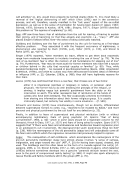
social support networks, values, and knowledge that are not congruent with full
commitment to the group‘s ideology and lifestyle.
If the potential convert accepts the notion of greater participation in the organization or
finds going back to his or her pre-contact state of existence now unsatisfying, an invitation
to join the group is extended, and accepted. Conversion tactics may involve an
intensification of emotional arousal begun in Phase 111, as well as exotic rituals and
psychologically coercive practices that generate an affective-cognitive conversion to the new
religious ideology and to a new way of life. The contact-conversion sequence is complete
when the newly recruited member begins the cycle again by re-entering Phase 1, but this
time as a recruiter. A side-effect of the act of recruiting, like that of seeking money for the
organization, is the further development of recruiter loyalty, in part as a consequence of
these effortful, often embarrassing, dissonance-arousing activities (Festinger, 1957
Aronson and Mills, 1959 Snyder, Zimbardo and Hirschman, 1973).
Let us next take a closer look at the variables and processes that constitute the first two
phases of the model, since we wish to understand better the dynamics of the initial contact
between a cult recruiter and prospective member. In doing so, we build a framework for
predicting:
a) the likelihood that a given person will be among those who enter the initial
contact phase,, NV, b) the outcomes of that initial contact, i.e., who is likely to move
on to the indoctrination phase and who resists further participation.
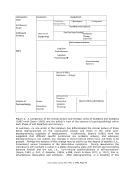
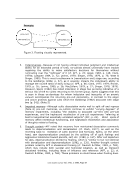
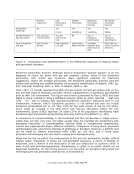
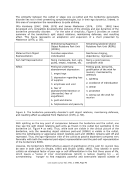
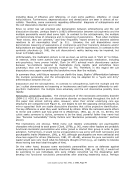
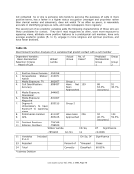
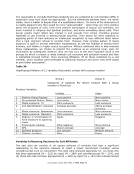
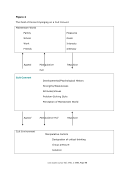
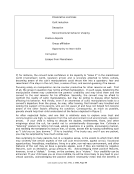
The four components integrated by our model in these early phases of the pre-conversion
process are: pre-contact variables, contact variables, mediational variables, and outcome
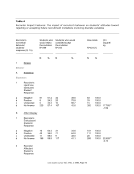
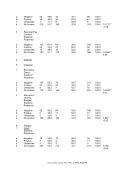
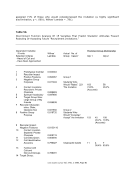
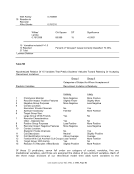
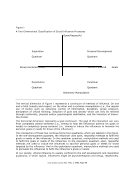
measures. Each will be outlined and illustrated with a schematic figure (Figures 1.2 to 1.5)
of its main features. In addition, the figures indicate (through the use of upper case) the
items of information we have collected in order to evaluate the predictive utility of the
model. (We will report on these in a later section of this article.)
Pre-Contact Variables
Pre-contact variables include predispositions (here only for the potential recruit) and
knowledge structure. Fixed predispositions are relatively constant traits or background
characteristics, such as sex, race, and birth order. Modifiable predispositions are states,
traits, and needs that are more transient and manipulable.
Knowledge structure is a concept central to cognitive psychology and communication
theory. What is it that an individual knows, and what is the source of that declarative
knowledge? Specifically, what facts does an individual have about cults in general, about
religious movements, and/or about a particular cult, and is the source of that knowledge
direct or mediated? Meta-cognitive knowledge and strategies refer to the ―top down‖
cognitive processes used to manipulate declarative knowledge for particular purposes. This
Includes knowing what you know, comprehension monitoring, assessing logicality or
intentionality, and being aware of discrepancies between one‘s position and that of a
persuasive communicator.
Contact Variables
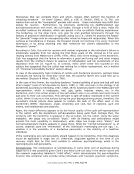
Contact variables refer to the strategies and tactics a recruiter uses during the interaction
with a target of social influence. The compliance-gaining strategies include the goals of the
contact, the purposes of the persuasion, and selection of the contact situation. The tactics
specify the means and style by which the influence attempt will be conducted--using both
verbal communications and non-verbal messages.
social support networks, values, and knowledge that are not congruent with full
commitment to the group‘s ideology and lifestyle.
If the potential convert accepts the notion of greater participation in the organization or
finds going back to his or her pre-contact state of existence now unsatisfying, an invitation
to join the group is extended, and accepted. Conversion tactics may involve an
intensification of emotional arousal begun in Phase 111, as well as exotic rituals and
psychologically coercive practices that generate an affective-cognitive conversion to the new
religious ideology and to a new way of life. The contact-conversion sequence is complete
when the newly recruited member begins the cycle again by re-entering Phase 1, but this
time as a recruiter. A side-effect of the act of recruiting, like that of seeking money for the
organization, is the further development of recruiter loyalty, in part as a consequence of
these effortful, often embarrassing, dissonance-arousing activities (Festinger, 1957
Aronson and Mills, 1959 Snyder, Zimbardo and Hirschman, 1973).
Let us next take a closer look at the variables and processes that constitute the first two
phases of the model, since we wish to understand better the dynamics of the initial contact
between a cult recruiter and prospective member. In doing so, we build a framework for
predicting:
a) the likelihood that a given person will be among those who enter the initial
contact phase,, NV, b) the outcomes of that initial contact, i.e., who is likely to move
on to the indoctrination phase and who resists further participation.
The four components integrated by our model in these early phases of the pre-conversion
process are: pre-contact variables, contact variables, mediational variables, and outcome
measures. Each will be outlined and illustrated with a schematic figure (Figures 1.2 to 1.5)
of its main features. In addition, the figures indicate (through the use of upper case) the
items of information we have collected in order to evaluate the predictive utility of the
model. (We will report on these in a later section of this article.)
Pre-Contact Variables
Pre-contact variables include predispositions (here only for the potential recruit) and
knowledge structure. Fixed predispositions are relatively constant traits or background
characteristics, such as sex, race, and birth order. Modifiable predispositions are states,
traits, and needs that are more transient and manipulable.
Knowledge structure is a concept central to cognitive psychology and communication
theory. What is it that an individual knows, and what is the source of that declarative
knowledge? Specifically, what facts does an individual have about cults in general, about
religious movements, and/or about a particular cult, and is the source of that knowledge
direct or mediated? Meta-cognitive knowledge and strategies refer to the ―top down‖
cognitive processes used to manipulate declarative knowledge for particular purposes. This
Includes knowing what you know, comprehension monitoring, assessing logicality or
intentionality, and being aware of discrepancies between one‘s position and that of a
persuasive communicator.
Contact Variables
Contact variables refer to the strategies and tactics a recruiter uses during the interaction
with a target of social influence. The compliance-gaining strategies include the goals of the
contact, the purposes of the persuasion, and selection of the contact situation. The tactics
specify the means and style by which the influence attempt will be conducted--using both
verbal communications and non-verbal messages.