Cultic Studies Journal, Vol. 2 No. 1 1985, Page 16
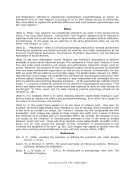
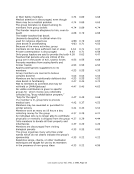
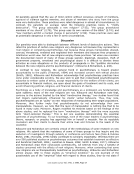
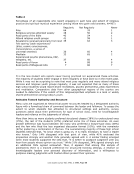
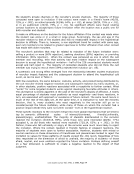
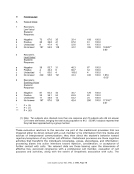
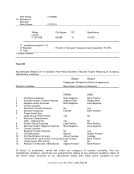
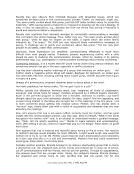
Converts are urged to drop out of school or quit
their jobs in order to serve the group full-time 4.26 .11 4.26
Teachings of external salvation are reinforced
by making the members feel guilty for the
―sins‖ of the former lifestyle 4.21 0.03 4.26
The group directly or indirectly induces
trance-like states in its members 4.16 -0.05 4.22
Group members are assisted in attaining a state
of high suggestibility 4.16 -0.05 4.21
The group believes that personal problems,
illnesses, accidents, and misfortunes are
caused by evil spirits 4.11 -0.13 4.16
Telephone calls to members are discouraged 4.11 -0.13 4.11
Members listen to long lectures which repeat
the same material over and over, with
emphasis on certain words or phrases 4.05 -0.23 4.05
Members are encouraged to work toward
personal perfection, power, or salvation by
conforming to the demands of the leadership 4.05 -0.23 4.00
Leader selects marriage partners for members 4.06 -0.21 4.11
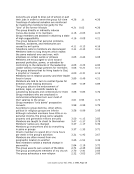
The group believes that its living leader is God,
a prophet or messiah 4.00 -0.31 4.16
Members live in relative poverty and their leader
lives in luxury 3.89 -0.49 4.21
Members are told to turn to central figures for
direction when making decisions 3.89 -0.49 3.89
The group obtains the endorsement of
political, legal, or scientific leaders by
subsidizing banquets and conferences for them 3.68 -0.83 3.74
Group members who are employed in
commercial enterprises turn over most of
their salaries to the group 3.61 0.94 3.72
Group members ―love bomb‖ prospective
converts 3.58 -0.99 3.79
According to group doctrine, other ethnic,
political or religious groups are inferior 3.58 -0.99 3.95
Although individual members have little or no
personal income, the group owns valuable
property and generates millions annually 3.50 -1.12 3.83
Members are taught to chant to themselves 3.47 -1.17 3.79
Members‘ names are changed 3.47 -1.17 3.39
Members go everywhere and do everything
in pairs or groups 3.37 -1.33 3.71
Directs members to spend 40 or more hours
per week in the group‘s activities 3.31 -1.43 3.67
Members are often moved from one
geographic location to another 3.26 -1.51 3.42
New members exhibit a marked change in
personality 2.84 -2.19 3.72
The group uses its own version of the Bible 2.74 -2.35 3.00
The group proselytizes members of my church 2.70 -2.41 2.83
The group advocates a new religion 2.32 -3.03 3.00