Cultic Studies Journal, Vol. 2 No. 1 1985, Page 33
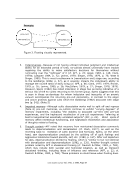
dissociative state/extensive link with the cult, the dissociative symptoms come and go, i.e.,
―floating.‖ Other than this, the only other symptoms which seem to mark an individual‘s
entering the initial post-deprogramming stage of cult recovery would be ambivalence,
depression, and the return of pre-cult affections and split off emotions. Elaboration upon
these will be made below.
AFF Model Critiqued
Only one writing systematically outlines the clinical picture of former members of extremist
cults, again the American Family Foundation (AFF) work by Clark, et al, (1981). In listing
―problems of former cult members‖ it outlines pertinent symptoms utilizing a format similar
to that seen in most mental status examinations: appearance, behavior, affect, perception,
intellectual functioning, memory, thought content, and decision making (p. 18-23).
Two major weaknesses may be attributed to this AFF work, possibly because of the
psychiatric mental status format itself. First, interpersonal problems are excluded in this
outline, although many of them are mentioned elsewhere in the AFF work. Second, there is
little or no consideration of the process element of differing onset points for various
symptoms listed in the AFF outline, in contrast to the delineation of symptoms within the
Goldberg‘ post-mind-control stages. Furthermore, as all others, AFF failed to include any
systematic consideration of the clinical picture of current cultists or those ‗mentally still
cultists (but physically out). They followed the pattern of all preceding authors (but Spero,
1982) of relegating such material to their literature review on cult conversion.
Consequently, AFF disregarded differing onset points for various symptoms during
reevaluation, as well as the readjustment phases of cult recovery as outlined by the
Goldbergs.
The proposed overview of the cultist‘s clinical picture will utilize the AFF ex-cultist material
as a foundation, but will strengthen it with interpersonal problem material (while deleting
the AFF behavior section), the Goldbergs‘ stage data, other relevant ex-cultist literature
(e.g., Singer, 1978, 1979), and the available, albeit scant, reevaluation/cultist clinical
picture data. It will also deviate from the AFF mental status exam model by incorporating its
material on perception, intellectual functioning, memory, thought content, and decision-
making into a combined section on ego functioning.
Over-view of Clinical Picture
While every effort will be made to point out differing onset points for the various symptoms
during reevaluation and the three stages of readjustment/cult recovery, most symptoms
and deficits presented below are most prevalent and troublesome during reevaluation
and/or initial post-deprogramming. Also, unless noted otherwise, they are assumed to be
gradually diminishing in effect throughout all the stages, but to have been reduced
sufficiently by the last stage so as to produce a minimum of interference in the life of the
individual ex-cultist. Likewise, any problems which begin during the middle stages will
probably still be present in the next stage, though again, to a lesser degree of concern. A
more exact delineation of symptom transformation awaits future research.
Ego Functioning
As pointed out earlier those entering cults often obtain relief from distress, but pay for this
―improved‖ coping ability with the relinquishing of voluntary control of their individual ego
functioning. Marked alterations in the ego functioning of cultists and ex-cultists may,
therefore, be seen in their ego defense structure, in their ego strength and self-confidence,
and in the onset of certain specific ego deficits.
dissociative state/extensive link with the cult, the dissociative symptoms come and go, i.e.,
―floating.‖ Other than this, the only other symptoms which seem to mark an individual‘s
entering the initial post-deprogramming stage of cult recovery would be ambivalence,
depression, and the return of pre-cult affections and split off emotions. Elaboration upon
these will be made below.
AFF Model Critiqued
Only one writing systematically outlines the clinical picture of former members of extremist
cults, again the American Family Foundation (AFF) work by Clark, et al, (1981). In listing
―problems of former cult members‖ it outlines pertinent symptoms utilizing a format similar
to that seen in most mental status examinations: appearance, behavior, affect, perception,
intellectual functioning, memory, thought content, and decision making (p. 18-23).
Two major weaknesses may be attributed to this AFF work, possibly because of the
psychiatric mental status format itself. First, interpersonal problems are excluded in this
outline, although many of them are mentioned elsewhere in the AFF work. Second, there is
little or no consideration of the process element of differing onset points for various
symptoms listed in the AFF outline, in contrast to the delineation of symptoms within the
Goldberg‘ post-mind-control stages. Furthermore, as all others, AFF failed to include any
systematic consideration of the clinical picture of current cultists or those ‗mentally still
cultists (but physically out). They followed the pattern of all preceding authors (but Spero,
1982) of relegating such material to their literature review on cult conversion.
Consequently, AFF disregarded differing onset points for various symptoms during
reevaluation, as well as the readjustment phases of cult recovery as outlined by the
Goldbergs.
The proposed overview of the cultist‘s clinical picture will utilize the AFF ex-cultist material
as a foundation, but will strengthen it with interpersonal problem material (while deleting
the AFF behavior section), the Goldbergs‘ stage data, other relevant ex-cultist literature
(e.g., Singer, 1978, 1979), and the available, albeit scant, reevaluation/cultist clinical
picture data. It will also deviate from the AFF mental status exam model by incorporating its
material on perception, intellectual functioning, memory, thought content, and decision-
making into a combined section on ego functioning.
Over-view of Clinical Picture
While every effort will be made to point out differing onset points for the various symptoms
during reevaluation and the three stages of readjustment/cult recovery, most symptoms
and deficits presented below are most prevalent and troublesome during reevaluation
and/or initial post-deprogramming. Also, unless noted otherwise, they are assumed to be
gradually diminishing in effect throughout all the stages, but to have been reduced
sufficiently by the last stage so as to produce a minimum of interference in the life of the
individual ex-cultist. Likewise, any problems which begin during the middle stages will
probably still be present in the next stage, though again, to a lesser degree of concern. A
more exact delineation of symptom transformation awaits future research.
Ego Functioning
As pointed out earlier those entering cults often obtain relief from distress, but pay for this
―improved‖ coping ability with the relinquishing of voluntary control of their individual ego
functioning. Marked alterations in the ego functioning of cultists and ex-cultists may,
therefore, be seen in their ego defense structure, in their ego strength and self-confidence,
and in the onset of certain specific ego deficits.