Cultic Studies Journal, Vol. 2 No. 1 1985, Page 69
Empathetic Associations
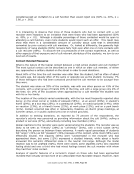
The students were asked to project the emotional reactions they might have to each of a set
of hypothetical scenarios concerning cults. If they were asked to lie for the group, they
would be angry (56%), disgusted (32%), afraid (10%), surprised (6%), or embarrassed
(4%), while 3% would feel sad about being asked to do so, but 1% would be happy to.
Collecting funds for the group also elicited a range of primarily negative emotions: angry
(35%), embarrassed (26%), disgusted (25%), afraid (3%), sad (4%), surprised (3%),
while 2% would be happy to collect funds. Negative empathetic associations to cults were
also shown on items asking students to imagine: giving their names to the group‘s mailing
list, having parents sign them up for an introductory session, and being asked to defend the
group physically. However, the dominant reaction to imagining a sibling dating a group
member was ―nothing felt‖ (30%), and surprised (24%). They can‘t imagine their parents
attending a group‘s meeting (31%, surprised), but 2% would be angry and 19% would be
disgusted. Mixed reactions were uncovered when students were invited to Imagine how they
would react if their parents or guardians objected to their joining such a group. More
responded ―happy‖ (36%) than with any other mood label. But many (29%) said they‘d
have no reaction to such an intervention. A significant 17% fell into the category of those
who would respond negatively--with anger--against this interference with their freedom of
choice. Another 6% would be disgusted, 3% sad, and 1% embarrassed. The issue of
parental intervention then seems to divide the students into opposite factions: those who
would welcome such ―concern‖ versus those who would reject such ―controlling‖ influence
by parents.
Another way to interpret these data suggests that students were more readily aroused
emotionally by responding to scenarios in which they personally experienced the
consequences compared to those scenarios that took the perspective of others. They react
most intensely to a loss of their personal freedom, whether the source is cults or parents.
Who Makes Contact With Cults?
If the process were random by which a cult recruiter selected an individual for contact-
conversion or by which an individual made him or herself available for such an approach, we
would not expect to find variables that operated in a systematic fashion to differentiate
those contacted from those never contacted. On the contrary, we have found a number of
variables that do contribute to a statistically significant degree to this dynamic process of
being selected for contact and/or being available for a contact agent‘s advances.
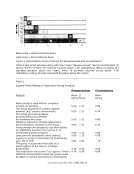
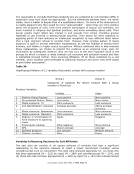
From an initial set of thirty-four possibly relevant variables (from our student survey
responses), a discriminate function analysis identified a subset of eleven predictor variables.
Taken together, these variables separate all students into two groups: those approached
and those not approached by a cult member. This composite of variables is accurate in
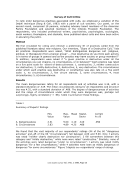
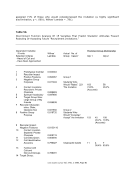
predicting 61% of the cases where contact either occurred or did not occur. The index of the
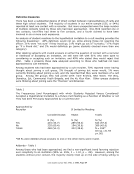
discriminating power of this multivariate analysis, Wilkes‘ Lambda of .786, is highly
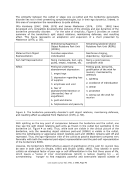
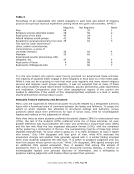
significant beyond the .0006 level (see Table 3A).
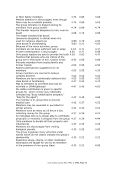
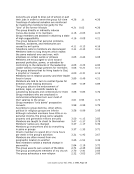
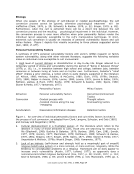
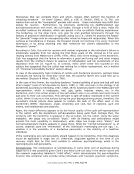
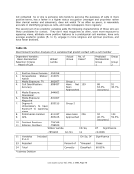
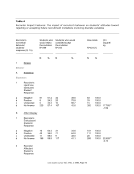
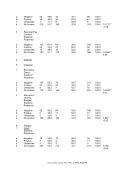
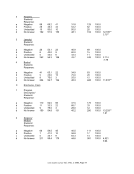
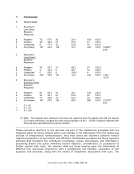
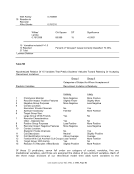
The description of each of these eleven contact predictor variables is outlined in Table 3B.
An analysis of the contribution of each of the predictor variables to group separation along
this discriminant function revealed that the first five variables are the strongest predictors of
contact, while the remaining six, thought important, were relatively less powerful. These
scaled vectors for the five best predictors were: positive group purposes (.423), father‘s
occupational status (-.486), media exposure, TV (.424), accuracy in identifying cults (.331),
and media exposure, newspapers (-.376).
The portrait of a high school student in our sample who was most likely to be available
for/targeted for contact by a cult member can now be drawn – in contrast to the youngster
Empathetic Associations
The students were asked to project the emotional reactions they might have to each of a set
of hypothetical scenarios concerning cults. If they were asked to lie for the group, they
would be angry (56%), disgusted (32%), afraid (10%), surprised (6%), or embarrassed
(4%), while 3% would feel sad about being asked to do so, but 1% would be happy to.
Collecting funds for the group also elicited a range of primarily negative emotions: angry
(35%), embarrassed (26%), disgusted (25%), afraid (3%), sad (4%), surprised (3%),
while 2% would be happy to collect funds. Negative empathetic associations to cults were
also shown on items asking students to imagine: giving their names to the group‘s mailing
list, having parents sign them up for an introductory session, and being asked to defend the
group physically. However, the dominant reaction to imagining a sibling dating a group
member was ―nothing felt‖ (30%), and surprised (24%). They can‘t imagine their parents
attending a group‘s meeting (31%, surprised), but 2% would be angry and 19% would be
disgusted. Mixed reactions were uncovered when students were invited to Imagine how they
would react if their parents or guardians objected to their joining such a group. More
responded ―happy‖ (36%) than with any other mood label. But many (29%) said they‘d
have no reaction to such an intervention. A significant 17% fell into the category of those
who would respond negatively--with anger--against this interference with their freedom of
choice. Another 6% would be disgusted, 3% sad, and 1% embarrassed. The issue of
parental intervention then seems to divide the students into opposite factions: those who
would welcome such ―concern‖ versus those who would reject such ―controlling‖ influence
by parents.
Another way to interpret these data suggests that students were more readily aroused
emotionally by responding to scenarios in which they personally experienced the
consequences compared to those scenarios that took the perspective of others. They react
most intensely to a loss of their personal freedom, whether the source is cults or parents.
Who Makes Contact With Cults?
If the process were random by which a cult recruiter selected an individual for contact-
conversion or by which an individual made him or herself available for such an approach, we
would not expect to find variables that operated in a systematic fashion to differentiate
those contacted from those never contacted. On the contrary, we have found a number of
variables that do contribute to a statistically significant degree to this dynamic process of
being selected for contact and/or being available for a contact agent‘s advances.
From an initial set of thirty-four possibly relevant variables (from our student survey
responses), a discriminate function analysis identified a subset of eleven predictor variables.
Taken together, these variables separate all students into two groups: those approached
and those not approached by a cult member. This composite of variables is accurate in
predicting 61% of the cases where contact either occurred or did not occur. The index of the
discriminating power of this multivariate analysis, Wilkes‘ Lambda of .786, is highly
significant beyond the .0006 level (see Table 3A).
The description of each of these eleven contact predictor variables is outlined in Table 3B.
An analysis of the contribution of each of the predictor variables to group separation along
this discriminant function revealed that the first five variables are the strongest predictors of
contact, while the remaining six, thought important, were relatively less powerful. These
scaled vectors for the five best predictors were: positive group purposes (.423), father‘s
occupational status (-.486), media exposure, TV (.424), accuracy in identifying cults (.331),
and media exposure, newspapers (-.376).
The portrait of a high school student in our sample who was most likely to be available
for/targeted for contact by a cult member can now be drawn – in contrast to the youngster