Cultic Studies Journal, Vol. 2 No. 1 1985, Page 29
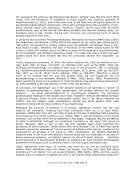
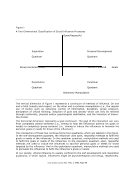
This is the moment of ―snapping‖ vulnerability, the mystical experience of simultaneous
mind expansion and dissociation. The cult takes advantage of this event through its
indoctrination tactics, which provide the ―answer‖ to the crisis (cf. Galanter‘s ―relief effect‖).
The ―answer,‖ however, has strings attached to it: The cult molds the individual in his
dissociative vulnerability according to its liking. This state is then maintained by a
continuation of the mental extension to, and deep emotional dependency upon, the cult.
Cult induced dissociation and the mystical experience. Dissociation can be seen as a form of
―macroscopic splitting‖ of the mind or ego (Grotstein, 1981, p. 10). Clark (1979b) noted
that these ―states of dissociation are in essence emergency states during which a number of
CNS functions, such as that of the autonomic nervous system, are changed or suspended‖
(p. 103). Pruyser (1977) referred to ―frozen emergency reactions--as ways of coping that
have become habitual long beyond the time they were originally needed in an erstwhile
stressful situation. Traits of this order are often ego-syntonic‖ (p. 343). Ego-syntonic forms
of dissociation, according to Grotstein (1981), are ―probably due to an adaptation of futility
in a compromised and constricted level of mental functioning‖ -functioning which is marked
by ―compromised reality testing which ignores distinctions‖ between the split halves (p.
110).
Spero (1982) saw severely impaired reality testing in cultists in dedifferentiated reality
frames: past-present, memory-dream, but particularly inner-outer and self-other (p. 338).
Spero‘s dedifferentiation may be likened to Beahrs‘ (1982) ―extension‖ or ―expansion,‖ i.e.,
―the process in which an individual‘s sense of selfhood extends beyond his physical
boundaries so that he experiences as self what is actually beyond‖ (P. 166).
It is most significant that Beahrs saw this extention in licertain religious or spiritual states of
mind‖ (p. 166) --the mystical experience or state (pp. 176-177). However, three important
differences must be pointed out between William James‘ mystical experience which Beahrs
referred to and the cult conversion experience. First, James‘ experience was expansive, but
it was not dissociative (i.e., involving macroscopic splitting of the mind). Second, it was
marked by its ―transiency--of short duration, the mystic state itself rarely lasting more than
a half-hour of clock time‖ (p. 177), in marked contrast to the frozen state of mind
maintained by cults. And third, the mystic state was not affected by compromised reality
testing. In this regard, the cult mind is closer to the ―symbiotic psychosis‖ which Beahrs
referred to, ―where a patient‘s sense of boundary between himself and non-self is so blurred
that reality testing becomes impossible‖ (p. 166 cf. Galanter, 1983a, p. 988).
Beahrs noted that ―individuals with problems in their sense of unity and multiplicity both
dissociate and extend simultaneously‖ (p. 167). Having a combination of both the mystic
state and the symbiotic psychosis, yet not quite being either, the extremist cult-induced
disorder may, therefore, be best explained via the simultaneous presence of Clark‘s
dissociation (or splitting) and Spero‘s dedifferentiation (or, extension or expansion).
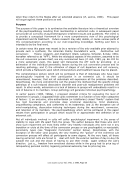
Stages of Cult Departure
Physical departure from a cult may not be equated with mental freedom from its bondage.
While physical departure may be viewed as the necessary first step of any outside
intervention (e.g., deprogramming AFF, p. 63), it is often quite independent of the mental
process of withdrawal or deconversion, i.e., the unfreezing of the
dissociation/dedifferentiation of the cult mind set. In cases of voluntary departure, this
process actually begins prior to the physical withdrawal from the group. Furthermore, the
clinical picture presented to the therapist during this process of mental deconversion is sure
to be an ever-changing one.
For these reasons, some structure would be most helpful for the therapist attempting to
discern the most effective therapeutic goals, tasks, and focuses for each change in the
This is the moment of ―snapping‖ vulnerability, the mystical experience of simultaneous
mind expansion and dissociation. The cult takes advantage of this event through its
indoctrination tactics, which provide the ―answer‖ to the crisis (cf. Galanter‘s ―relief effect‖).
The ―answer,‖ however, has strings attached to it: The cult molds the individual in his
dissociative vulnerability according to its liking. This state is then maintained by a
continuation of the mental extension to, and deep emotional dependency upon, the cult.
Cult induced dissociation and the mystical experience. Dissociation can be seen as a form of
―macroscopic splitting‖ of the mind or ego (Grotstein, 1981, p. 10). Clark (1979b) noted
that these ―states of dissociation are in essence emergency states during which a number of
CNS functions, such as that of the autonomic nervous system, are changed or suspended‖
(p. 103). Pruyser (1977) referred to ―frozen emergency reactions--as ways of coping that
have become habitual long beyond the time they were originally needed in an erstwhile
stressful situation. Traits of this order are often ego-syntonic‖ (p. 343). Ego-syntonic forms
of dissociation, according to Grotstein (1981), are ―probably due to an adaptation of futility
in a compromised and constricted level of mental functioning‖ -functioning which is marked
by ―compromised reality testing which ignores distinctions‖ between the split halves (p.
110).
Spero (1982) saw severely impaired reality testing in cultists in dedifferentiated reality
frames: past-present, memory-dream, but particularly inner-outer and self-other (p. 338).
Spero‘s dedifferentiation may be likened to Beahrs‘ (1982) ―extension‖ or ―expansion,‖ i.e.,
―the process in which an individual‘s sense of selfhood extends beyond his physical
boundaries so that he experiences as self what is actually beyond‖ (P. 166).
It is most significant that Beahrs saw this extention in licertain religious or spiritual states of
mind‖ (p. 166) --the mystical experience or state (pp. 176-177). However, three important
differences must be pointed out between William James‘ mystical experience which Beahrs
referred to and the cult conversion experience. First, James‘ experience was expansive, but
it was not dissociative (i.e., involving macroscopic splitting of the mind). Second, it was
marked by its ―transiency--of short duration, the mystic state itself rarely lasting more than
a half-hour of clock time‖ (p. 177), in marked contrast to the frozen state of mind
maintained by cults. And third, the mystic state was not affected by compromised reality
testing. In this regard, the cult mind is closer to the ―symbiotic psychosis‖ which Beahrs
referred to, ―where a patient‘s sense of boundary between himself and non-self is so blurred
that reality testing becomes impossible‖ (p. 166 cf. Galanter, 1983a, p. 988).
Beahrs noted that ―individuals with problems in their sense of unity and multiplicity both
dissociate and extend simultaneously‖ (p. 167). Having a combination of both the mystic
state and the symbiotic psychosis, yet not quite being either, the extremist cult-induced
disorder may, therefore, be best explained via the simultaneous presence of Clark‘s
dissociation (or splitting) and Spero‘s dedifferentiation (or, extension or expansion).
Stages of Cult Departure
Physical departure from a cult may not be equated with mental freedom from its bondage.
While physical departure may be viewed as the necessary first step of any outside
intervention (e.g., deprogramming AFF, p. 63), it is often quite independent of the mental
process of withdrawal or deconversion, i.e., the unfreezing of the
dissociation/dedifferentiation of the cult mind set. In cases of voluntary departure, this
process actually begins prior to the physical withdrawal from the group. Furthermore, the
clinical picture presented to the therapist during this process of mental deconversion is sure
to be an ever-changing one.
For these reasons, some structure would be most helpful for the therapist attempting to
discern the most effective therapeutic goals, tasks, and focuses for each change in the