Cultic Studies Journal, Vol. 2 No. 1 1985, Page 70
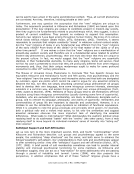
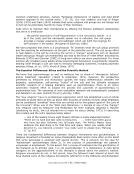
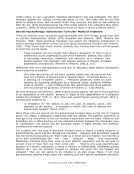
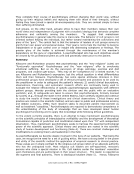
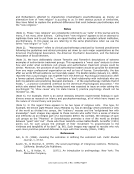
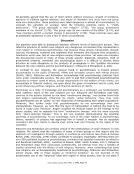
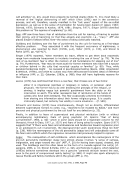
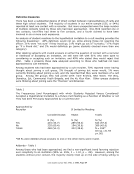
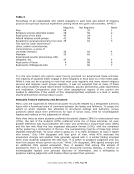
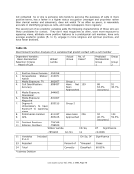
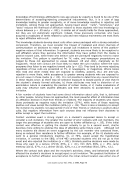
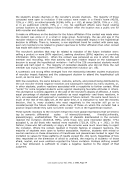
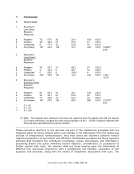
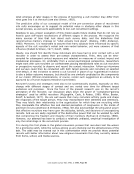
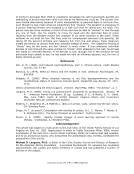
not contacted he or she is someone who tends to perceive the purposes of cults in more
positive terms, has a father in a higher status occupation (manager and proprietor rather
than clerical worker and salesman), does not watch TV as often as peers, is reasonably
accurate in identifying groups as cults, and reads newspapers more regularly.
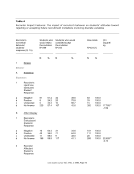
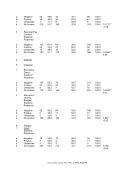
The second set of six predictor variables adds the following characteristics of those who are
likely candidates for contact. They don‘t read magazines as often, want more exposure to
opposing views, attribute more positive features to a prototypical cult member, have only
average academic grades (B- to C), engage in more religious and spiritual practices, and
have fewer brothers.
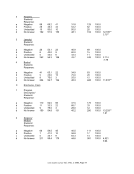
Table 3A
Discriminant Function Analysis of 11 variables that predict contact with a cult member
Dependent Variable:
Been Approached Wilkes‘
Actual
Group
No. of
Cases*
Predicted
Membership
Group
Selection Criteria
Heard of Cult
Lamda Group
1
Group
2
1. Positive Group Purpose .950458
2. Occupational Status:
Father
.913071
3. Media Exposure: TV .882857 Group 1
4. Cult Identification:
Accuracy
.858457 Have Not
Been
Approached
139 88
63.3%
(accuracy)
51
36.7%
5. Media Exposure:
Newspaper
.844662
6. Media Exposure:
Magazine
.831067
7. Dogma 4:
Unnecessary to have
exposure to opposing
views
.820155 Group 2
8. Prototypical member .811437 Have been 226 92 134
9. GPA .803416 Approached 40.7%
(accuracy)
59.3%
10. Spiritual Practices .794348
11. Siblings: Brothers .798520
Wilkes‘ Lamda Chi Sq. DF Significance
.7855204 32.711 11 0.0006
11 Variables Included
F1.0
Chi Sq. DF Significance
23 Rejected Percent of ―Grouped Cases
34 Total Correctly Classified: 60.82%
*Listwise Deletion
not contacted he or she is someone who tends to perceive the purposes of cults in more
positive terms, has a father in a higher status occupation (manager and proprietor rather
than clerical worker and salesman), does not watch TV as often as peers, is reasonably
accurate in identifying groups as cults, and reads newspapers more regularly.
The second set of six predictor variables adds the following characteristics of those who are
likely candidates for contact. They don‘t read magazines as often, want more exposure to
opposing views, attribute more positive features to a prototypical cult member, have only
average academic grades (B- to C), engage in more religious and spiritual practices, and
have fewer brothers.
Table 3A
Discriminant Function Analysis of 11 variables that predict contact with a cult member
Dependent Variable:
Been Approached Wilkes‘
Actual
Group
No. of
Cases*
Predicted
Membership
Group
Selection Criteria
Heard of Cult
Lamda Group
1
Group
2
1. Positive Group Purpose .950458
2. Occupational Status:
Father
.913071
3. Media Exposure: TV .882857 Group 1
4. Cult Identification:
Accuracy
.858457 Have Not
Been
Approached
139 88
63.3%
(accuracy)
51
36.7%
5. Media Exposure:
Newspaper
.844662
6. Media Exposure:
Magazine
.831067
7. Dogma 4:
Unnecessary to have
exposure to opposing
views
.820155 Group 2
8. Prototypical member .811437 Have been 226 92 134
9. GPA .803416 Approached 40.7%
(accuracy)
59.3%
10. Spiritual Practices .794348
11. Siblings: Brothers .798520
Wilkes‘ Lamda Chi Sq. DF Significance
.7855204 32.711 11 0.0006
11 Variables Included
F1.0
Chi Sq. DF Significance
23 Rejected Percent of ―Grouped Cases
34 Total Correctly Classified: 60.82%
*Listwise Deletion