Cultic Studies Journal, Vol. 2 No. 1 1985, Page 4
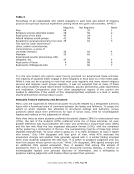
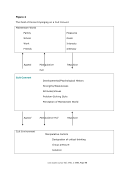
to individuals drawn from the same groups 3) the underlying ―deep structure‖ (supportive,
empathic, confiding relationship special setting with symbols of hope and healing special
rationale that explains health and illness and a special set of rituals and practices) is the
same 4) both serve the same common functions—improving the functioning and/or self-
esteem of the member or patient 5) they have similar cognitive and interactive styles, i.e.,
the way in which members/patients think about themselves or interact with others is
essentially the same and 6) both psychotherapy and the new religions tend to be referred
to by outsiders in a derogatory manner and are scapegoated.
Based on these presumed commonalities Kilbourne and Richardson reach the provocative
but oversimplified and fallacious conclusion that psychotherapy and the ―new religions‖ are
essentially the same. We believe there are profound differences in form, structure, process,
and outcome for psychotherapy as compared to the ―new religions‖.
Interestingly, we (Kriegman and Solomon, 1985 Kriegman, 1980) have also documented
some striking similarities between psychotherapy and religious cult groups, namely1, the
relationship of the patient/member to the therapist/leader/group and 2) the sense of relief
and positive change that accompanies the formation of the relationship with the
therapist/leader/group. However, we also clearly delineate major differences. We have
suggested that Kohut‘s ―self-psychology‖ and clinical perspectives (Kohut, 1971, 1977) can
serve to illuminate the ―psychosocial fit‖ between what cult groups promise and the
yearning for ―self-cohesion‖ on the part of the ―true believer‖ or potential recruit.
The parallels between the particular type of transference which develops during the clinical
treatment of narcissistic personality disorders and the idealization of the cult leader are so
striking that when one reads Kohut‘s descriptions of the ―idealizing transference‖ it seems
as though he might be describing the typical relationship between a cult member and his
leader (Kriegman and Solomon, 1985). The cult group‘s use of this type of transference or
bonding phenomenon, however, is markedly different from the manner in which the
therapist seeks to ―work through‖ and resolve this type of transference. In Kriegman &
Solomon (1985), we describe how a resolution leading to greater internal freedom and
personal autonomy is brought about in the therapeutic process. We believe that Kilbourne
and Richardson‘s conclusion that psychotherapy and religious cults are essentially the same
is unwarranted. Let us examine some of their arguments.
The Correlation In Time Fallacy
Kilbourne and Richardson (1984) state:
Both psychotherapy and new religions exist within the same sociohistorical
context, even though psychotherapeutic approaches gained impetus a few
decades earlier ...(p. 238)
They go on to list some of the characteristics of the current ―sociohistorical context,‖ with
the implication being that certain features of modern-day western society have led to the
appeal of both psychotherapy and the ―new religions,‖ which, it is concluded, serve similar
societal needs. While it may be true that certain features of modern society have led to
certain types of anxieties, to argue that these two ―solutions‖ are therefore functionally
equivalent is simply not logical. Raising a family and developing a productive fulfilling
career, on the one hand, and a life of crime and heroin addiction, on the other, are both, at
least in part, solutions to existential anxiety. Though they both may offer partial solutions to
the same problem, there is no reason to conclude that they are therefore essentially the
same. The correlation of two phenomena with a third cannot be used to argue that the
original two are related in any particular way. To do so would be a form of the
correlation/causation fallacy, for anything that comes into being within the same time period
to individuals drawn from the same groups 3) the underlying ―deep structure‖ (supportive,
empathic, confiding relationship special setting with symbols of hope and healing special
rationale that explains health and illness and a special set of rituals and practices) is the
same 4) both serve the same common functions—improving the functioning and/or self-
esteem of the member or patient 5) they have similar cognitive and interactive styles, i.e.,
the way in which members/patients think about themselves or interact with others is
essentially the same and 6) both psychotherapy and the new religions tend to be referred
to by outsiders in a derogatory manner and are scapegoated.
Based on these presumed commonalities Kilbourne and Richardson reach the provocative
but oversimplified and fallacious conclusion that psychotherapy and the ―new religions‖ are
essentially the same. We believe there are profound differences in form, structure, process,
and outcome for psychotherapy as compared to the ―new religions‖.
Interestingly, we (Kriegman and Solomon, 1985 Kriegman, 1980) have also documented
some striking similarities between psychotherapy and religious cult groups, namely1, the
relationship of the patient/member to the therapist/leader/group and 2) the sense of relief
and positive change that accompanies the formation of the relationship with the
therapist/leader/group. However, we also clearly delineate major differences. We have
suggested that Kohut‘s ―self-psychology‖ and clinical perspectives (Kohut, 1971, 1977) can
serve to illuminate the ―psychosocial fit‖ between what cult groups promise and the
yearning for ―self-cohesion‖ on the part of the ―true believer‖ or potential recruit.
The parallels between the particular type of transference which develops during the clinical
treatment of narcissistic personality disorders and the idealization of the cult leader are so
striking that when one reads Kohut‘s descriptions of the ―idealizing transference‖ it seems
as though he might be describing the typical relationship between a cult member and his
leader (Kriegman and Solomon, 1985). The cult group‘s use of this type of transference or
bonding phenomenon, however, is markedly different from the manner in which the
therapist seeks to ―work through‖ and resolve this type of transference. In Kriegman &
Solomon (1985), we describe how a resolution leading to greater internal freedom and
personal autonomy is brought about in the therapeutic process. We believe that Kilbourne
and Richardson‘s conclusion that psychotherapy and religious cults are essentially the same
is unwarranted. Let us examine some of their arguments.
The Correlation In Time Fallacy
Kilbourne and Richardson (1984) state:
Both psychotherapy and new religions exist within the same sociohistorical
context, even though psychotherapeutic approaches gained impetus a few
decades earlier ...(p. 238)
They go on to list some of the characteristics of the current ―sociohistorical context,‖ with
the implication being that certain features of modern-day western society have led to the
appeal of both psychotherapy and the ―new religions,‖ which, it is concluded, serve similar
societal needs. While it may be true that certain features of modern society have led to
certain types of anxieties, to argue that these two ―solutions‖ are therefore functionally
equivalent is simply not logical. Raising a family and developing a productive fulfilling
career, on the one hand, and a life of crime and heroin addiction, on the other, are both, at
least in part, solutions to existential anxiety. Though they both may offer partial solutions to
the same problem, there is no reason to conclude that they are therefore essentially the
same. The correlation of two phenomena with a third cannot be used to argue that the
original two are related in any particular way. To do so would be a form of the
correlation/causation fallacy, for anything that comes into being within the same time period