Cultic Studies Journal, Vol. 2 No. 1 1985, Page 84
process, it is important to appreciate what that ―target person‖ brings Into the contact
setting, as well as focus upon the recruiter‘s strategies and tactics. It is not so much what
the cult recruiter says, does, or how he or she looks that directly influences the decisions of
the person contacted. Rather, it is the person‘s perception, evaluation, and interpretation of
the recruiter‘s impact features that figures prominently in the decision to accept, consider,
or reject a cult invitation.
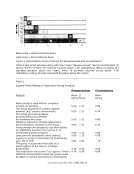
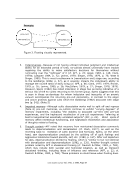
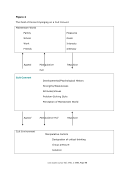
Figure 2. Variables That Predict Who is Likely to Be Contacted and Who Will be Amenable
to Negotiation. (unavailable)
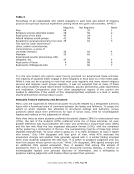
Our data force us to reject the notion of a random process by which someone gets
contacted by a cult member and by which a decision is made for future contact with a cult
group. Two discriminant function analyses enable us to make a highly significant
assignment of students to categories of approached/not approached, as well as to the
categories of would reject versus would consider/accept a recruitment invitation.
Only a few of the variables that influence the contact outcome also operate to influence the
affiliation outcome. Most notable of the variables playing a dual function in these decisions
are perception of the purposes of cults, and evaluation of the characteristics of a
prototypical member. Accordingly, we need to think of these two outcomes as qualitatively
distinct and not merely as sequential phases of unidimensional process. For example, extent
and nature of media exposure affects likelihood of contact, but is not relevant for likelihood
of affiliation. The same is true of father‘s status, grades, religious practices, and several
other variables. To understand the process by which the cult affiliation decision is made by
students who have been previously contacted, we must take into account the complex
interaction of pre-contact knowledge and values of the student, recruiter impact on the
student, the contact setting, and especially the student‘s cognitive transformation of these
inputs into affective ties, perceived congruence, and empathetic associations.
Attention should also be drawn to the rather small and subtle differences between the
groups on each of the outcome measures. Contacted students who would ―consider/accept‖
are not necessarily uninformed students, with low grades, shy, poor, or gullible. They have
lots of media exposure, average grades, know what cults are, engage in a moderate amount
of religious practices, and are undogmatic about being exposed to contrary views. They are
also more likely to come from high status homes. There is also a ―socially normative‖ look
to the youngsters who are willing to admit to being open to future association with a cult.
We found nothing deviant, nor even qualitatively distinct about them--as compared to
students rejecting the invitation. The major dimensions which seem to guide them away
from the ―reject‖ decision are: a) having developed more positive attitudes and values
about cults and the cult recruiter, and b) not having the contact made in the wrong setting
by an inappropriate recruiter.
These apparently subtle features of the ―contact-prone‖ and ―affiliation-prone‖ person
contrast with the starkly drawn journalistic and clinical case portraits of the ―cult seekers‖
and ―innocents‖ deceptively manipulated to become cult converts. (U.S. News and World
Reports, 1978 Conway &Siegelman, 1978 Richardson, 1978, among others). Our sample
is much younger than those typically studied, and we are dealing only with the initial stage
in a long, complex process of cult indoctrination. Perhaps there is a filtering or tracking
mechanism at various decision stages. At each stage, from initial contact to indoctrination to
conversion, ever more extreme reactions are demanded and more unique attributes called
for in recruits, loyal members, and deployable agents, (see Hirschman‘s important analysis
of the dynamics of ―exit, voice, and loyalty‖ in organizations, 1970). This is not to question
the validity of prevailing sociological conceptions of troubled-youths-in-distress, nor of
adolescents alienated from their families (Doress &Porter, 1978). But rather, to note that
process, it is important to appreciate what that ―target person‖ brings Into the contact
setting, as well as focus upon the recruiter‘s strategies and tactics. It is not so much what
the cult recruiter says, does, or how he or she looks that directly influences the decisions of
the person contacted. Rather, it is the person‘s perception, evaluation, and interpretation of
the recruiter‘s impact features that figures prominently in the decision to accept, consider,
or reject a cult invitation.
Figure 2. Variables That Predict Who is Likely to Be Contacted and Who Will be Amenable
to Negotiation. (unavailable)
Our data force us to reject the notion of a random process by which someone gets
contacted by a cult member and by which a decision is made for future contact with a cult
group. Two discriminant function analyses enable us to make a highly significant
assignment of students to categories of approached/not approached, as well as to the
categories of would reject versus would consider/accept a recruitment invitation.
Only a few of the variables that influence the contact outcome also operate to influence the
affiliation outcome. Most notable of the variables playing a dual function in these decisions
are perception of the purposes of cults, and evaluation of the characteristics of a
prototypical member. Accordingly, we need to think of these two outcomes as qualitatively
distinct and not merely as sequential phases of unidimensional process. For example, extent
and nature of media exposure affects likelihood of contact, but is not relevant for likelihood
of affiliation. The same is true of father‘s status, grades, religious practices, and several
other variables. To understand the process by which the cult affiliation decision is made by
students who have been previously contacted, we must take into account the complex
interaction of pre-contact knowledge and values of the student, recruiter impact on the
student, the contact setting, and especially the student‘s cognitive transformation of these
inputs into affective ties, perceived congruence, and empathetic associations.
Attention should also be drawn to the rather small and subtle differences between the
groups on each of the outcome measures. Contacted students who would ―consider/accept‖
are not necessarily uninformed students, with low grades, shy, poor, or gullible. They have
lots of media exposure, average grades, know what cults are, engage in a moderate amount
of religious practices, and are undogmatic about being exposed to contrary views. They are
also more likely to come from high status homes. There is also a ―socially normative‖ look
to the youngsters who are willing to admit to being open to future association with a cult.
We found nothing deviant, nor even qualitatively distinct about them--as compared to
students rejecting the invitation. The major dimensions which seem to guide them away
from the ―reject‖ decision are: a) having developed more positive attitudes and values
about cults and the cult recruiter, and b) not having the contact made in the wrong setting
by an inappropriate recruiter.
These apparently subtle features of the ―contact-prone‖ and ―affiliation-prone‖ person
contrast with the starkly drawn journalistic and clinical case portraits of the ―cult seekers‖
and ―innocents‖ deceptively manipulated to become cult converts. (U.S. News and World
Reports, 1978 Conway &Siegelman, 1978 Richardson, 1978, among others). Our sample
is much younger than those typically studied, and we are dealing only with the initial stage
in a long, complex process of cult indoctrination. Perhaps there is a filtering or tracking
mechanism at various decision stages. At each stage, from initial contact to indoctrination to
conversion, ever more extreme reactions are demanded and more unique attributes called
for in recruits, loyal members, and deployable agents, (see Hirschman‘s important analysis
of the dynamics of ―exit, voice, and loyalty‖ in organizations, 1970). This is not to question
the validity of prevailing sociological conceptions of troubled-youths-in-distress, nor of
adolescents alienated from their families (Doress &Porter, 1978). But rather, to note that