Cultic Studies Journal, Vol. 2 No. 1 1985, Page 55
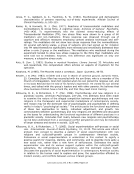
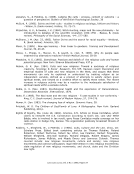
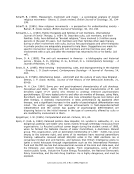
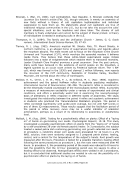
Singer, M.T. (1978). Therapy with ex-cult members. Journal of the National Association of
Private Psychiatric Hospitals 9(4), 14-18.
Singer, M.T. (1979). Coming out of the cults. Psychology Today, January, pp. 72 75-76
79-80 82.
Spero, M.H. (1977). Cults: Some theoretical and practical perspectives. Journal of Jewish
Communal Service, 53(4), 330-338.
Spero, M.H. (1980). The stimulus value of religion to cultic penitent personality types.
Journal of Psychology and Judaism, 4(3), 161-170.
Spero, M.H719-‘82). Psychotherapeutic procedures with religious cult devotees. Journal of
Nervous and Mental Disease, 170(6), 332-344.
Stone, M.H.71-980). The borderline syndromes: Constitution, personality, and adaptation.
New York: McGraw-Hill.
Sullivan, L.B. (1964). Family perspectives on involvements in new religious groups. Cultic
Studies Journal, l(l), 79-102.
Tibe, R. (1979). Theoretical definition of the borderline syndrome. Unpublished doctoral
dissertation, Rosemead Graduate School of Professional Psychology.
Ungerleider, J.T., &Wellish, D.K. (1979). Cultism, thought control and deprogramming:
Observations on a phenomenon. Psychiatric Opinion, 16(l), 10-11 14-15.
Ungerleider, J.T., &Wellish, D.K. (1979). Coercive persuasion (brainwashing), religious cults
and deprogramming. American Journal of Psychiatry, L36(3), 279-282.
Verdier, P.A. (1977). Brainwashing, and the cults: An expose on capturing, the human
mind. No. Hollywood, CA: Wilshire.
Weiner, 1. (1966) Psychodiagnosis in schizophrenia. New York: Wiley &Sons.
West, L.J., &Singer, M.T. (1980). Cults, quacks, and nonprofessional psychotherapies in
H.I. Kaplan, A.M. Freedman, &B.]. Sadock (Eds.), Comprehensive textbook of
Psychiatry III. Baltimore: Williams &Williams.
Yamamoto, 3.1. (1977). The puppet master: An inquiry into Sun Myung Moon and the
Unification Church. Downers Grove, IL: Intervarsity.
Zerin, M. (1982). The Pied Piper phenomenon: Family systems and vulnerability to cults.
Unpublished doctoral dissertation, The Fielding Institute. (Summarized in: The
Script, 12 No. 2, 1-2).
Stephen M. Ash, Psy.D. is a clinical psychologist in private practice in Dallas, Texas. In
1983 Dr. Ash completed a dissertation on cults, the essence of which he is publishing as
articles in the Cultic Studies Journal.
This article is an electronic version of an article originally published in Cultic Studies Journal, 1985, Volume 2,
Number 1, pages 31-90. Please keep in mind that the pagination of this electronic reprint differs from that of the
bound volume. This fact could affect how you enter bibliographic information in papers that you may write.