Cultic Studies Journal, Vol. 2 No. 1 1985, Page 80
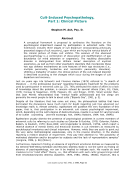
perceived cults in more positive terms. For those approached, significant differences were
found between rejectors and those who would consider/accept on each of the following
dimensions: not worthwhile/worthwhile, threatening/safe, crazy/sane, profit-
minded/charity-minded, against freedom/for freedom, painful-pleasureable (all p values
.001). For the dimensions of political/non-political and religious/non-religious the non
significant trend was for both of these extremes to be more often chosen by students who
rejected the invitation than were receptive. Interestingly, a virtually identical pattern was
shown by the students who had not been approached. Negative cult descriptions and
rejection were associated as were positive descriptions and being in the category of
students who would consider/accept the hypothetical invitation (p values falling between
.01 and .001). Again, to those who reject or accept cult recruiters, It does not matter
whether cults are perceived as political or not, or religious or not. Across all students in this
study, then, two of the major dimensions on which most cults are commonly described--the
religious and the political-appear to have no value in predicting the outcome measure of
reject versus consider/accept a cult invitation.
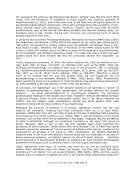
The final measure that belongs within the category of mediational processes is the
empathetic association students revealed when asked to project their current feelings about
cults elicited by a number of imagined cult-relevant scenarios. Among contacted students,
more of those rejecting the invitation projected negative feelings (of anger, disgust, fear,
sadness, and embarrassment) than did those who would consider/accept the invitation.
Most of these reactions to scenarios were significantly different between the non-negotiators
and negotiators. Scenarios included: if a relative dated a cult member, if parents attended a
cult meeting, if parents signed up the student for a cult event, if asked to lie for group,
defend group, or collect funds. Among the small number of students who were ―happy‖ in
imagining these events, almost all were receptive to the cult invitation. They also
predominated over the rejecting students in reporting feeling ―nothing‖ in response to most
of these scenarios. Across both subgroups of these contacted students, the strongest
feelings projected (most students reported) were: surprise and disgust if a relative dated a
cult member, surprise if parents attended a meeting, anger if parents signed up the
student, happiness if parents objected to their joining a cult, anger if asked to lie, anger and
fear if made to defend the cult, anger and embarrassment if made to collect funds.
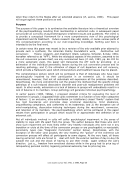
A generally similar pattern of empathetic associations exists for the uncontacted students.
One major difference between their pattern and that of the contacted students is their
greater frequency of responding ―feel nothing‖ to almost every one of the scenarios. That
finding may mean that without some actual contact with cults it is more difficult to project
strong emotional reactions to these imaginary scenarios. Or, alternatively, prior contact
enables students more readily to get effectively involved in these hypothetical situations.
For both contacted and non-contacted students, the ―happy‖ response (N =120) to all
these scenarios (excluding ―if parent objected to your joining‖) is given 87% of the time by
the receptive students and only 13% of the time by the rejecting students (p .01). Those
open to further affiliation tend to express less negative affect related to imagined cult
experiences, along with more neutral and more positive feelings than do those who flatly
reject the hypothetical invitation.
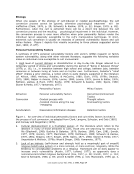
Variables Predicting Cult Affiliation
It is possible to predict with reasonable accuracy the kind of students most likely to be open
to considering or accepting an invitation to attend a cult event, and to discriminate between
them and those who would be opposed to such affiliation. When 27 of our possibly relevant
variables were entered into a discriminant function analysis, 15 variables formed a rich
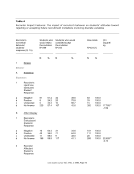
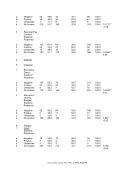
predictor composite. As can be seen in tables 5A and 5B, these variables correctly assigned
74% of the students to the group of those who would reject the invitation, and correctly
perceived cults in more positive terms. For those approached, significant differences were
found between rejectors and those who would consider/accept on each of the following
dimensions: not worthwhile/worthwhile, threatening/safe, crazy/sane, profit-
minded/charity-minded, against freedom/for freedom, painful-pleasureable (all p values
.001). For the dimensions of political/non-political and religious/non-religious the non
significant trend was for both of these extremes to be more often chosen by students who
rejected the invitation than were receptive. Interestingly, a virtually identical pattern was
shown by the students who had not been approached. Negative cult descriptions and
rejection were associated as were positive descriptions and being in the category of
students who would consider/accept the hypothetical invitation (p values falling between
.01 and .001). Again, to those who reject or accept cult recruiters, It does not matter
whether cults are perceived as political or not, or religious or not. Across all students in this
study, then, two of the major dimensions on which most cults are commonly described--the
religious and the political-appear to have no value in predicting the outcome measure of
reject versus consider/accept a cult invitation.
The final measure that belongs within the category of mediational processes is the
empathetic association students revealed when asked to project their current feelings about
cults elicited by a number of imagined cult-relevant scenarios. Among contacted students,
more of those rejecting the invitation projected negative feelings (of anger, disgust, fear,
sadness, and embarrassment) than did those who would consider/accept the invitation.
Most of these reactions to scenarios were significantly different between the non-negotiators
and negotiators. Scenarios included: if a relative dated a cult member, if parents attended a
cult meeting, if parents signed up the student for a cult event, if asked to lie for group,
defend group, or collect funds. Among the small number of students who were ―happy‖ in
imagining these events, almost all were receptive to the cult invitation. They also
predominated over the rejecting students in reporting feeling ―nothing‖ in response to most
of these scenarios. Across both subgroups of these contacted students, the strongest
feelings projected (most students reported) were: surprise and disgust if a relative dated a
cult member, surprise if parents attended a meeting, anger if parents signed up the
student, happiness if parents objected to their joining a cult, anger if asked to lie, anger and
fear if made to defend the cult, anger and embarrassment if made to collect funds.
A generally similar pattern of empathetic associations exists for the uncontacted students.
One major difference between their pattern and that of the contacted students is their
greater frequency of responding ―feel nothing‖ to almost every one of the scenarios. That
finding may mean that without some actual contact with cults it is more difficult to project
strong emotional reactions to these imaginary scenarios. Or, alternatively, prior contact
enables students more readily to get effectively involved in these hypothetical situations.
For both contacted and non-contacted students, the ―happy‖ response (N =120) to all
these scenarios (excluding ―if parent objected to your joining‖) is given 87% of the time by
the receptive students and only 13% of the time by the rejecting students (p .01). Those
open to further affiliation tend to express less negative affect related to imagined cult
experiences, along with more neutral and more positive feelings than do those who flatly
reject the hypothetical invitation.
Variables Predicting Cult Affiliation
It is possible to predict with reasonable accuracy the kind of students most likely to be open
to considering or accepting an invitation to attend a cult event, and to discriminate between
them and those who would be opposed to such affiliation. When 27 of our possibly relevant
variables were entered into a discriminant function analysis, 15 variables formed a rich
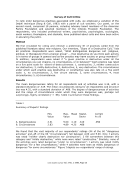
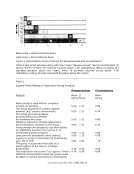
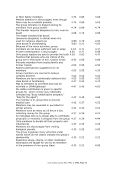
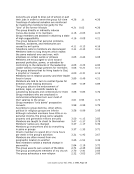
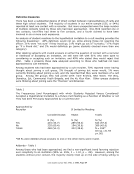
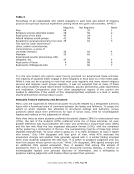
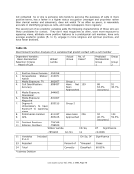
predictor composite. As can be seen in tables 5A and 5B, these variables correctly assigned
74% of the students to the group of those who would reject the invitation, and correctly