Cultic Studies Journal, Vol. 2 No. 1 1985, Page 62
dozen teenagers who generated appropriate terms and language for the semantic
differential items used. A pilot sample of 150 students from local Catholic and Jewish youth
centers was then used to pre-test the wording of questions and other features of the
survey.
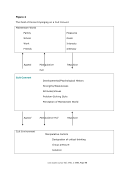
The 50 items of information requested in this self-report survey were organized around four
general classes: pre-contact variables, contact variables, mediational variables, and
outcome measures. Questionnaire format varied within each of these classes of items.
Students responded using check lists, open-ended write-ins, Likert-type response scales,
and semantic differential scales. Some questions had as many as 30 subparts.
Pre-Contact variables
Pre-contact variables relate to predispositions of the respondents and to their knowledge
structure. Fixed predispositions were sex, age, race, religion, and family composition.
Modifiable predispositions included background questions about GPA, geographical mobility,
nature and extent of media exposure, spiritual practices, type of classroom preferred,
shyness, views about authority, and the value of exposure to opposition ideas.
Knowledge structure regarding cults was measured by items that asked the students to
identify if they had heard of any or over 30 listed groups, and whether or not each was a
cult. Descriptions of prototypical cult members were also elicited, as were general
perceptions of groups referred to as cults. Semantic differential subsets were used (with
nine-point equal intervals) to collect these reactions. Thus cults might be: charity
minded/profit minded, non-religious/religious, and so forth. Typical cult members were
described on fifteen semantic differential subsets including: foolish/wise,
responsible/irresponsible, weak/strong, lonely/not lonely, and others. Check lists of the
primary purposes of these groups included both multiple response items, such as: ―to raise
money,‖ ―to improve the world,‖ ―to destroy individual freedom,‖ ―to strengthen the
American family,‖ and eleven others, and also open-ended items for free responses to this,
and other check-list items.
Contact variables. Contact variables were those related to the recruiter‘s strategies and
tactics. The fundamental question that separated our participants into those with and
without contact was: ―Have you been approached by a member of a group that you
thought was a cult?‖ For those who had been contacted, the survey elicited information
about the situation in which that contact had taken place, e.g., public or private, whether
alone or with others. Descriptions of the recruiter and the verbal and non-verbal behaviors
she or he or she used during the contact were also noted by the respondents.
Mediational processes. Mediational processes were indirectly measured by trying to
determine the degree of perceived congruence between the student-respondent and the cult
recruiter, as well as the extent of similarity perceived between the student and prototypical
cult members. A series of questions asked the student‘s reaction to the person who had
made the contact. Some reactions were of a general type: friendly/unfriendly,
afraid/unafraid, interested/disinterested, angry/pleasant. Other items focused on the
recruiter‘s specific verbal and non-verbal aspects that the student felt affected him/her
(either favorably or unfavorably). Among them were: eye contact, enthusiasm, affection,
hand gestures, dress, tone of voice, product being sold, and so forth. Affective reactions
were also elicited to a series of eight items asking about imagines transactions within cults,
such as: if a relative dated a cult member, if parents attended a cult meeting, or if parents
objected to the student‘s joining the group.
Outcome measures. Outcome measures were of three kinds. The most basic question is
that which established whether there had been any contact with a cult recruiter: ―Have you
dozen teenagers who generated appropriate terms and language for the semantic
differential items used. A pilot sample of 150 students from local Catholic and Jewish youth
centers was then used to pre-test the wording of questions and other features of the
survey.
The 50 items of information requested in this self-report survey were organized around four
general classes: pre-contact variables, contact variables, mediational variables, and
outcome measures. Questionnaire format varied within each of these classes of items.
Students responded using check lists, open-ended write-ins, Likert-type response scales,
and semantic differential scales. Some questions had as many as 30 subparts.
Pre-Contact variables
Pre-contact variables relate to predispositions of the respondents and to their knowledge
structure. Fixed predispositions were sex, age, race, religion, and family composition.
Modifiable predispositions included background questions about GPA, geographical mobility,
nature and extent of media exposure, spiritual practices, type of classroom preferred,
shyness, views about authority, and the value of exposure to opposition ideas.
Knowledge structure regarding cults was measured by items that asked the students to
identify if they had heard of any or over 30 listed groups, and whether or not each was a
cult. Descriptions of prototypical cult members were also elicited, as were general
perceptions of groups referred to as cults. Semantic differential subsets were used (with
nine-point equal intervals) to collect these reactions. Thus cults might be: charity
minded/profit minded, non-religious/religious, and so forth. Typical cult members were
described on fifteen semantic differential subsets including: foolish/wise,
responsible/irresponsible, weak/strong, lonely/not lonely, and others. Check lists of the
primary purposes of these groups included both multiple response items, such as: ―to raise
money,‖ ―to improve the world,‖ ―to destroy individual freedom,‖ ―to strengthen the
American family,‖ and eleven others, and also open-ended items for free responses to this,
and other check-list items.
Contact variables. Contact variables were those related to the recruiter‘s strategies and
tactics. The fundamental question that separated our participants into those with and
without contact was: ―Have you been approached by a member of a group that you
thought was a cult?‖ For those who had been contacted, the survey elicited information
about the situation in which that contact had taken place, e.g., public or private, whether
alone or with others. Descriptions of the recruiter and the verbal and non-verbal behaviors
she or he or she used during the contact were also noted by the respondents.
Mediational processes. Mediational processes were indirectly measured by trying to
determine the degree of perceived congruence between the student-respondent and the cult
recruiter, as well as the extent of similarity perceived between the student and prototypical
cult members. A series of questions asked the student‘s reaction to the person who had
made the contact. Some reactions were of a general type: friendly/unfriendly,
afraid/unafraid, interested/disinterested, angry/pleasant. Other items focused on the
recruiter‘s specific verbal and non-verbal aspects that the student felt affected him/her
(either favorably or unfavorably). Among them were: eye contact, enthusiasm, affection,
hand gestures, dress, tone of voice, product being sold, and so forth. Affective reactions
were also elicited to a series of eight items asking about imagines transactions within cults,
such as: if a relative dated a cult member, if parents attended a cult meeting, or if parents
objected to the student‘s joining the group.
Outcome measures. Outcome measures were of three kinds. The most basic question is
that which established whether there had been any contact with a cult recruiter: ―Have you