Cultic Studies Journal, Vol. 2 No. 1 1985, Page 48
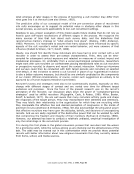
this can help to explain the Goldbergs‘ (1982) puzzling finding that those who ―have
attained leadership status, and have, in effect, become the controllers‖ usually ―take longer
to disavow the (group) experience‖ after leaving, even though their departure was almost
always on their own (p. 167). (Is this due to the complicated layers of dissociated ego parts
they must work through?) For example, the narcissistic personality/ego state could be
defending against a dissociative state, which may be defending against even deeper pre-cult
personality conflicts, which paradoxically could even revolve around a borderline personality
disorder itself.
The author also believes that Erhard Seminars Training (est) utilizes a dissociative-inducing
process to produce functionally narcissistic personalities in that ―getting it‖ means
realizing your inner divinity and accountability to yourself only (Ash, 1984c). If research
bears this out, then it would not be too great a leap to imagine the more typical passive
dependent cult personality flipping over in Its dissociative/dedifferentiative ego structure
into a narcissistic personality once he attains a leadership position.
Post-traumatic Stress Disorder
Although the atypical dissociative disorder is the diagnosis of choice for the cultist syndrome
during the reevaluation phase of cult departure, a DSM-111 diagnosis is less clear for those
who have broken the dissociation through deprogramming or other means. Zerin (1982) has
suggested a similarity to post-traumatic stress disorder, which would be of the acute
subtype (308.30) as the post-deprogramming stage of cult recovery rarely extends past six
months.
Indeed, there are many similarities, most of which center around dissociative phenomena,
particularly floating, e.g., ―the sudden acting or. feeling as if the traumatic event were
reoccurring because of an association with an environmental or ideational stimulus‖ (DSM-
111, APA, p. 137). Others of particular similarity are the recurring dreams of the event
(nightmares), guilt about surviving, and memory impairment or trouble concentrating.
Indeed, it appears as if almost all of the post-traumatic stress disorder symptoms may fit
within the clinical picture of the post-mind-control syndrome.
However, an across-the-board comparison should await research on this issue, for
differences do linger in the shadows. For example, not included in the post-traumatic stress
disorder symptoms list, but present in the clinical picture of ex-cultists, are problems such
as indecisiveness, perceptual difficulties, depression, fear, anger, and interpersonal
problems centering around ambivalence. Survivors of concentration camps or battles in
Viet Nam rarely wish to return to the ―safety‖ and simplicity of their traumatic environment.
They knew they were in a stressful situation both during the experience and afterward,
whereas ex-cultists often express a desire to return to their experience, while cultists deny
that it is traumatic or stressful at all.
Consequently, the utilization of DSM-111 #308.30 for ex-cultists in stage one of cult
recovery may be supported, but not without question.
Summary
The clinical picture which has been portrayed here is that of individuals who have been
psychologically impaired by their participation in an extremist cult as defined by Ash,
1984b). Although the entire scope of all (ex-) cultist problems has been reviewed, it must
be remembered that not all individuals will experience all these problems. Nevertheless,
with the exception of the psychopathic or narcissistic personality types (and possibly the
very healthy), the ―poison‖ of the extremist cult conversion process will to some degree
affect all who participate. Furthermore, the more extremist the individual‘s group is in its
cultism (i.e., being a totalitarian closed system utilizing deceptive mind manipulating
this can help to explain the Goldbergs‘ (1982) puzzling finding that those who ―have
attained leadership status, and have, in effect, become the controllers‖ usually ―take longer
to disavow the (group) experience‖ after leaving, even though their departure was almost
always on their own (p. 167). (Is this due to the complicated layers of dissociated ego parts
they must work through?) For example, the narcissistic personality/ego state could be
defending against a dissociative state, which may be defending against even deeper pre-cult
personality conflicts, which paradoxically could even revolve around a borderline personality
disorder itself.
The author also believes that Erhard Seminars Training (est) utilizes a dissociative-inducing
process to produce functionally narcissistic personalities in that ―getting it‖ means
realizing your inner divinity and accountability to yourself only (Ash, 1984c). If research
bears this out, then it would not be too great a leap to imagine the more typical passive
dependent cult personality flipping over in Its dissociative/dedifferentiative ego structure
into a narcissistic personality once he attains a leadership position.
Post-traumatic Stress Disorder
Although the atypical dissociative disorder is the diagnosis of choice for the cultist syndrome
during the reevaluation phase of cult departure, a DSM-111 diagnosis is less clear for those
who have broken the dissociation through deprogramming or other means. Zerin (1982) has
suggested a similarity to post-traumatic stress disorder, which would be of the acute
subtype (308.30) as the post-deprogramming stage of cult recovery rarely extends past six
months.
Indeed, there are many similarities, most of which center around dissociative phenomena,
particularly floating, e.g., ―the sudden acting or. feeling as if the traumatic event were
reoccurring because of an association with an environmental or ideational stimulus‖ (DSM-
111, APA, p. 137). Others of particular similarity are the recurring dreams of the event
(nightmares), guilt about surviving, and memory impairment or trouble concentrating.
Indeed, it appears as if almost all of the post-traumatic stress disorder symptoms may fit
within the clinical picture of the post-mind-control syndrome.
However, an across-the-board comparison should await research on this issue, for
differences do linger in the shadows. For example, not included in the post-traumatic stress
disorder symptoms list, but present in the clinical picture of ex-cultists, are problems such
as indecisiveness, perceptual difficulties, depression, fear, anger, and interpersonal
problems centering around ambivalence. Survivors of concentration camps or battles in
Viet Nam rarely wish to return to the ―safety‖ and simplicity of their traumatic environment.
They knew they were in a stressful situation both during the experience and afterward,
whereas ex-cultists often express a desire to return to their experience, while cultists deny
that it is traumatic or stressful at all.
Consequently, the utilization of DSM-111 #308.30 for ex-cultists in stage one of cult
recovery may be supported, but not without question.
Summary
The clinical picture which has been portrayed here is that of individuals who have been
psychologically impaired by their participation in an extremist cult as defined by Ash,
1984b). Although the entire scope of all (ex-) cultist problems has been reviewed, it must
be remembered that not all individuals will experience all these problems. Nevertheless,
with the exception of the psychopathic or narcissistic personality types (and possibly the
very healthy), the ―poison‖ of the extremist cult conversion process will to some degree
affect all who participate. Furthermore, the more extremist the individual‘s group is in its
cultism (i.e., being a totalitarian closed system utilizing deceptive mind manipulating