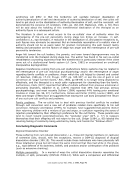
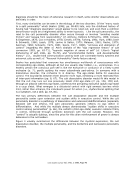
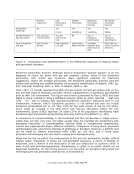
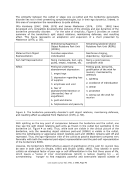
Cultic Studies Journal, Vol. 2 No. 1 1985, Page 92
sure that a caretaker mode of relating is called for before resorting to manipulative methods
aimed at fulfilling goals and needs of their child.
Promoting Voluntary Reevaluation
Collecting Information
Some workers in this field use the terms ―voluntary deprogramming‖ or ―exit counseling‖ to
describe the helping process I describe. I prefer the term ―reevaluation counseling!‘ because
it is not ―loaded,‖ as are the other two. Parents or helping professionals who want to
Initiate a process of voluntary deprogramming or exit counseling assume, in the first case,
that the cultist is ―programmed‖ or, in the second case, that he should necessarily ―exit‖
from the cult. Sometimes these assumptions may be warranted, e.g., when the person is
obviously troubled because of practices in a group known to be destructive. But frequently
this is not the case. More and more individuals caught up in cultic relationships belong to
lesser known groups or to groups that are not clearly destructive, at least not to all
members. Furthermore, the high level of negative news coverage concerning cults inclines
some parents to deem a group destructive simply because it appears unorthodox.
Therefore, I believe one more easily maintains his ethical bearings if he remains open to the
possibility that the individual in question may not be a victim of a cultic relationship.
Assuming plausible reasons for concern about one‘s child, a parent‘s goal should be to help
the child make a voluntary, informed reevaluation of his group involvement, i.e., to find out
whether the concern is warranted and whether the child in question shares that concern
after coming to understand it. Consequently, obtaining valid information is a critical aspect
of any attempt to help a convert voluntarily reevaluate his involvement in a possibly cultic
group.
Parents have six primary sources of information to help them determine whether or not
their child is the victim of a cultic relationship and to understand the nature of that
relationship. (1) readings, including publications of the group in question, as well as articles
and books written about the group (2) cult-watcher organizations and individuals, e.g., the
Citizens Freedom Foundation, and professionals knowledgeable about cults (3) ex-
members of the group in question (4) current members of the group in question (5) their
own observations of the group and their child and (6) their child.
Parents should consider and evaluate information from all of these sources. Each has Its
strong and weak points. Although publications produced by the group in question may be
self-serving, they may, nonetheless, help parents better understand what their child
believes and may prepare them to discuss those beliefs at the appropriate time. Outside
written analyses of the group can be very valuable if they are not biased or sensational.
Cult-watcher organizations and individuals sometimes have information that has not made
its way into the public arena, although they do have a tendency to collect mainly critical
information and, therefore, may not present a rounded picture of the group in question. Ex-
members, not all of whom are categorically critical of their groups, frequently have a
uniquely valuable understanding of the group. Conversations with current members can be
useful, not only because of the information they provide, but also because talking with them
gives parents an opportunity to study the group‘s communication methods and other
practices. These kinds of parental observations should be supplemented by analysis of their
child‘s behavior, especially behavior that seems out of character. And lastly, parents
should never underestimate the value of information that their own child can provide.
Unfortunately, once parents do become concerned, their emotions often get in the way of
communicating with their child or taking advantage of other information sources. For this
reason, learning how to communicate effectively and to deal with emotions are the first
challenges most cultists‘ parents confront.
sure that a caretaker mode of relating is called for before resorting to manipulative methods
aimed at fulfilling goals and needs of their child.
Promoting Voluntary Reevaluation
Collecting Information
Some workers in this field use the terms ―voluntary deprogramming‖ or ―exit counseling‖ to
describe the helping process I describe. I prefer the term ―reevaluation counseling!‘ because
it is not ―loaded,‖ as are the other two. Parents or helping professionals who want to
Initiate a process of voluntary deprogramming or exit counseling assume, in the first case,
that the cultist is ―programmed‖ or, in the second case, that he should necessarily ―exit‖
from the cult. Sometimes these assumptions may be warranted, e.g., when the person is
obviously troubled because of practices in a group known to be destructive. But frequently
this is not the case. More and more individuals caught up in cultic relationships belong to
lesser known groups or to groups that are not clearly destructive, at least not to all
members. Furthermore, the high level of negative news coverage concerning cults inclines
some parents to deem a group destructive simply because it appears unorthodox.
Therefore, I believe one more easily maintains his ethical bearings if he remains open to the
possibility that the individual in question may not be a victim of a cultic relationship.
Assuming plausible reasons for concern about one‘s child, a parent‘s goal should be to help
the child make a voluntary, informed reevaluation of his group involvement, i.e., to find out
whether the concern is warranted and whether the child in question shares that concern
after coming to understand it. Consequently, obtaining valid information is a critical aspect
of any attempt to help a convert voluntarily reevaluate his involvement in a possibly cultic
group.
Parents have six primary sources of information to help them determine whether or not
their child is the victim of a cultic relationship and to understand the nature of that
relationship. (1) readings, including publications of the group in question, as well as articles
and books written about the group (2) cult-watcher organizations and individuals, e.g., the
Citizens Freedom Foundation, and professionals knowledgeable about cults (3) ex-
members of the group in question (4) current members of the group in question (5) their
own observations of the group and their child and (6) their child.
Parents should consider and evaluate information from all of these sources. Each has Its
strong and weak points. Although publications produced by the group in question may be
self-serving, they may, nonetheless, help parents better understand what their child
believes and may prepare them to discuss those beliefs at the appropriate time. Outside
written analyses of the group can be very valuable if they are not biased or sensational.
Cult-watcher organizations and individuals sometimes have information that has not made
its way into the public arena, although they do have a tendency to collect mainly critical
information and, therefore, may not present a rounded picture of the group in question. Ex-
members, not all of whom are categorically critical of their groups, frequently have a
uniquely valuable understanding of the group. Conversations with current members can be
useful, not only because of the information they provide, but also because talking with them
gives parents an opportunity to study the group‘s communication methods and other
practices. These kinds of parental observations should be supplemented by analysis of their
child‘s behavior, especially behavior that seems out of character. And lastly, parents
should never underestimate the value of information that their own child can provide.
Unfortunately, once parents do become concerned, their emotions often get in the way of
communicating with their child or taking advantage of other information sources. For this
reason, learning how to communicate effectively and to deal with emotions are the first
challenges most cultists‘ parents confront.