Cultic Studies Journal, Vol. 2 No. 1 1985, Page 18
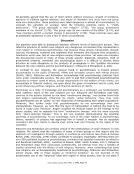
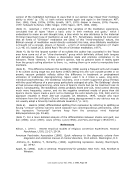
instruments other than nonstandardized self-report measures were utilized in the
assessment of these so-called therapeutic outcomes. Nonstandardized self-report -
instruments are no longer considered reliable or valid as the sole measures of outcome in
therapy outcome research, yet at least some of the studies they cite (e.g., Galanter, 1980,
Galanter &Buckley, 1983) base their conclusions solely on responses to these kinds of
measures.
Without control groups, pre-post measures, or dispassionate researchers (all of which are
readily found in those psychotherapy outcome studies recognized as most comprehensive
and valid), these scant findings are questionable. That leaves us with personal testimony.
The critics of new religions most often cited by Kilbourne and Richardson, have by their own
estimates, worked with over 2,000 new religionists and their families (Clark, Singer,
Langone &West, 1985). To this sample one can add the hundreds more seen by other
clinicians in this field (cf. Goldberg &Goldberg, 1982 Dubrow Eichel, Dubrow Eichel, &
Eisenberg, 1984, as examples). This sample is admittedly clinical and therefore biased. Do
Kilboume and Richardson wish to imply, however, that many of the samples they cite (e.g.,
119 ―premies‖ at a Divine Light Mission festival) are unbiased?
While it may be useful to compare the structures and functions of both new religions and
psychotherapies, Kilbourne and Richardson are guilty of the logical ―fallacy of the
undistributed middle‖ (Sherwood, 1960 Flew 1975). Because some of the new religions
may perform social functions similar to those performed by some psychotherapies, the two
are not therefore equivalent. Most of Kilbourne and Richardson‘s criteria for comparing new
religions and psychotherapy, for example, are applicable to both prisons and public schools,
and to both organized crime syndicates and the Catholic Church. Asking oneself where one
would rather send his or her children and by which group one would rather be employed
might provide two ―gut‖ examples of the differences between these groups.
We believe that dangerousness, or destructiveness, is a dimension that clearly distinguishes
psychotherapy from some new religions. Although there are many other problems with
Kilbourne and Richardson‘s comparison between psychotherapy and new religions, these
seem to pale when we consider that they have not adequately considered the dimension of
dangerousness. There is a vast literature that documents those systematically planned and
executed activities that are destructive to a new religion‘s membership and/or to the society
at large. This literature needs to be incorporated into, rather than casually dismissed by,
any theoretical model that claims to compare psychology to some of the new religions.
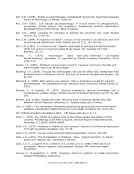
References
Boettcher, R., &Freedman, G. (1980). Gifts of deceit. New York: Holt, Rinehart and
Winston.
Borg, W., &Gail M. (1983). Educational research. New York: Longman.
Clark, J., Singer, M., Langone, M., &West, L. (1985, January). Experts criticize ―one-
sided‖ view (reprint of edited letter that first appeared in the October 1984 issue of
Psychology Today. The Cult Observer, p. 11.
Dole, A., &Dubrow Eichel, 5.(1981). Moon over academe. Journal of Religion and Health,
20, 35-40.
Dubrow Eichel, S., Dubrow Eichel, L., &Eisenberg, R. (1984). Mental health interventions in
cult-related cases: Preliminary investigations of outcomes. Cultic Studies Journal, 1,
156-166.
Flew, A.TI975). Thinking straight. Buffalo, NY: Prometheus. Galanter, M. (1980).
Psychological induction into the large group: Findings from a modem religious sect.
American Journal of Psychiatry, 137, 1574-1579.
instruments other than nonstandardized self-report measures were utilized in the
assessment of these so-called therapeutic outcomes. Nonstandardized self-report -
instruments are no longer considered reliable or valid as the sole measures of outcome in
therapy outcome research, yet at least some of the studies they cite (e.g., Galanter, 1980,
Galanter &Buckley, 1983) base their conclusions solely on responses to these kinds of
measures.
Without control groups, pre-post measures, or dispassionate researchers (all of which are
readily found in those psychotherapy outcome studies recognized as most comprehensive
and valid), these scant findings are questionable. That leaves us with personal testimony.
The critics of new religions most often cited by Kilbourne and Richardson, have by their own
estimates, worked with over 2,000 new religionists and their families (Clark, Singer,
Langone &West, 1985). To this sample one can add the hundreds more seen by other
clinicians in this field (cf. Goldberg &Goldberg, 1982 Dubrow Eichel, Dubrow Eichel, &
Eisenberg, 1984, as examples). This sample is admittedly clinical and therefore biased. Do
Kilboume and Richardson wish to imply, however, that many of the samples they cite (e.g.,
119 ―premies‖ at a Divine Light Mission festival) are unbiased?
While it may be useful to compare the structures and functions of both new religions and
psychotherapies, Kilbourne and Richardson are guilty of the logical ―fallacy of the
undistributed middle‖ (Sherwood, 1960 Flew 1975). Because some of the new religions
may perform social functions similar to those performed by some psychotherapies, the two
are not therefore equivalent. Most of Kilbourne and Richardson‘s criteria for comparing new
religions and psychotherapy, for example, are applicable to both prisons and public schools,
and to both organized crime syndicates and the Catholic Church. Asking oneself where one
would rather send his or her children and by which group one would rather be employed
might provide two ―gut‖ examples of the differences between these groups.
We believe that dangerousness, or destructiveness, is a dimension that clearly distinguishes
psychotherapy from some new religions. Although there are many other problems with
Kilbourne and Richardson‘s comparison between psychotherapy and new religions, these
seem to pale when we consider that they have not adequately considered the dimension of
dangerousness. There is a vast literature that documents those systematically planned and
executed activities that are destructive to a new religion‘s membership and/or to the society
at large. This literature needs to be incorporated into, rather than casually dismissed by,
any theoretical model that claims to compare psychology to some of the new religions.
References
Boettcher, R., &Freedman, G. (1980). Gifts of deceit. New York: Holt, Rinehart and
Winston.
Borg, W., &Gail M. (1983). Educational research. New York: Longman.
Clark, J., Singer, M., Langone, M., &West, L. (1985, January). Experts criticize ―one-
sided‖ view (reprint of edited letter that first appeared in the October 1984 issue of
Psychology Today. The Cult Observer, p. 11.
Dole, A., &Dubrow Eichel, 5.(1981). Moon over academe. Journal of Religion and Health,
20, 35-40.
Dubrow Eichel, S., Dubrow Eichel, L., &Eisenberg, R. (1984). Mental health interventions in
cult-related cases: Preliminary investigations of outcomes. Cultic Studies Journal, 1,
156-166.
Flew, A.TI975). Thinking straight. Buffalo, NY: Prometheus. Galanter, M. (1980).
Psychological induction into the large group: Findings from a modem religious sect.
American Journal of Psychiatry, 137, 1574-1579.