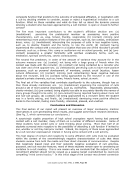
Cultic Studies Journal, Vol. 2 No. 1 1985, Page 32
Cult Departure
Stage
(Cult Recvery)
(Stage
Goldberg and
Goldberg
Spero
Revaluation Readjustment
(Marathon)
(Deprogramming)
1. Initial Post-
Deprogramming
1. I
n
i
t
i
a
l
P
o
s
t
-
D
e
p
r
o
g
r
a
m
m
i
n
g
I
n
i
t
i
a
l
P
o
s
t
2. e
p
r
n
gthose
r
a
m
m
i
n
g
2. Reemergence 3. Integration
Post Mind Control Sydrome
Short-Term Group Counseling
Individual
Therapy
optional)
Post-Commitment Syndrome
Long-Term
Psychodynamic
Individual
Psychotherapy
(Group Counseling)
(Optional )
Return of Affect
Depression --- Anger
(Ambivalence) -------------------------------
Transitory
Essence of Stable Dissociative Return of Pre-Cult Problems
Psychopathology
Dissociative
Disorder
Symptoms
(Floating )
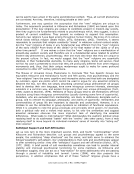
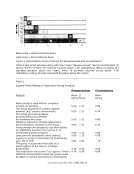
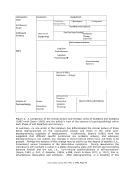
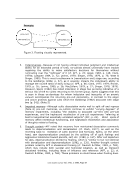
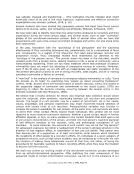
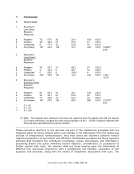
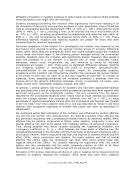
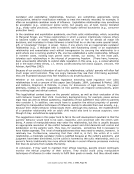
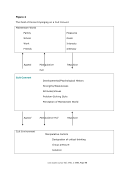
Figure 2. A comparison of the clinical picture and therapy views of Goldberg and Goldberg
(1982) with Spero (1982) and the author‘s view of the essence of psychopathology within
each phase of cult departure and recovery.
In summary, no one writer in the literature has differentiated the clinical picture of those
being deprogrammed (in the reevaluation phase) and in the initial post-
deprogramming subphase of readjustment. Furthermore, Spero‘s (1982) work has
suggested that different specific syndromes are probably unlikely, and whenever
deprogramming is not utilized, any changes in clinical picture which occur are likely to be
gradual. Perhaps the essence of this change may be said to be the degree of stability (i.e.,
frozenness) versus transience of the dissociative symptoms. During reevaluation the
individual is still mentally a cultist in a stable dissociative state with blurred ego boundaries
between himself and the cult, i.e., ―cult-induced dedifferentiation of self-boundaries‖
(Spero, 1982, p. 341 cf. Galanter, 1983a, p.988 Kirsch &Glass 1977, p. 1257), that is,
simultaneous dissociation and extension. After deprogramming, or a breaking of this
Cult Departure
Stage
(Cult Recvery)
(Stage
Goldberg and
Goldberg
Spero
Revaluation Readjustment
(Marathon)
(Deprogramming)
1. Initial Post-
Deprogramming
1. I
n
i
t
i
a
l
P
o
s
t
-
D
e
p
r
o
g
r
a
m
m
i
n
g
I
n
i
t
i
a
l
P
o
s
t
2. e
p
r
n
gthose
r
a
m
m
i
n
g
2. Reemergence 3. Integration
Post Mind Control Sydrome
Short-Term Group Counseling
Individual
Therapy
optional)
Post-Commitment Syndrome
Long-Term
Psychodynamic
Individual
Psychotherapy
(Group Counseling)
(Optional )
Return of Affect
Depression --- Anger
(Ambivalence) -------------------------------
Transitory
Essence of Stable Dissociative Return of Pre-Cult Problems
Psychopathology
Dissociative
Disorder
Symptoms
(Floating )
Figure 2. A comparison of the clinical picture and therapy views of Goldberg and Goldberg
(1982) with Spero (1982) and the author‘s view of the essence of psychopathology within
each phase of cult departure and recovery.
In summary, no one writer in the literature has differentiated the clinical picture of those
being deprogrammed (in the reevaluation phase) and in the initial post-
deprogramming subphase of readjustment. Furthermore, Spero‘s (1982) work has
suggested that different specific syndromes are probably unlikely, and whenever
deprogramming is not utilized, any changes in clinical picture which occur are likely to be
gradual. Perhaps the essence of this change may be said to be the degree of stability (i.e.,
frozenness) versus transience of the dissociative symptoms. During reevaluation the
individual is still mentally a cultist in a stable dissociative state with blurred ego boundaries
between himself and the cult, i.e., ―cult-induced dedifferentiation of self-boundaries‖
(Spero, 1982, p. 341 cf. Galanter, 1983a, p.988 Kirsch &Glass 1977, p. 1257), that is,
simultaneous dissociation and extension. After deprogramming, or a breaking of this