Cultic Studies Journal, Vol. 2 No. 1 1985, Page 63
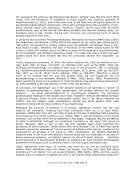
been approached by a member of a group that you thought was a cult? Answers to this
item divided our sample into two broad groupings of those contacted and those never
contacted. Number of contacts and consequences of that contact (what it led to) were also
assessed. Another major outcome measure we developed probed the student‘s interest in
attending a cult group meeting, if invited. Those who ―definitely would not go‖ (non-
negotiators) were categorized separately from all the rest of the respondents who were
accessible to further exposure to a cult, namely, all who answered ―definitely would go,‖
―might go out of curiosity,‖ ―might go with a friend,‖ and ―not sure‖ (negotiators).
Survey Administration
During the spring of 1980, one of our staff administered the eleven-page survey to
classroom groups of 15-30 students. A standard introduction provided general guidelines
for taking the survey, along with explanations of those items with a potential difficulty of
interpretation. Most students completed the task in about 30 to 40 minutes. Contingency
(or filtered) questions made it easy for students to answer only relevant items by skipping
sections if they had not heard of the word ―cult,‖ or if they had never been approached by a
cult member.
For classes with low reading levels, the survey was guided by a local radio announcer‘s
tape-recording of instructions and questions. When requested by a teacher, a lengthy
question-and-answer session followed the survey administration.
Data analysis
The questionnaire responses were sorted into categories, assigned code numbers, and then
manually transcribed onto optical scanning forms. These data were verified by independent
judges who visually compared the scanning form numbers with the original survey
responses and assigned codes. Statistical analyses were conducted at the Stanford
University Computer Center with the aid of various SPSS software programs (Nie, Hall,
Henkins, Steubrent, &Bent, 1980).
In order to provide a general portrait of the respondents, descriptive statistics of selected
characteristics of the entire sample will be presented first. Percentages for any item
reported have been adjusted for valid codes only, that is, excluding missing or faulty data.
Significance tests of relationships among measures were computed using Chi Square
(corrected for continuity). With more than two categories within variables, an additional
test for ordered categories (Goodman and Kruskal‘s Gamma) was applied. Following this
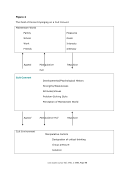
preliminary data presentation, we will use our multivariate analyses to address the primary
questions of this investigation: is it possible to identify a set of characteristics that predict
which individuals will be contacted by a cult recruiter, and if contracted, which of these
students will reject or be receptive to further inducements for affiliation with a cult? Chi
square analyses and discriminant function analyses were used to assess the predictive
utility of components of our theoretical model for each of these two outcomes.
Results
Our results will be presented in four sections: (1) data related to the two outcome
measures (b) data that provide information about the students‘ conceptions of cults and
the descriptions of their contact with cult recruiters (c) the associations between selected
independent variables from the students‘ pre-conversion background (predispositions,
knowledge, and attitudes) and the dependent outcome variable and (d) multivariate
analyses of a composite of attributes that predict which type of students are most likely to
have contact with a recruiter, and which are likely to be receptive to future affiliation with
cult groups.
been approached by a member of a group that you thought was a cult? Answers to this
item divided our sample into two broad groupings of those contacted and those never
contacted. Number of contacts and consequences of that contact (what it led to) were also
assessed. Another major outcome measure we developed probed the student‘s interest in
attending a cult group meeting, if invited. Those who ―definitely would not go‖ (non-
negotiators) were categorized separately from all the rest of the respondents who were
accessible to further exposure to a cult, namely, all who answered ―definitely would go,‖
―might go out of curiosity,‖ ―might go with a friend,‖ and ―not sure‖ (negotiators).
Survey Administration
During the spring of 1980, one of our staff administered the eleven-page survey to
classroom groups of 15-30 students. A standard introduction provided general guidelines
for taking the survey, along with explanations of those items with a potential difficulty of
interpretation. Most students completed the task in about 30 to 40 minutes. Contingency
(or filtered) questions made it easy for students to answer only relevant items by skipping
sections if they had not heard of the word ―cult,‖ or if they had never been approached by a
cult member.
For classes with low reading levels, the survey was guided by a local radio announcer‘s
tape-recording of instructions and questions. When requested by a teacher, a lengthy
question-and-answer session followed the survey administration.
Data analysis
The questionnaire responses were sorted into categories, assigned code numbers, and then
manually transcribed onto optical scanning forms. These data were verified by independent
judges who visually compared the scanning form numbers with the original survey
responses and assigned codes. Statistical analyses were conducted at the Stanford
University Computer Center with the aid of various SPSS software programs (Nie, Hall,
Henkins, Steubrent, &Bent, 1980).
In order to provide a general portrait of the respondents, descriptive statistics of selected
characteristics of the entire sample will be presented first. Percentages for any item
reported have been adjusted for valid codes only, that is, excluding missing or faulty data.
Significance tests of relationships among measures were computed using Chi Square
(corrected for continuity). With more than two categories within variables, an additional
test for ordered categories (Goodman and Kruskal‘s Gamma) was applied. Following this
preliminary data presentation, we will use our multivariate analyses to address the primary
questions of this investigation: is it possible to identify a set of characteristics that predict
which individuals will be contacted by a cult recruiter, and if contracted, which of these
students will reject or be receptive to further inducements for affiliation with a cult? Chi
square analyses and discriminant function analyses were used to assess the predictive
utility of components of our theoretical model for each of these two outcomes.
Results
Our results will be presented in four sections: (1) data related to the two outcome
measures (b) data that provide information about the students‘ conceptions of cults and
the descriptions of their contact with cult recruiters (c) the associations between selected
independent variables from the students‘ pre-conversion background (predispositions,
knowledge, and attitudes) and the dependent outcome variable and (d) multivariate
analyses of a composite of attributes that predict which type of students are most likely to
have contact with a recruiter, and which are likely to be receptive to future affiliation with
cult groups.